Field recordist captures humpback whale songs using underwater audio tools
Background and context
Humpback whales are among the most sonically expressive animals in the ocean, producing long, evolving songs that can travel vast distances underwater. For sound professionals, these vocalizations present both a creative opportunity and a technical challenge.
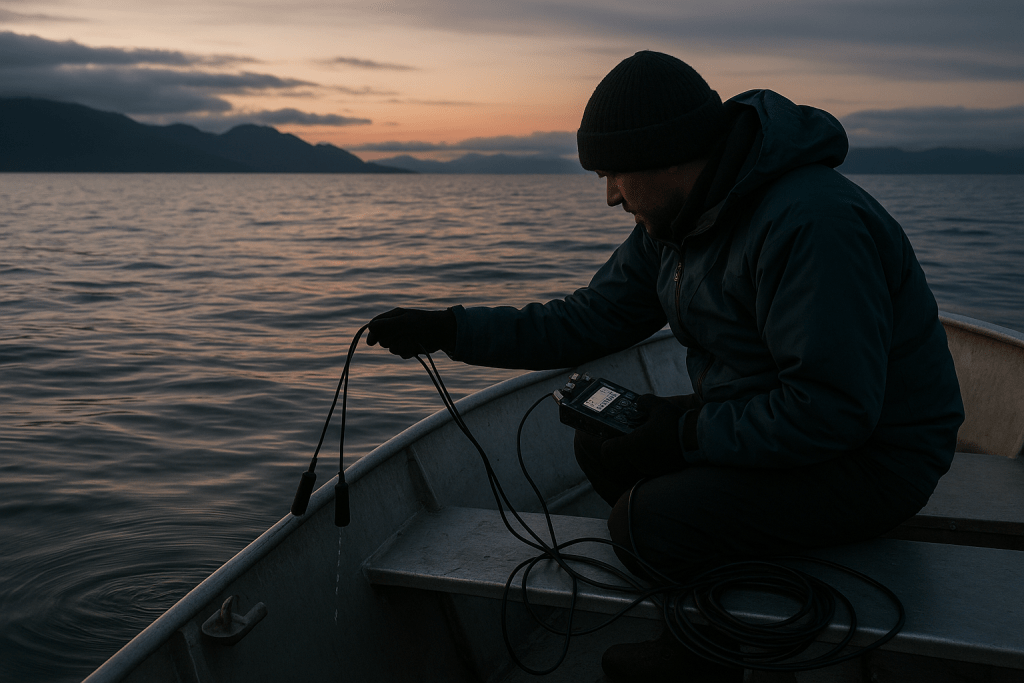
US-based field recordist and composer Thomas Rex Beverly has been working in remote coastal regions of Alaska to document these sounds in high resolution. His work sits at the intersection of art, science, and audio technology, and is increasingly relevant to sectors such as immersive experiences, sound libraries, and spatial audio for live and virtual events.
Key announcement
Beverly has undertaken an extended recording project focused on humpback whale songs in Alaska, using a combination of hydrophones and professional recording equipment, including solutions from Sennheiser and related audio tools. The project aims to capture not only the songs themselves but also the broader underwater soundscape in which these animals communicate.
Working from small boats and coastal positions, Beverly deploys hydrophones below the surface to pick up distant whale calls, echoing songs, and environmental details such as ice, waves, and other marine life. The recordings are made at high sample rates and bit depths to preserve dynamic range and subtle detail, making them suitable for use in spatial audio workflows and high-end sound design.
The material collected is being developed into commercial sound libraries and used in Beverly’s own compositions, while also being made available to collaborators in film, gaming, installation art, and museum projects. Further information about the recording tools and methodologies can be found via Sennheiser’s official newsroom and product resources at sennheiser.com.
Industry impact
While whale song recordings are not new, this kind of focused, high-fidelity field work speaks directly to the needs of several parts of the event and AV sector. Immersive exhibitions, themed attractions, and planetarium-style shows increasingly rely on detailed natural soundscapes to create believable environments for audiences.
Libraries built from these recordings can be integrated into multi-channel sound systems, 3D audio installations, and interactive experiences. For audio professionals, such content allows for more nuanced sound design that can move beyond generic effects toward authentic, location-specific sound.
In addition, these projects highlight the growing role of specialist field recordists as content suppliers to live event producers, sound rental houses, and experience designers who are expected to deliver distinctive audio atmospheres on tight production schedules.
Why this matters
For event technology professionals, Beverly’s work underscores how advances in portable recording gear, microphones, and hydrophones are expanding what is possible outside the studio. High-quality natural recordings can now be captured in extreme environments and later deployed in concert halls, immersive domes, exhibitions, and hybrid events.
The project also illustrates the importance of reliable, low-noise signal chains and robust transducers for critical recording. As demand grows for original, location-based content in VR, AR, and experiential installations, the ability to capture and reproduce complex soundscapes—such as humpback whale choruses—becomes a competitive differentiator.
For manufacturers, these use cases provide real-world feedback on how equipment performs in demanding conditions. For the broader event and AV industry, they offer a reminder that compelling audience experiences often start far from the venue, at the moment of capture.