Experiential trends from Cannes Lions 2026 point to more immersive, tech-led brand activations
Background and context
The Cannes Lions International Festival of Creativity has become a key showcase for large-scale brand activations, immersive environments, and technology-driven experiences. Beyond the awards show, the event now functions as a testbed where agencies, brands, and production partners trial new formats for live and hybrid engagement.
As experiential budgets return and brands seek more measurable outcomes from in-person events, industry observers are paying closer attention to what appears along the Croisette. The experiences deployed at Cannes often filter into product launches, conferences, pop-ups, and tours over the following 18–24 months.
This year, BizBash and creative agency Public School collaborated on a trends report that looks specifically at the experiential work on display at Cannes Lions 2026. The report aims to connect headline-grabbing activations with underlying shifts in strategy, production, and technology that are likely to influence the wider events sector.
Key announcement
The joint report, titled “After the Activation: The Cannes Lions 2026 Trends Report,” analyzes the most prominent creative builds and brand experiences that shaped this year’s festival. Rather than focusing only on aesthetics, it examines how concepts were executed, how attendees interacted, and what tools and platforms were used behind the scenes.
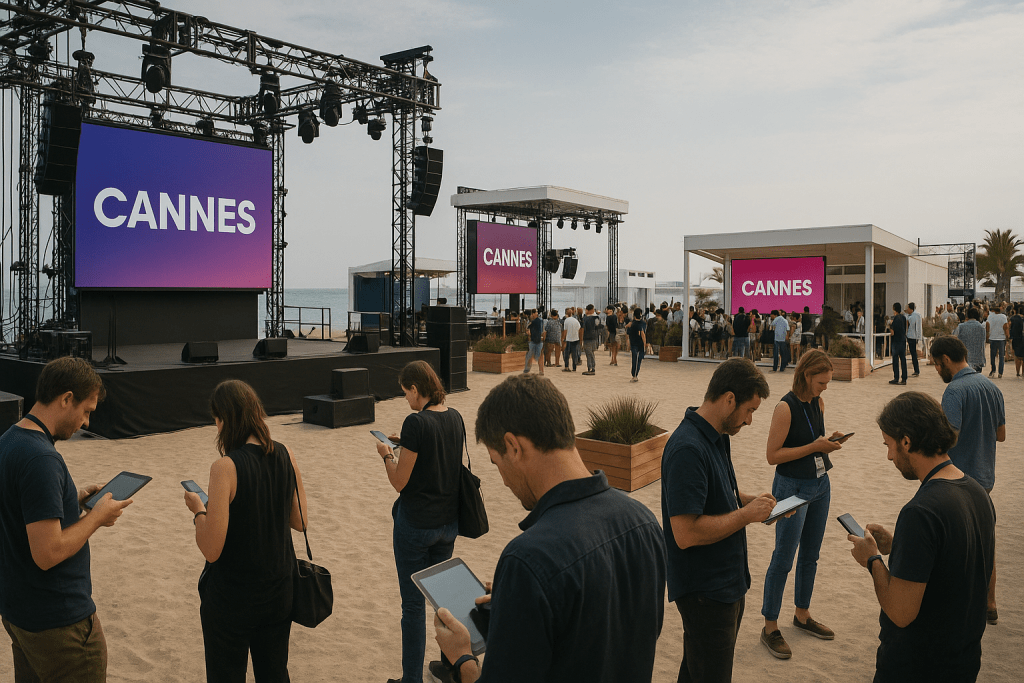
According to the authors, the study looks at how brands combined physical installations, digital layers, and content creation opportunities into cohesive narratives. It highlights patterns across beachfront pavilions, pop-up studios, invite-only lounges, and public-facing experiences that drew large crowds of marketers and media professionals.
The report also places this year’s activations in the context of ongoing experimentation with emerging tech, such as AI-assisted content production, interactive displays, and data-informed attendee journeys. It considers how these technologies were embedded into experiences rather than presented as standalone novelties.
Further details on the findings and examples of featured activations are available through BizBash’s official website at bizbash.com.
Industry impact
For agencies, producers, and event technology providers, the analysis offers a snapshot of where major brands are directing experiential spend and attention. Cannes Lions has historically set the tone for how global marketers think about live engagement, and the 2026 edition continued that trend.
The report suggests that experiential teams are prioritizing:
- Integrated storytelling that runs consistently across physical spaces, social content, and broadcast-style programming.
- Flexible build-outs that support both planned programming and spontaneous content capture.
- Tools that make it easier to measure participation, dwell time, and content output from on-site experiences.
For AV specialists, production companies, and platform vendors, these priorities signal rising demand for infrastructure that can support multi-purpose stages, live-stream-ready setups, and audience-facing interactivity at scale.
Why this matters
While Cannes is a high-profile, high-budget environment, the approaches documented in the report often influence more routine brand events, from B2B conferences to consumer roadshows. As marketers seek to justify experiential investment, there is growing pressure on event teams to design activations that can generate both impact on-site and content that travels online.
This places a premium on reliable, flexible event technology—particularly systems for live production, content capture, audience engagement, and analytics. The trends identified at Cannes Lions 2026 suggest that future activations will increasingly be built as media platforms in their own right, rather than one-off installations.
For event professionals, the findings serve as an early indicator of how expectations may shift in the next few years, and where to focus when upgrading capabilities or planning new experiential formats.