MLB All-Star Week 2026 showcases evolving playbook for live fan engagement
Background and context
Major League Baseball’s All-Star Week has increasingly become a large-scale live entertainment platform for brands, extending well beyond the game itself. The 2026 edition in Philadelphia is expected to underline that trend as the league aligns its midsummer showcase with the United States’ 250th anniversary celebrations.
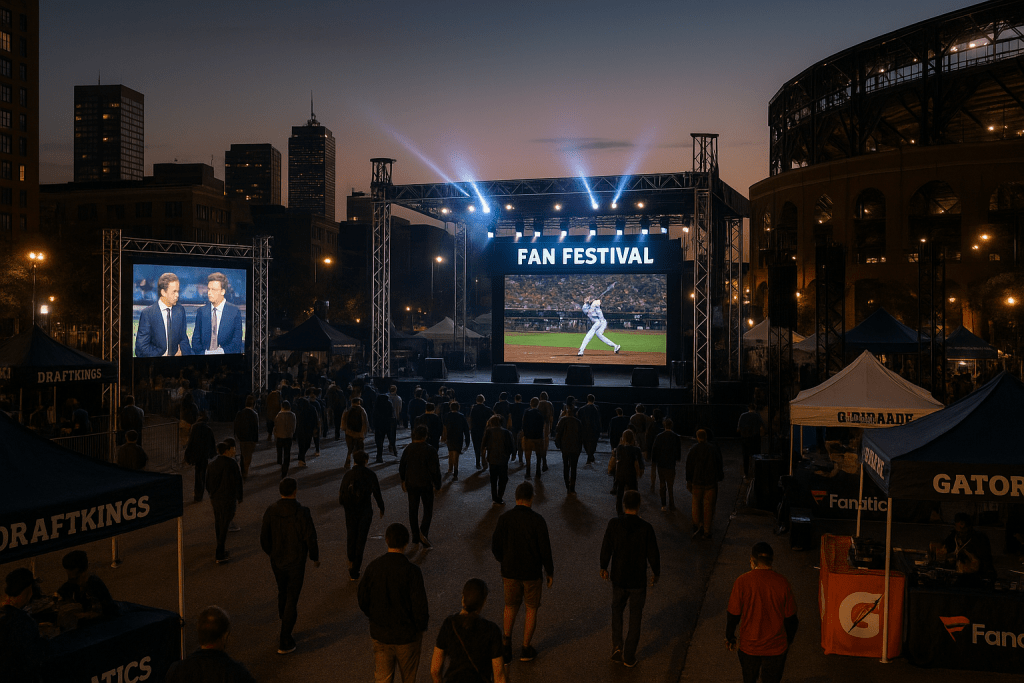
For host cities, All-Star Week functions as a multi-day festival, pulling in tourists, local residents, and corporate partners. For marketers and event producers, it serves as a test bed for new fan engagement formats, hybrid activations, and technology-led experiences that can be replicated at other large sporting events.
MLB and its partners typically use the All-Star platform to blend sport, culture, and local identity, turning downtown districts, public spaces, and venues into branded environments. This approach is expected to be particularly visible in Philadelphia, where the historical backdrop offers a strong narrative hook for experiential campaigns.
Key announcement
While specific activation details for 2026 are still emerging, MLB has confirmed that Philadelphia will host a full slate of All-Star Week programming, including the All-Star Game, surrounding fan festivals, and related citywide experiences.
The league generally structures All-Star Week around layered touchpoints: large-scale official fan zones, smaller sponsor-led experiences, and hospitality programming for partners and VIPs. Technology continues to play a central role, with interactive installations, real-time content creation, and mobile-based experiences now standard elements of the format.
MLB’s central event information hub at mlb.com is expected to outline ticketing, public access activations, and ancillary programming as the event approaches, giving brands and agencies a clearer framework for their own event technology deployments.
Industry impact
For the event technology sector, All-Star Week functions as a live laboratory. Recent editions have showcased how interactive LED, large-format displays, AR filters, mobile engagement tools, and data-driven experiences can be integrated into dense urban environments and temporary venues.
Vendors supplying staging, audio, lighting, and content production solutions are likely to see increased demand for flexible, quickly deployable systems that can handle fluctuating crowd sizes and outdoor conditions. The Philadelphia setting, with its mix of historic sites and modern venues, could prompt creative uses of projection, sound design, and wayfinding technology.
- Integration of mobile apps and QR-based journeys for on-site engagement and information.
- Use of interactive displays and social content walls to extend fan participation beyond the ballpark.
- Data capture at activation points to measure dwell time, content interaction, and conversion.
The city’s broader 250th anniversary programming is also likely to encourage collaboration between sports properties, civic organizations, and cultural institutions, opening opportunities for new types of cross-venue tech deployments.
Why this matters
For event professionals, MLB All-Star Week 2026 in Philadelphia illustrates how major sports properties are evolving into multi-day destination events that depend heavily on well-orchestrated technology and production design. The emphasis is shifting from one marquee game to an extended experience that must feel cohesive across multiple sites and sponsor activations.
Production teams will be watching how organizers manage crowd flows between official and unofficial events, how content is synchronized across venues, and how digital interactions are tied back to measurable outcomes for brands. The lessons from 2026 are likely to inform planning for future large-scale sports and commemorative events, where hybrid physical-digital strategies and robust technical infrastructure are now baseline expectations.
As cities compete for major sports properties and anniversaries, the Philadelphia All-Star Week blueprint will provide a reference point for how municipal stakeholders, leagues, and sponsors can work together to create connected, tech-enabled experiences that serve both fans and local economies.