Immersive media studio supports interactive exhibits at new National Geographic museum
Background and context
National Geographic has opened a new museum space that places immersive storytelling and interactive media at the centre of its visitor experience strategy. The venue reflects a wider trend in the cultural and attractions sector, where institutions are investing in experiential technology to reach diverse audiences and deepen engagement with complex subjects.
To support this direction, National Geographic enlisted Moment Factory, a media and experience studio known for large-scale digital environments and interactive installations. Together, the teams set out to merge traditional exhibition design with dynamic, technology-driven narrative tools aimed at families, students and general visitors.
Key announcement
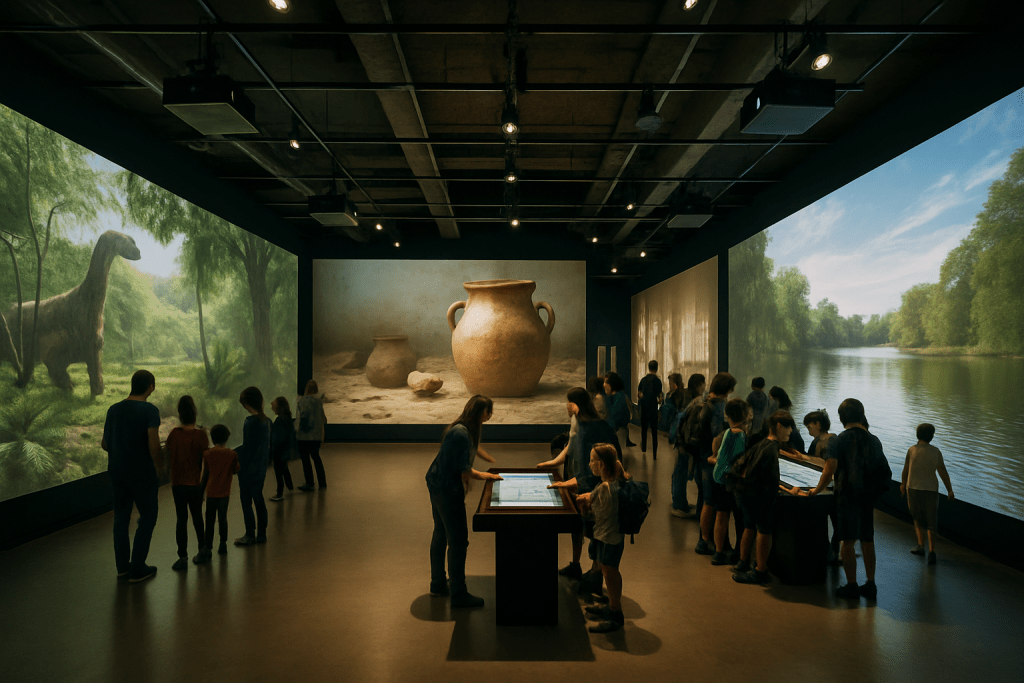
Moment Factory has developed a series of immersive and educational installations for the new National Geographic museum, combining projection, sound design and interactive interfaces to present scientific and exploratory content in accessible ways.
According to the company, the project focuses on creating exhibits that encourage active participation rather than passive viewing. Visitors can move through themed environments where visual media, lighting and audio cues respond to their presence or actions, helping to illustrate topics such as geography, wildlife, ecosystems and exploration.
The experience design includes:
- Immersive rooms that use large-format projections and spatial audio to transport visitors into natural and scientific environments.
- Interactive stations where guests can trigger content, manipulate data or influence visual scenes through touch or movement.
- Narrative sequences structured to support both self-guided discovery and group visits, such as school tours and family outings.
Moment Factory notes that the exhibits were created to be intuitive for visitors of all ages, with clear visual narratives and straightforward interaction methods. More information on the studio’s museum and attractions work is available on Moment Factory’s official website.
Industry impact
For event and exhibition professionals, the National Geographic museum project illustrates how institutions are integrating immersive technologies into permanent and semi-permanent installations, rather than reserving them solely for temporary shows or ticketed experiences.
The collaboration highlights several ongoing trends in the sector:
- The shift from static displays to responsive, media-rich environments that adapt to visitor movement and behaviour.
- The use of projection mapping and interactive content to communicate complex scientific topics through visual storytelling.
- Growing demand for experiences that can appeal simultaneously to children, adults and educators, requiring layered content design.
As cultural venues compete with entertainment attractions and digital media for audience attention, projects like this show how museums are adopting tools and techniques more familiar to live event producers and experiential marketers.
Why this matters
For the event technology community, the National Geographic and Moment Factory partnership underscores how immersive toolkits—projection, spatial audio, interactive sensors and experience design—are becoming standard components in educational and cultural storytelling.
Event producers, AV integrators and content designers can draw several lessons from this deployment:
- Immersive techniques used in live events can be repurposed for long-term, educational use when paired with clear, structured narratives.
- Designing exhibits for broad age ranges requires simple, legible interaction models and strong visual cues, supported by robust underlying technology.
- Partnerships between content-driven brands and specialist media studios are likely to expand, creating new opportunities for cross-disciplinary teams.
As audiences continue to expect more interactive and visually rich experiences, museums and cultural institutions are likely to remain important testbeds for event technology, influencing how future conferences, brand activations and public installations are conceived and delivered.