Immersive audio installed at Shenzhen’s Longgang International Arts Centre
Background and context
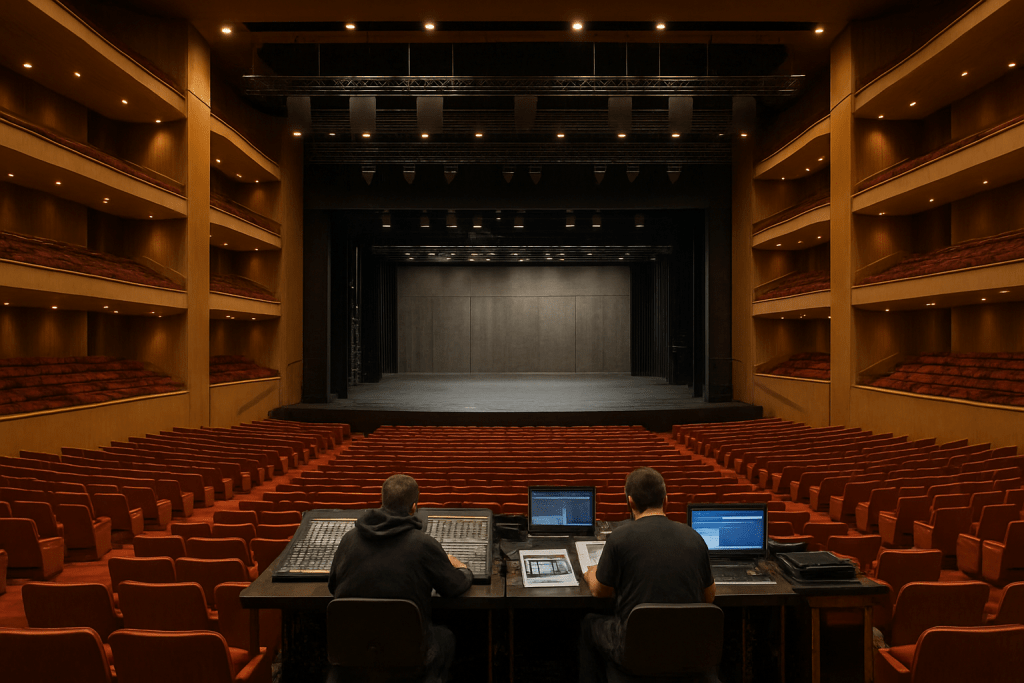
Shenzhen’s Longgang International Arts Centre has adopted immersive audio as a core part of its technical infrastructure, with new systems now operational in both its main opera theatre and smaller concert hall.
The multi-venue complex, which opened in January 2026, is a key cultural project under Shenzhen’s 14th Five-Year Plan. The 110,000-square-metre facility includes a 1,501-seat opera theatre, a 552-seat drama theatre and a 305-seat concert hall.
Designed by US firm TVS Design and delivered by the Beijing Institute of Architectural Design, the building references traditional Chinese instruments in its architecture. That visual ambition created significant constraints for audio integration, with strict requirements that loudspeakers should not be visible to audiences or interfere with interior artworks.
Key announcement
To meet those requirements, the venue selected the L-ISA Immersive Hyperreal Sound platform from L-Acoustics for the opera theatre and concert hall. The systems were specified by Germany-based consultancy Kunkel, working with Rightway Audio Consultants (Racpro) in China.
In the opera theatre, the main immersive system centres on seven evenly spaced Kara II line array hangs above the stage in a scene-and-extension configuration, supported by KS28 subwoofers. An L-ISA processor handles object-based mixing, allowing sound images to track performers across the stage and remain coherent for all 1,501 seats.
Limited ceiling space meant the team had around 80 cm of clearance to work with above the finished ceiling. Directional control technologies were used to keep energy focused on the audience and reduce reflections from the venue’s complex architecture.
Surround and overhead coverage is delivered by a dense network of compact coaxial loudspeakers, including 5XT units along balcony fronts and walls, X8 cabinets for near-field zones and X12 and KS21i models in overhead positions. The layout provides full 360-degree spatial coverage and supports a range of acoustic presets, from intimate room responses to extended reverberation profiles, managed from a dedicated control room using L-ISA Sound Spaces tools.
In the 305-seat concert hall, a more compact L-ISA configuration was designed around X12 coaxial loudspeakers as the main array under a low rigging height. X8 loudspeakers provide near-field and surround coverage, with additional 5XT units overhead to complete the immersive field. The system is tailored for chamber music and instrumental performances, where precise localisation and clarity are priority.
Industry impact
The Longgang International Arts Centre joins a growing list of Asian performing arts venues adopting immersive audio as a standard rather than a special add-on. By implementing full 360-degree coverage in both a large opera house and a small concert hall, the project demonstrates how object-based systems can scale across different room volumes and programme types.
The decision to hide all loudspeakers behind fabric grilles and architectural elements reflects a wider trend in high-profile venues, where visual integration is given equal weight to technical capability. For system designers and integrators, the project illustrates approaches to working within strict architectural and aesthetic constraints while still delivering multi-layer immersive coverage.
The venue opened with the Asian premiere of the Verbier Festival, hosting 23 concerts and seven masterclasses shortly after launch. Since then, the immersive systems have been used across opera, chamber music and contemporary performance, providing a real-world test bed for long-term use of spatial audio in repertory programming.
Why this matters
For the event and performing arts technology sector, the Shenzhen Longgang installation highlights how immersive sound is moving from experimental deployments into everyday infrastructure in major venues.
Object-based mixing and 360-degree playback are now being specified at the build stage, rather than retrofitted, which has implications for consultants, rental partners and content creators working in live performance, broadcast and hybrid events.
The project also underscores the importance of collaboration between architects, acoustic consultants and systems engineers when loudspeaker visibility is restricted. As more cultural landmarks and high-end corporate venues pursue immersive audio, similar integration challenges are likely to become common.
Further technical details of the L-ISA platform and product range used in Shenzhen are available from the manufacturer’s official site at https://www.l-acoustics.com.