Emerging catering experiences shaping live events in 2026
Background and context
Food and beverage programs have become a core part of how live events signal their identity and engage attendees. Rather than treating catering as a functional service, planners are increasingly building it into the overall experience design.
In the first half of 2026, several high-profile events have highlighted this shift with visually striking and interactive catering installations. These concepts are not just about presentation; they are being used to drive dwell time, social sharing, and deeper attendee participation in both corporate and public-facing events.
Within this context, creative catering has started to overlap more directly with event technology, scenic design, and audience engagement tools, creating hybrid spaces where F&B, staging, and storytelling intersect.
Key announcement
Across multiple events so far in 2026, organisers and catering partners have experimented with a range of immersive concepts. Notable examples include outdoor “garden” builds where salads are served from swing-style installations, and spirits stations that invite guests to dip glassware or vessels into wax as part of a customised service ritual.
These experiences blend theatrical elements with service delivery. The garden salad swings bring a kinetic, playful component to a standard course, while the wax-dipping spirits activation reframes a traditional bar interaction into a multi-step, hands-on moment.
According to event producers working on these concepts, the goal is to create touchpoints that feel memorable without significantly slowing down service flows. That balance is key as events scale up in size and complexity. More information on related offerings and experiential catering trends can typically be found through major catering and production suppliers’ official product pages and service catalogs.
Industry impact
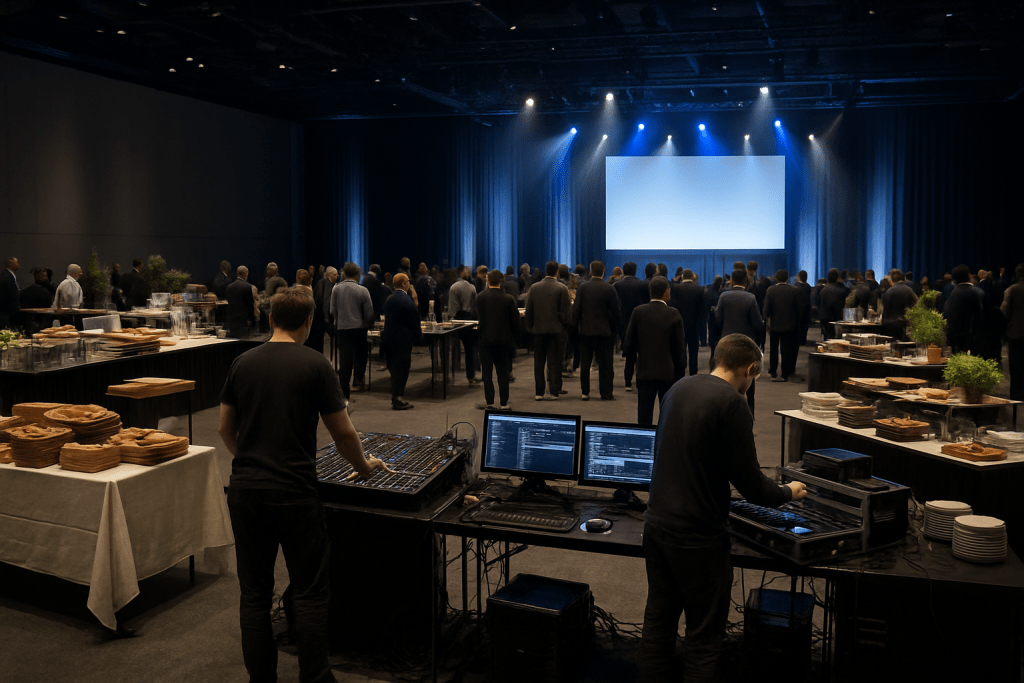
These concepts reflect a broader movement toward experiential catering that aligns with developments in event technology. As planners deploy LED walls, environmental lighting, and interactive displays, catering is being designed to coexist with—or even trigger—digital content and live cues.
For example, kinetic serving structures can be integrated into lighting designs or projection mapping, turning a buffet or bar into part of the stage picture. Interactive drink activations can be synchronised with RFID-based check-ins, content capture stations, or social photo moments, making them measurable engagement tools rather than standalone novelties.
On the operations side, these setups often require closer collaboration between caterers, production teams, and venue staff. Load-in timings, rigging needs, and safety considerations all influence how far a concept can be pushed in a given space. This is prompting some planners to bring catering into technical planning conversations much earlier in the process.
Why this matters
For event professionals, the rise of experiential catering in 2026 underscores a few practical takeaways:
- Attendee expectations are rising: Guests increasingly anticipate interactive, photo-friendly moments across all aspects of an event, including F&B.
- Catering is now part of the content plan: Installations like garden salad swings or custom spirits stations can function as programmed moments that support themes, sponsorships, and brand storytelling.
- Technical integration is essential: These activations work best when coordinated with lighting, sound, and spatial design, which places them firmly within the remit of event technology planning.
- Measurement opportunities are growing: When paired with check-in tools, QR-driven menus, or content capture points, catering experiences can generate useful data on movement patterns and engagement.
As the year progresses, it is likely that more events will test hybrid concepts that treat catering installations as both service elements and experiential assets. For AV and production teams, understanding these trends will be important for designing environments that support creative F&B concepts without compromising flow, safety, or technical reliability.