Salesforce Dreamforce Conference Showcases Immersive Customer Experience City
Dreamforce Conference Redefines Customer Experience Environment
Salesforce used its flagship Dreamforce conference to show how advanced technology can become tangible for attendees, building an immersive environment anchored in transparent LED, a city of customer experiences, and hands-on artificial intelligence demonstrations.
Positioned as a showcase for its latest innovations, the Dreamforce conference focused on bringing complex digital concepts into a physical, explorable setting that enabled visitors to see, touch, and test Salesforce solutions in real time.
Immersive City Of Customer Experience Zones
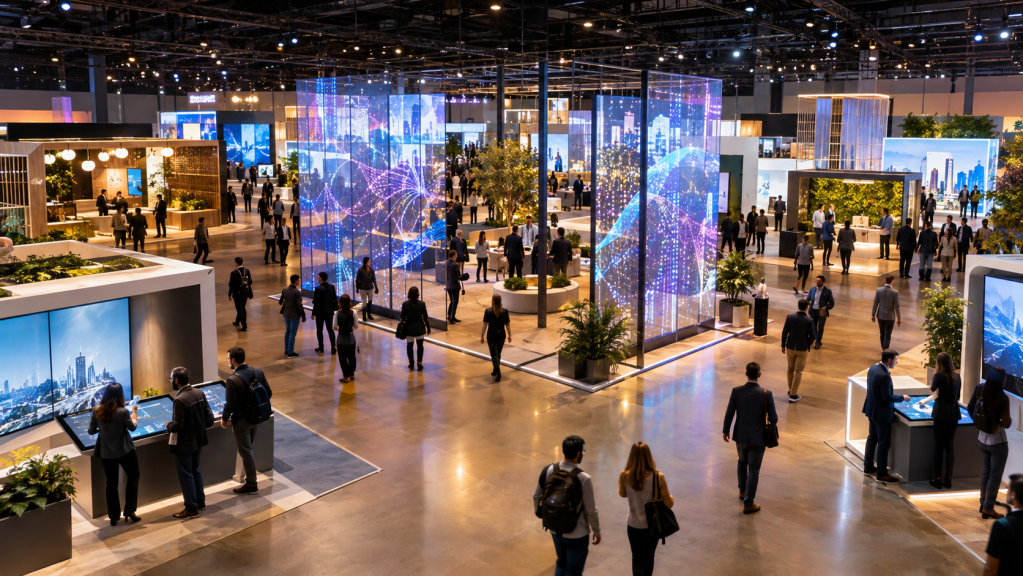
At the heart of the Dreamforce conference was an immersive city of customer experiences. Instead of traditional static booths, Salesforce organized the environment into zones that functioned like distinct city districts, each dedicated to different aspects of the customer journey and business use cases.
This city-style layout turned the show floor into a navigable ecosystem where attendees could follow a storyline from one customer experience to the next. Each area was designed to demonstrate how Salesforce technology and partner solutions connect across departments, industries, and touchpoints.
- Customer experience zones represented real-world business scenarios.
- Attendees could move between different zones as if traveling through a city.
- The layout emphasized end-to-end journeys rather than isolated products.
The approach allowed event organizers to guide audiences through layered narratives, helping business decision-makers understand how data, workflows, and AI can link across an entire organization.
Transparent LED Screen Installations For Visual Storytelling
Transparent LED screens were a key visual and functional element of the Dreamforce environment, used to frame spaces, add depth, and deliver dynamic content without blocking sightlines.
These transparent LED elements helped Salesforce and its partners display dashboards, data visualizations, and animated storytelling directly within the physical architecture of the conference. Because attendees could see through the screens, the content felt integrated into the environment rather than appearing as a separate layer.
- Transparent LED surfaces created high-impact visual canvases over open structures.
- Content could run continuously without visually closing off the space.
- The technology supported both directional wayfinding and narrative storytelling.
For event designers and production teams, the use of transparent LED illustrated how venues and temporary structures can become flexible media surfaces that communicate brand messaging, technical workflows, and live data without overwhelming the attendee.
Hands-On Artificial Intelligence Demonstration Areas
Another defining feature of the Dreamforce conference was its emphasis on hands-on AI demonstrations. Rather than presenting artificial intelligence only through keynotes or theoretical sessions, Salesforce provided interactive zones where visitors could test AI capabilities themselves.
These demonstration areas were built to lower the barrier between abstract AI concepts and practical business application. Attendees could explore how AI might affect customer service, sales, marketing, analytics, and other core functions.
- AI tools were presented in live, guided demonstration formats.
- Participants could interact directly with AI features and workflows.
- The focus was on real use cases that connected to customer experiences.
By making AI a hands-on component of the event, the Dreamforce conference highlighted how live demonstrations can accelerate understanding, shorten sales cycles, and support more informed conversations between technology providers and enterprise buyers.
Event Production And Technology Lessons For Organizers
The Dreamforce execution offers several takeaways for conference, exhibition, and corporate event organizers who are looking to make complex technology more accessible and engaging.
Use Of Environment As Narrative Framework
The immersive city of customer experiences demonstrated how a show floor can become a narrative framework instead of a simple arrangement of booths. Organizers can map visitor journeys across themed zones, guiding them through connected stories that reflect real business processes.
Integration Of Display Technology Into Architecture
The strategic use of transparent LED screens showed how display technology can be blended into the architecture of an event. Rather than relying solely on large, opaque LED walls, production teams can layer transparent surfaces into trusses, gateways, and scenic elements to maintain openness while still delivering high-impact content.
Prioritization Of Interactive Technology Demonstrations
The hands-on AI areas underscored the value of interactive, tactile experiences when communicating advanced technologies. Allowing attendees to experiment with tools encourages deeper engagement and more meaningful feedback compared with passive viewing alone.
Implications For Future Conference And Exhibition Design
By combining immersive spatial design, integrated LED technology, and practical AI demonstrations, the Dreamforce conference offered a template for how large-scale events can communicate complex digital ecosystems in a physical setting.
For B2B organizers, venues, and event production partners, the event highlighted the growing expectation that technology conferences will not only talk about innovation but also demonstrate it through the structure, content, and interactivity of the experience itself.
As transparent LED, AI-driven applications, and experiential layouts become more accessible, similar approaches are likely to influence how conferences, exhibitions, and corporate events are planned and produced across sectors that need to make sophisticated solutions understandable to diverse audiences.