Showman’s Show discussion explores Value Of Trade Show Investment
Event professionals at The Showman’s Show have been examining how exhibitors can secure stronger returns from trade show participation, focusing on practical approaches to stand design, budgeting, sustainability and attendee experience.
In a conversation at the outdoor event industry showcase, commentator James Dickson spoke with events specialist Jack Saward about strategies exhibitors can use to extract measurable value from trade shows and how industry newcomers can build careers with the support of mentorship.
Discussion focuses on Value Of Trade Show Participation
The discussion centred on the challenge many suppliers and organisers face when justifying the cost of trade show stands, travel, staffing and production. Saward emphasised that exhibitors increasingly need to approach shows with clear objectives and a plan for how their presence will translate into commercial or strategic outcomes.
Rather than treating each appearance as a discrete marketing expense, the conversation highlighted the benefit of viewing trade shows as part of a longer-term business development pipeline, where consistent messaging and targeted interactions can compound over multiple editions of the same event.
Stand Design and Attendee Experience take Central Role
Stand design emerged as one of the core levers for improving trade show performance. Dickson and Saward discussed how the configuration of a stand can either encourage or discourage meaningful conversations, with factors such as flow, visibility and product demonstration space all affecting engagement.
They considered how visual elements and layout choices can help exhibitors communicate what they do within seconds, a crucial requirement in busy show environments where buyers and event planners move quickly between suppliers.
The discussion also underscored the importance of designing stands around the attendee journey. That includes thinking about where visitors first make eye contact with staff, how they are welcomed onto the stand, and what prompts they receive to explore equipment, services or case studies.
Budgeting Strategy supports Measurable Outcomes
Budgeting for trade show participation was another key topic. Saward described how companies often underestimate the full cost of exhibiting when they focus solely on stand space and basic build, without fully accounting for travel, accommodation, staffing, logistics and technical requirements.
By breaking down costs and aligning them with specific goals, exhibitors can assess which elements contribute most directly to qualified leads, relationship building or brand visibility. The conversation suggested that such clarity can help teams refine their presence from one year to the next, reallocating budget toward activities that show demonstrable return.
They noted that this approach does not necessarily mean spending less, but rather spending with greater purpose, particularly for suppliers operating in competitive event technology and production markets.
Sustainability Consideration shapes Stand Planning
Sustainability was highlighted as a growing consideration in how exhibitors plan and deliver their trade show presence. Dickson and Saward discussed how re-usable structures, responsible materials and efficient logistics can all reduce the environmental impact of exhibiting.
With clients and events increasingly scrutinising sustainability credentials, the conversation pointed to opportunities for exhibitors to integrate sustainable practices into their stand design and operations, from modular components that can be reconfigured across different shows to more efficient power and transport planning.
The pair also touched on how sustainability can complement budget management, where investments in durable, re-usable elements may reduce overall costs over multiple events.
Attendee Experience and Visualisation of Live Environments
A recurring theme in the discussion was how exhibitors can better visualise and deliver compelling attendee experiences. Saward shared perspectives on using stand design and on-stand activity to simulate or reference real-world event environments, helping visitors picture how solutions will perform in their own projects.
They noted that when suppliers can create a clear line between what is presented on the stand and the live event scenarios their customers manage, conversations become more targeted and productive. This can be particularly relevant for audiovisual, staging and production companies exhibiting at trade shows serving the live events ecosystem.
The conversation also covered the value of planning attendee touchpoints, from first interaction through to follow-up after the show, so that the experience feels cohesive rather than improvised.
Industry Pathway and Role Of Mentorship
Beyond stand design and commercial metrics, Dickson and Saward explored the varied routes into the events and production industry. They discussed how people often arrive from different educational and professional backgrounds, reflecting the sector’s blend of technical, creative and operational roles.
Mentorship was described as an important factor in helping newcomers understand how trade shows function as part of the wider event supply chain. Experienced professionals who are willing to share knowledge on topics such as budgeting, specification, safety and on-site delivery can, they suggested, significantly accelerate a newcomer’s development.
The conversation positioned mentorship as beneficial not only for individuals but also for the resilience of the industry, as knowledge transfer helps maintain standards and encourages innovation in areas such as sustainability and attendee experience design.
Showman’s Show Context for Supplier and Buyer Engagement
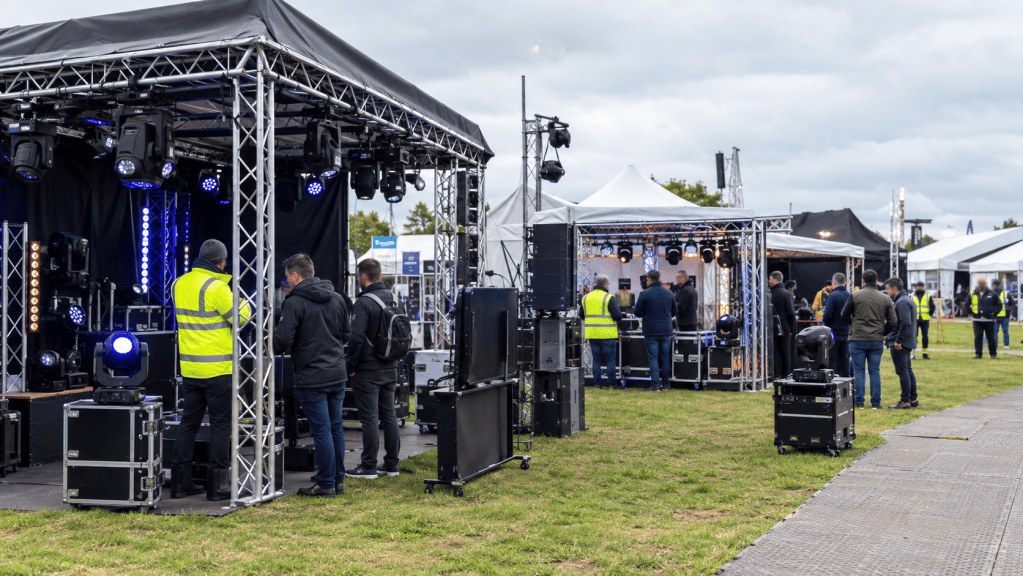
The Showman’s Show provides a live environment for these themes to play out, bringing together suppliers to the outdoor and live events sector with organisers, production companies and planners. Within that context, the discussion between Dickson and Saward served as a practical reflection on how exhibitors can refine their approach year on year.
By tying together budgeting, stand design, sustainability and mentorship, the conversation underlined how multiple factors combine to determine whether trade show participation delivers meaningful value for event technology and production businesses.
As trade shows continue to function as a central marketplace for the live events supply chain, the perspectives shared at The Showman’s Show highlight ongoing efforts within the sector to make each appearance more strategic, measurable and aligned with evolving client priorities.