Dutch Barrier Services gains certified sustainable status
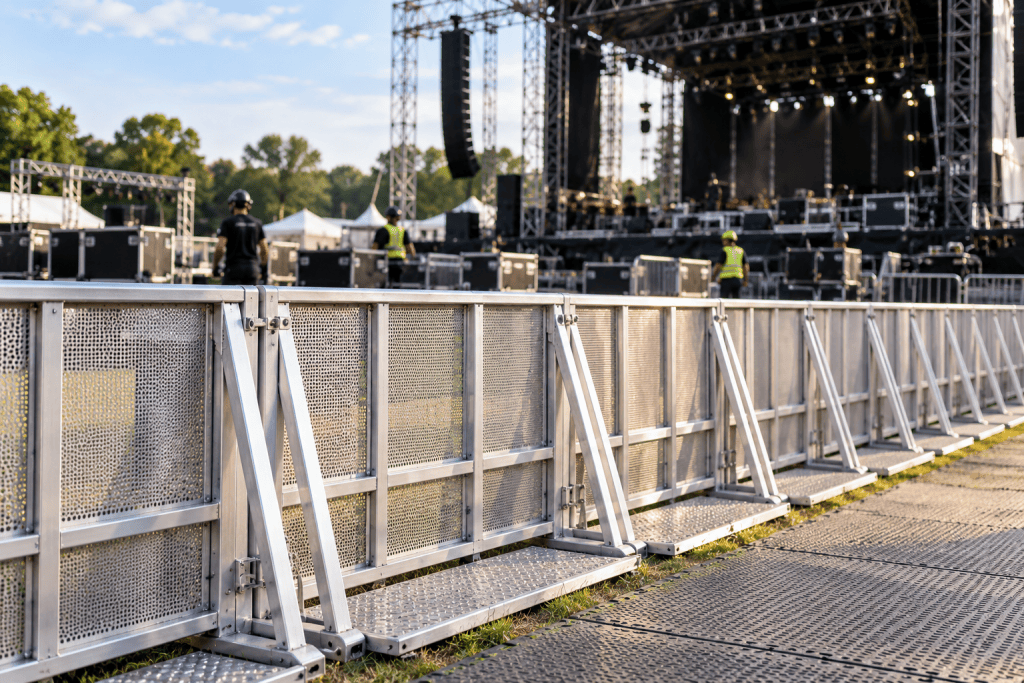
Dutch Barrier Services has achieved certified sustainable status for its aluminium crowd safety barriers after cutting the carbon impact of its sales and rental operations by a further 35%. The company now records an overall certified footprint of 3.8 kg CO2 per kilogram of used aluminium across its barrier portfolio.
The lower carbon figure follows a shift to sourcing what the company identifies as the most sustainable certified aluminium from two suppliers, Speira and Hydro. The move aligns with Dutch Barrier Services’ founding focus on sustainability, which has been central to its business model since its launch in 2022.
Certified reduction in carbon impact
The newly certified carbon intensity of 3.8 kg CO2 per kilogram of aluminium represents a significant decrease compared with the company’s previous impact level. Dutch Barrier Services reports that the 35% reduction is measured across both its sales and rental barrier offerings, covering the aluminium used in its crowd safety systems.
This certification provides quantified evidence of the company’s efforts to address the environmental footprint of its barrier products, a key infrastructure element at many live events, festivals, exhibitions, and public gatherings. The certified figure offers event organisers and venues a documented emissions value when assessing the impact of their physical safety equipment choices.
Sourcing of sustainable certified aluminium
To reach the lower emissions profile, Dutch Barrier Services has restructured its aluminium sourcing strategy. The company now procures certified sustainable aluminium exclusively from two producers, Speira and Hydro. Both suppliers are referenced by the company as providing the most sustainable certified aluminium it could source for its barrier systems.
By concentrating procurement on these certified sources, Dutch Barrier Services has been able to reduce the embedded carbon in the aluminium that underpins its product range. This directly influences the lifecycle emissions associated with manufacturing, supplying, and operating its crowd safety barriers for event clients.
Focus on sustainable crowd safety infrastructure
Dutch Barrier Services was established in 2022 with sustainability described as a core component of its business. From its inception, the company positioned environmental performance as a defining principle in the development and delivery of its barrier solutions.
The latest certified emissions figure reinforces that positioning by linking the company’s sustainability claims to independently recognised carbon data. For event organisers and production stakeholders focused on decarbonising their operations, such certified metrics provide an additional layer of transparency around infrastructure-related emissions.
Implications for event and venue procurement
Aluminium crowd safety barriers are a common sight at concerts, outdoor festivals, sporting events, exhibitions, and city-based public events. As sustainability criteria become more embedded in procurement processes, quantified carbon data on these types of infrastructure elements is increasingly relevant to production planning.
With a certified footprint of 3.8 kg CO2 per kilogram of used aluminium, Dutch Barrier Services offers buyers a specific emissions value to factor into supplier comparisons, carbon accounting, and broader environmental reporting. This can support event teams seeking verifiable information on the impact of core site infrastructure such as barriers, fencing, and other crowd management systems.
Continuing emphasis on measured sustainability
The 35% reduction in carbon impact underscores Dutch Barrier Services’ focus on measured, material changes in its supply chain rather than purely promotional sustainability claims. By tying its reduction to certified aluminium sources and a clearly stated emissions figure, the company provides a concrete reference point for environmental performance.
As the events sector pays closer attention to the carbon profile of equipment and infrastructure, developments such as this certified reduction highlight how targeted sourcing decisions around core materials like aluminium can directly affect the overall environmental footprint of crowd safety solutions.