Stadium sector marks event excellence at 2026 awards
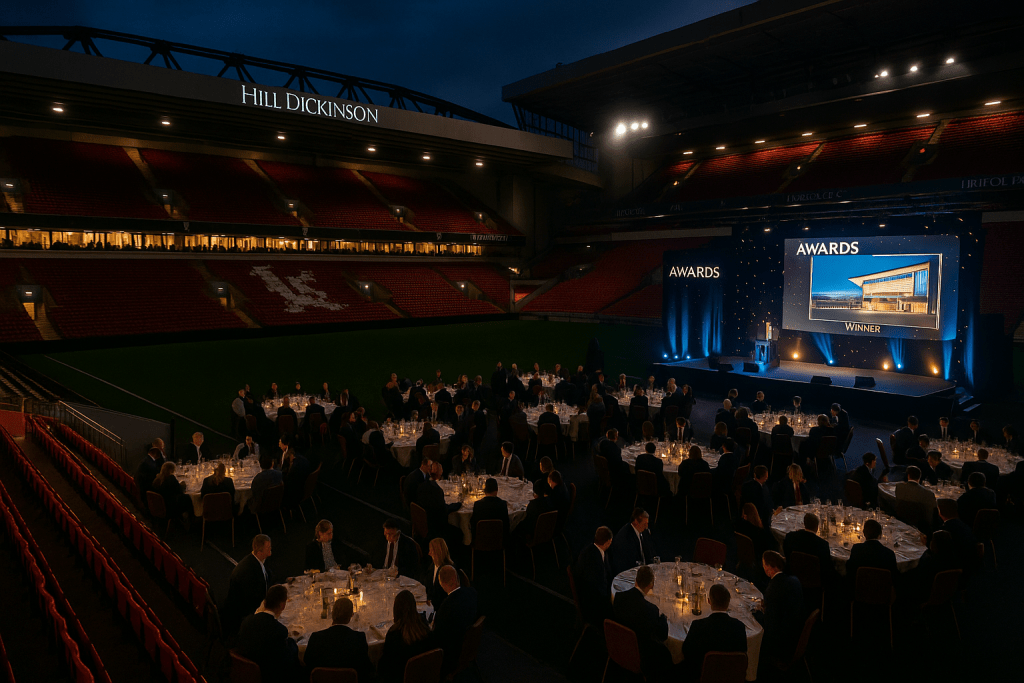
Specialist events and hospitality teams from stadiums across the UK came together to recognise operational and commercial excellence at the Stadium Events & Hospitality Awards 2026. Representatives from more than 70 football, rugby, cricket and athletics venues attended the 19th edition of the awards, which this year were sponsored by Global Payments and hosted at Hill Dickinson Stadium, the new home of Everton.
The annual gathering spotlighted the work of in-house and contracted teams responsible for non-matchday events, premium hospitality, conferences and banqueting, as stadium operators continue to diversify their revenue models and invest in guest experience.
Background and industry context
Stadiums have increasingly repositioned themselves as year-round event destinations, blending sports, entertainment and corporate functions. Beyond matchday operations, venues now compete in areas such as digital ticketing, hospitality technology, fan engagement platforms and hybrid event capabilities. This shift has placed greater emphasis on operational reliability, integrated technology systems and service standards across all types of events hosted in large-scale venues.
Within this landscape, the Stadium Events & Hospitality Awards have become a benchmark forum for recognising how stadium teams deliver complex event programmes while managing security, guest flows, data, and commercial performance. Categories typically span hospitality service, event sales, operational delivery and innovation, reflecting the broad skill set required to run modern stadium-based events.
Key developments from the 2026 ceremony
The 2026 awards brought together venue management, catering operators, event sales specialists and technology partners under one roof at Hill Dickinson Stadium. The choice of host venue highlighted the role of newly built or redeveloped stadiums as multi-purpose event hubs with integrated hospitality infrastructure.
While individual category winners were not detailed in the announcement, the event underscored several core themes:
- Recognition of non-matchday success: Teams were commended for performance “off the pitch”, emphasising the commercial and operational contribution of conferences, exhibitions, concerts, and corporate events hosted within stadium environments.
- Focus on hospitality and service quality: Front-of-house staff, event planners and catering teams were acknowledged for enhancing guest experience through service consistency and tailored offerings for different event formats.
- Operational resilience: Venues were recognised for delivering large-scale events safely and efficiently, coordinating logistics, security, access control and crowd movement within complex footprints.
- Partnership and sponsorship: Global Payments’ role as headline sponsor underlined the importance of payments infrastructure, integrated POS systems and transactional data in managing and optimising stadium-based events.
The 19th edition also reinforced the longevity of the awards programme itself, pointing to a maturing stadium events ecosystem where performance measurement and peer recognition are increasingly formalised.
Industry impact for stadiums and large venues
For the UK stadium sector, the 2026 ceremony served as both recognition and a barometer of how event and hospitality operations are evolving. Many venues are now using awards programmes and benchmarking initiatives to demonstrate value to rights holders, sponsors and local authorities, while supporting business cases for further investment in facilities and technology.
Operationally, the focus on non-matchday success reflects a broader trend: stadium operators are actively targeting conferences, exhibitions, product launches and corporate hospitality to smooth seasonal demand and unlock additional revenue per square metre. This has implications for technology deployment, from CRM and event management software to visitor analytics and mobile ordering tools.
For suppliers and technology providers, the awards environment offers insight into where stadiums are prioritising investment — particularly in areas such as payment systems, digital journey design, and integrated hospitality platforms that support both event organisers and end customers.
Why this matters for event professionals and technology providers
For event organisers, the recognition of stadium-based teams highlights the growing sophistication of these venues as partners for complex B2B and B2C events. Many stadiums now provide in-house event management expertise, AV and production support, and established security and access control frameworks that can be adapted for conferences and exhibitions.
From a technology standpoint, several implications emerge:
- Integrated guest journeys: As hospitality and event operations become more data-driven, there is rising demand for solutions that connect ticketing, registration, catering pre-orders, payments and post-event feedback into a single journey.
- Scalable infrastructure: Stadiums must support high-density connectivity during both sports fixtures and business events, creating opportunities for network, Wi-Fi analytics and digital signage providers.
- Flexible payment and POS systems: The presence of a payments sponsor at the awards underscores how critical frictionless transactions, contactless options and real-time revenue reporting have become for food and beverage operations during events.
- Hybrid and broadcast capabilities: Many stadiums now incorporate spaces designed for streaming, broadcast and hybrid formats, opening new possibilities for conference organisers seeking distinctive venues with built-in technical resilience.
For technology vendors, collaborating with stadium operators can provide access to high-volume, data-rich environments that test solution scalability across both sports and corporate event use cases.
Conclusion
The Stadium Events & Hospitality Awards 2026 demonstrated how far the UK stadium sector has progressed in positioning itself as an integral part of the wider events and hospitality landscape. By bringing together more than 70 venues and their teams, the event highlighted not only service excellence but also the operational and technological frameworks that underpin modern stadium-based events.
As stadiums continue to expand their role beyond traditional matchday operations, alignment between venue operators, event professionals and technology providers will become increasingly important. The ongoing recognition of “off the pitch” achievement suggests that the competitive edge for stadiums will hinge as much on data, digital systems and hospitality innovation as on the action taking place on the field.