Theater in der Josefstadt adopts Sennheiser Spectra for next-generation audio
Background and context
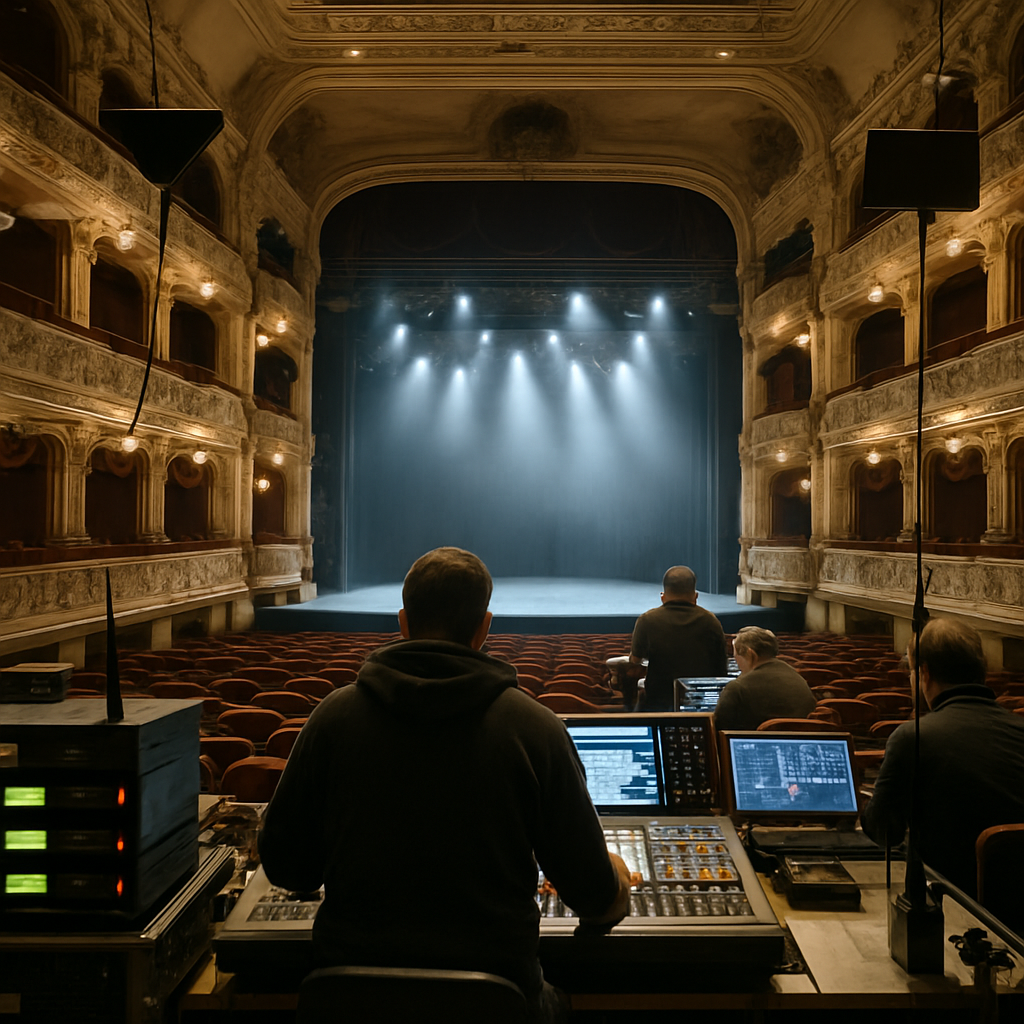
Theater in der Josefstadt, one of Vienna’s oldest and best-known spoken-word theatres, has modernised its audio infrastructure as part of an ongoing technical upgrade. The venue, which combines listed architecture with demanding contemporary productions, faces familiar challenges for historic houses: limited space for equipment, strict aesthetic requirements in the auditorium, and the need to support both artistic flexibility and accessibility.
In this context, the theatre has turned to a new RF distribution and management platform from audio manufacturer Sennheiser. The goal is to create a more future-proof backbone for wireless microphones and in-ear systems that can adapt to changing frequency regulations and production needs, while remaining as unobtrusive as possible to audiences.
Key announcement
The Theater in der Josefstadt has installed Sennheiser Spectra, the company’s RF over fibre and RF distribution solution, as the core of its new wireless infrastructure. Spectra is designed to route and distribute radio frequencies over fibre and coax networks within a venue, allowing antennas and RF zones to be placed more flexibly and managed centrally.
According to Sennheiser, the implementation at the Josefstadt includes a central Spectra unit feeding multiple antenna positions throughout the house. This enables coverage for wireless microphones across the main stage, rehearsal areas, and additional spaces without visible cabling or large antenna farms in the auditorium.
The system is integrated into the theatre’s existing audio workflow, linking to wireless receivers, in-ear monitoring, and assistive listening setups. By using RF over fibre, the theatre can run longer cable paths with less signal loss, which is particularly relevant in a multi-level heritage building where technical runs are often constrained.
Sennheiser highlights that the Spectra configuration in Vienna is prepared for evolving spectrum conditions and potential expansion. Additional RF zones or antenna positions can be added as required, without a complete redesign of the backbone. More information on the platform is available on Sennheiser’s official product pages at sennheiser.com.
Industry impact
For theatres and live venues, RF infrastructure has become increasingly complex as wireless demand grows and available spectrum tightens. Systems like Spectra aim to address this by treating RF distribution more like an IT or AV network, with centralised control and flexible routing.
The Josefstadt installation demonstrates how such an approach can be applied in a traditional theatre context. Instead of adding more standalone antenna and cabling solutions for each new production or technical requirement, the venue now operates from a shared RF backbone that supports different use cases.
- Improved coverage for wireless mics and in-ear systems across multiple zones
- Reduced visual impact of antennas in historically sensitive spaces
- Greater resilience against signal loss over long cable runs
- Scalability for additional RF applications, such as expanded assistive listening
While the technology itself is not unique to theatre, this deployment underlines a broader trend: performance venues are beginning to treat RF distribution as a long-term infrastructure investment rather than a show-by-show add-on.
Why this matters
For event technology professionals, the move by Theater in der Josefstadt illustrates how next-generation RF distribution can be integrated into demanding, architecturally protected venues without compromising audience experience or technical reliability.
As more productions rely on dense wireless setups – from body-worn microphones to in-ear monitoring and audience services – the underlying RF network becomes critical. A structured RF backbone such as Sennheiser Spectra provides a pathway to manage that complexity, particularly where physical access and cable routing are restricted.
The Vienna project also highlights the role of infrastructure upgrades in enabling accessibility. Stable, venue-wide RF coverage can support assistive listening systems and flexible seating options for audiences who rely on them, which is increasingly a requirement for publicly funded cultural institutions.
For other theatres and live event spaces, the Josefstadt deployment serves as a practical case study: a historic building adopting contemporary RF distribution to meet today’s production standards while preparing for future regulatory and technical changes.