Rise adds industry leaders to board to bolster diversity
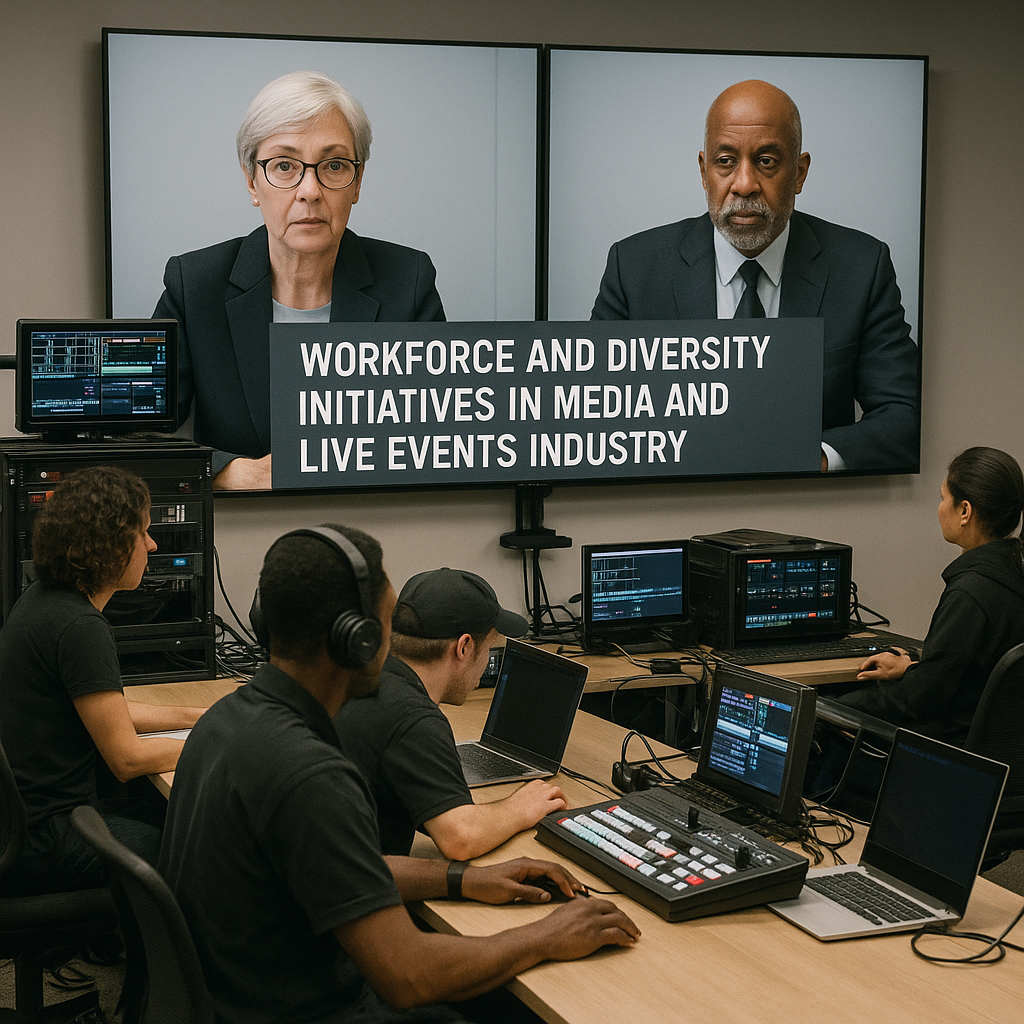
Rise, an advocacy organisation focused on improving gender diversity and career pathways in the broadcast and audiovisual (AV) sectors, has appointed two new non-executive directors to its board. Industry figures Purminder Gandhu and Daryl Clarke have joined the leadership team as the group steps up its international activity and support programmes.
The appointments are intended to broaden the organisation’s governance and strategic insight as it continues to work with technology vendors, broadcasters, AV firms and production companies on talent development and inclusion initiatives worldwide.
Background and industry context
Broadcast and AV businesses are undergoing rapid transformation, driven by IP-based workflows, cloud production, virtualised infrastructure and the integration of live, remote and hybrid event delivery. Despite this pace of change, gender representation in technical, operational and leadership roles remains a recognised challenge across the sector.
Industry bodies and advocacy groups have responded with mentoring schemes, training, networking events and targeted recruitment programmes aimed at making media and AV careers more accessible and sustainable for women and underrepresented groups. Rise is among the most visible of these initiatives, operating across multiple regions and collaborating with a range of technology and media companies.
As workflows for broadcast, streaming and live events increasingly converge, the organisation’s remit now touches adjacent markets, including live production, corporate AV and large-scale event environments. Strengthening its board is viewed as a step toward supporting this broader ecosystem.
Key developments and announcement
The organisation has confirmed that Purminder Gandhu and Daryl Clarke have been appointed as non-executive directors, joining an existing board that oversees strategy, governance and long-term planning.
Non-executive directors typically provide independent oversight and guidance on issues such as organisational focus, partnership development, financial sustainability and programme effectiveness. For an advocacy group operating across multiple regions and disciplines, board-level input from experienced practitioners can be critical in aligning initiatives with real-world industry needs.
Both new appointees bring extensive backgrounds in broadcast and AV, including experience with technology operations, content production and vendor collaboration. Their perspectives are expected to support the organisation’s work in:
- Expanding mentoring and leadership development programmes for women in technical and management roles.
- Strengthening ties with broadcast, production and AV technology suppliers.
- Advising on international growth as the organisation extends its reach beyond its original core markets.
- Ensuring that initiatives are closely aligned with current and emerging skills gaps across the sector.
The expanded board will also guide how the organisation responds to shifting workforce expectations, including flexible work patterns, hybrid production models and evolving skills requirements in software-driven media environments.
Industry impact
The addition of two established professionals to the organisation’s leadership reflects a broader trend: diversity and inclusion are now being treated as operational priorities rather than purely HR or communications issues. In broadcast, AV and live event production, talent shortages in engineering, operations and project management are already influencing the pace of innovation and delivery.
Advocacy groups that can bridge the gap between education, early-career support and ongoing professional development are increasingly seen as partners in workforce planning. Non-executive directors with direct experience of complex production workflows and technology deployments can help ensure that initiatives address real skills bottlenecks, such as IP networking, cloud-based production, remote operations and integrated AV systems for live and hybrid events.
For vendors, system integrators and production companies, engagement with such organisations offers a pathway to more diverse candidate pipelines, clearer support structures for existing staff and opportunities to align corporate social responsibility objectives with tangible industry outcomes.
Why this matters for event and technology professionals
For event organisers, production teams and technology providers operating at the intersection of broadcast and live events, gender balance is increasingly linked to business resilience and innovation capacity. As large-scale exhibitions, conferences and hybrid events incorporate more broadcast-grade capabilities—remote contribution, multi-platform streaming, sophisticated audio-visual staging—the need for skilled, diverse technical teams has intensified.
Key implications for event and technology stakeholders include:
- Stronger talent pipelines: Programmes run or supported by advocacy groups can feed skilled candidates into roles spanning live production, media servers, streaming infrastructure, control rooms and venue AV.
- Better alignment with client expectations: Brands commissioning high-profile events often scrutinise supplier diversity and sustainability practices. Active engagement with sector-wide initiatives can support procurement requirements and bid responses.
- Adaptation to hybrid workflows: As events blend on-site and remote participation, the technical profile of teams increasingly mirrors that of broadcast operations. Mentoring and training that targets women in these specialisms can help close gaps in planning, engineering and operations.
- Cross-sector collaboration: The broadcast, AV and events communities share many technologies and vendors. Shared diversity initiatives can create consistent standards and support structures across overlapping markets.
The appointment of Gandhu and Clarke provides the organisation with additional governance capacity to scale such initiatives, potentially resulting in more structured engagement opportunities for event technology providers and production partners.
Conclusion
By bringing Purminder Gandhu and Daryl Clarke onto its board, the diversity-focused organisation is reinforcing its leadership at a time when the broadcast and AV industries are reassessing how they attract, retain and develop talent. The move underlines a recognition that board-level expertise from active industry practitioners can sharpen the focus of mentoring, training and advocacy efforts.
For B2B technology companies, broadcasters, AV specialists and event producers, the development signals ongoing momentum behind structured, industry-wide approaches to gender diversity. As workflows converge and the boundaries between media production and live events continue to blur, initiatives led and guided by experienced non-executive directors are likely to play a growing role in shaping the future workforce across these interconnected sectors.