Conference Technology creates Shared Moment for Audience Engagement
Conference organisers are increasingly focused on transforming meetings from information-heavy programmes into shared experiences that delegates remember long after the closing session. Rather than relying solely on keynote presentations and slide decks, event teams are looking at staging, audiovisual production, and participatory formats to create moments that bring audiences together.
This shift reflects growing expectations from business event attendees, who want to feel involved in the experience as well as informed by it. Memorable conferences are now framed not just by what is said on stage, but by how audiences are invited to connect, react, and participate throughout the agenda.
Conference Moment and Delegate Memory
A conference can leave a lasting impression for many reasons, from a powerful opening session to an unscripted exchange between speakers. Increasingly, organisers are working deliberately to design these moments rather than leaving them to chance. They are considering how delegates enter a room, how content is framed visually and sonically, and how each segment of the programme might spark a continued conversation.
Memorable experiences often emerge when delegates feel part of a collective moment. That may involve a shared reveal, a coordinated interaction, or a structured opportunity for participants to respond in real time. By focusing on moments that the whole room experiences together, organisers aim to strengthen emotional connection to the content and to the event brand.
Role of Audiovisual Production and Stage Design
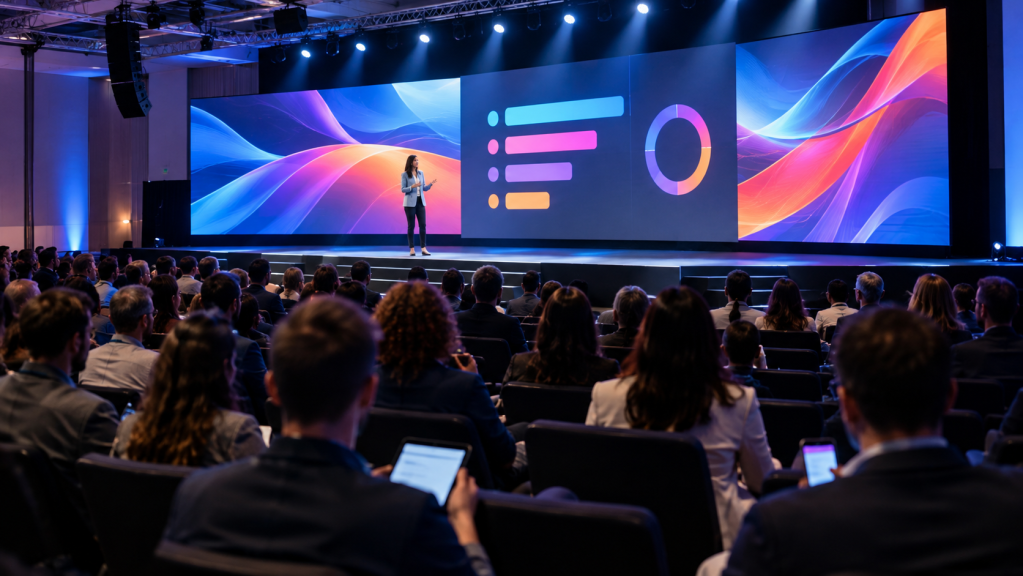
Technical production teams play a central role in supporting this more experiential approach to conferences. Staging, lighting, sound, and screen content can be combined to emphasise key transitions in the programme and guide audience attention. A well-timed lighting change or immersive audio cue can signal a shift in tone, helping to differentiate a standout moment from standard presentations.
Visual design on large-format displays is also used to frame messages more dramatically. Moving away from basic slide presentations, event producers are integrating richer media, motion graphics, and dynamic layouts that align closely with the narrative on stage. This can make content more engaging while giving speakers stronger visual support.
Stage layouts are being rethought to reduce distance between presenters and delegates. Alternative configurations, such as in-the-round seating or split stages, can alter how audiences perceive speakers and each other. These choices influence whether a room feels like a broadcast from a distant stage or a shared space where involvement is encouraged.
Interactive Format and Audience Participation
Beyond visual and audio impact, many organisers are incorporating interactive elements into conference agendas to involve delegates directly. Live polling, moderated Q&A, and digital feedback tools create structured ways for audiences to respond and shape the flow of a session. These mechanisms help move experiences away from one-way delivery toward two-way communication.
Session formats are evolving to accommodate this interactivity. Instead of a long uninterrupted keynote followed by a few questions, organisers are segmenting content into shorter chapters interlaced with audience input. This structure allows space for reflection, reaction, and clarification, making the experience feel more collaborative.
In some cases, small-group discussions or facilitated breakouts are integrated into the main programme. Delegates are encouraged to exchange views with peers, then bring key points back to the plenary environment. This interplay between intimate conversation and larger shared session can deepen engagement and make ideas more memorable.
Digital Tool and Hybrid Possibility
Digital platforms used alongside in-person production extend the range of ways delegates can participate. Event apps, second-screen tools, and web-based interfaces give attendees a channel to contribute questions, comments, and reactions without interrupting the flow of a talk. These inputs can be curated by moderators and surfaced at pivotal moments on stage.
Where events include remote participation, the same technologies offer online attendees opportunities to join shared conference moments. Poll results can merge in-person and virtual responses, and moderated Q&A can include questions from both physical and digital rooms. This helps create a more unified experience across formats, even when participants are not in the same location.
Digital elements also provide organisers with data on engagement levels, popular topics, and audience sentiment. While the primary aim is to enrich the live experience, these insights can inform future programme design and technical planning.
Content Structure and Emotional Arc
Designing a memorable conference experience involves more than selecting strong speakers. Organisers are looking at the sequence of sessions and the emotional arc across a day or multi-day programme. High-energy segments may be placed at key transition points, such as the opening, post-lunch return, or closing session, to anchor audience memory.
Technical cues can reinforce these peaks, with more intensive lighting, audio, or visual effects reserved for specific high-impact moments. In contrast, quieter sessions might employ more restrained production, giving delegates space to process information and engage in discussion.
This structured approach to pacing recognises that delegates are more likely to remember a handful of distinct, well-crafted experiences rather than a continuous stream of similar presentations. By aligning content planning with production strategy, organisers aim to shape how attendees recall the event.
Collaboration between Organiser and Production Team
Delivering these kinds of experiences typically requires close collaboration between event organisers and technical partners from the earliest planning stages. Instead of treating audio, lighting, and visual services as late-stage additions, some teams are bringing production experts into agenda design discussions.
This collaborative planning allows creative ideas to be tested against practical constraints such as venue layout, rigging capacity, and available equipment. It also helps technical crews understand the narrative and emotional objectives of each session, enabling them to propose cues and transitions that support those goals.
Onsite, clear communication between producers, show callers, and technicians is critical to ensuring that designed moments play out smoothly. Rehearsals, technical run-throughs, and contingency planning are used to protect key segments from disruption.
Delegate Connection beyond Programme Delivery
As expectations continue to evolve, conference strategies are increasingly focused on what delegates will remember and share after the event. Experiences that encourage participation and foster a sense of collective involvement are more likely to continue in conversations, internal meetings, and social channels.
For organisers, this emphasis on shared moments represents a move beyond simple content delivery toward more holistic experience design. Supported by staging, audiovisual production, and interactive tools, conferences are being shaped as environments where delegates do not just receive information, but take part in creating the event narrative themselves.