Event Tech Stack Platform connects Event Planning Lifecycle
Event Tech Stack is positioning its platform as a unified environment for managing the full lifecycle of business events, from attendee registration through on-site delivery and post-event reporting. Developed by event professionals, the system is designed to connect multiple operational components that are often handled in separate tools.
The platform aims to provide organisers with a single hub to coordinate registrations, meetings, programme content, sponsors, exhibitors, attendee communications, and venue-side logistics, reducing the need to move data between disconnected systems.
Platform Approach To Event Lifecycle Management
Events typically require organisers to work across several technologies for ticketing, agenda planning, exhibitor management, and on-site check-in. Event Tech Stack is presented as an attempt to consolidate these workflows within one framework, so that teams can plan and run events without switching between multiple systems.
The platform is built to support activity before, during, and after an event. Its stated scope covers registration and data capture at the outset, operational control on site, and reporting once the event has concluded.
Registration And Attendee Data Management
Registration sits at the core of Event Tech Stack, reflecting its role as the entry point for attendee data. The platform is designed to manage sign-ups for a range of event types, ensuring information gathered at registration can be reused throughout the rest of the system.
By keeping registration, attendee profiles, and participation details within the same environment, organisers can reference and update data without exporting and importing between unconnected tools. This is intended to support more consistent records across the wider event operation.
Meeting And Session Coordination
Event Tech Stack also addresses meeting and session scheduling, which can be a significant organisational task for conferences and business events. The platform is positioned to help structure meetings and programme elements alongside the attendee base collected at registration.
Bringing meetings into the same system as registration data allows organisers to tie participation, access, and scheduling together. This supports a joined-up view of who is attending which sessions and how that relates to their overall event journey.
Speaker, Sponsor, And Exhibitor Management
Speakers, sponsors, and exhibitors represent key stakeholder groups for many business events. Event Tech Stack includes functionality aimed at managing these parties as part of the same event environment.
For speakers, the platform focuses on their role within the programme and their connection to sessions and meetings. For sponsors and exhibitors, the system is designed to integrate their presence into the broader event structure, aligning their activities with attendee engagement and event communications.
By keeping speakers, sponsors, and exhibitors within one connected platform, organisers can coordinate contributions, visibility, and logistics without maintaining separate spreadsheets or systems for each group.
Attendee Communication And Engagement
Communication with attendees before and during an event is another area Event Tech Stack seeks to centralise. The platform links communication tools with the core registration and participation data, enabling messages to be targeted based on attendee status and involvement.
This connection between data and communication is intended to streamline the process of sending updates, reminders, and practical information, as well as supporting consistent messaging throughout the event lifecycle.
On-Site Operation And Delivery Support
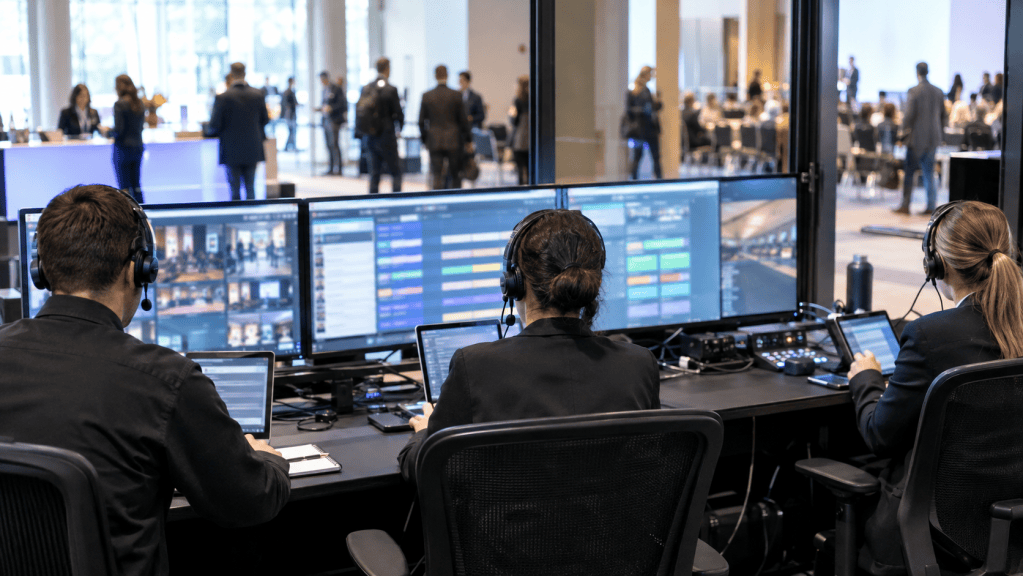
On-site operations are a critical phase for business events, when plans must translate into live delivery. Event Tech Stack positions itself as a tool to support this handover from planning to execution by carrying data and configurations directly into the on-site environment.
Because the same platform manages registration, schedules, and participant information, the on-site team can work from a unified dataset. This is designed to reduce manual preparation and help align access control, session entry, and other operational processes with the information gathered in advance.
Reporting And Post-Event Analysis
After an event has closed, organisers typically require data for evaluation and internal reporting. Event Tech Stack incorporates reporting capabilities that draw on the various activities captured within the platform.
With registration, meetings, content, sponsor and exhibitor details, and on-site operations recorded in one place, the system is set up to compile information without extensive reconciliation from multiple sources. This is intended to provide a clearer overview of event performance across stakeholders.
Design By Event Professionals For Practitioner Needs
The platform is described as being built by professionals with direct experience in organising events. That background informs its focus on practical workflows across planning, on-site delivery, and reporting, and its emphasis on linking previously fragmented processes.
This practitioner-led approach underpins the decision to connect registration, meetings, programme content, sponsor and exhibitor activity, and communications. The aim is to address common pain points identified in day-to-day event delivery, rather than approaching the challenge from a purely technical or generic software perspective.
Single Platform Strategy For Event Teams
Event Tech Stack is presented as a comprehensive event management option for organisers seeking to reduce the number of tools used across the event lifecycle. By offering a single environment for core functions, the platform targets efficiency gains and simplification in planning and delivery.
Its scope encompasses registration workflows, stakeholder management, attendee engagement, on-site coordination, and post-event reporting. For event organisers dealing with complex business events, the system is pitched as a means to bring together the many moving parts that contribute to the overall attendee and stakeholder experience.