Five Festive Event Trend shifts set to shape Christmas 2026
Corporate Christmas parties are set to look very different by 2026, as employers place greater emphasis on meaning, experience, and connection in their end-of-year celebrations. Event specialists from De Vere Grand Connaught Rooms and Uptown Events have identified five emerging festive event trends they expect to influence how businesses plan and deliver seasonal gatherings.
The developments range from heritage-themed glamour and elevated dining to immersive storytelling and more personalised formats, reflecting shifting expectations among corporate audiences and changes in workplace culture.
Heritage-Inspired Glamour returns to corporate Celebration
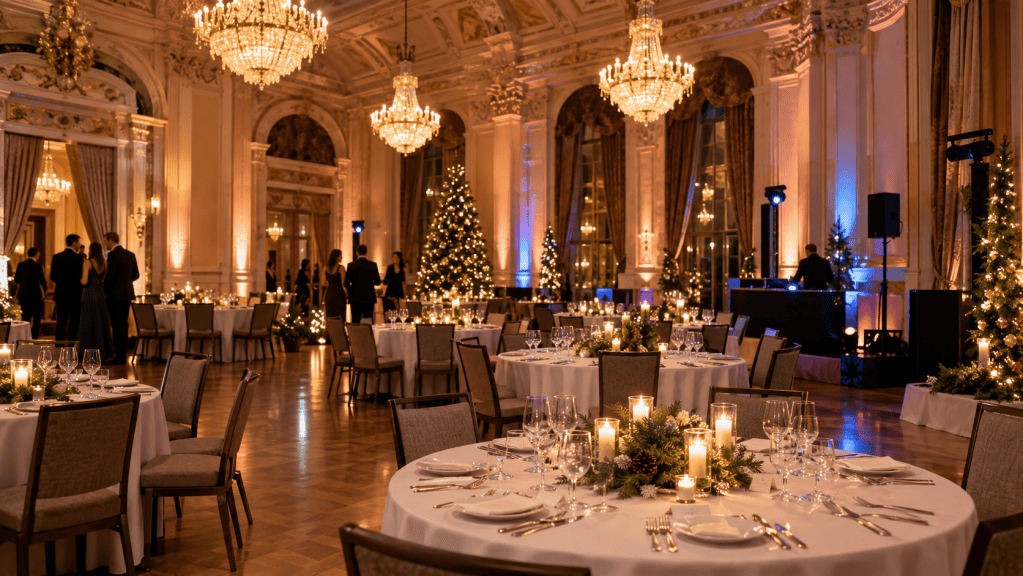
One of the most prominent trends is a renewed appetite for heritage-inspired glamour, with organisers looking to period architecture and classic interiors to frame Christmas events. Venues with original features, ornate ballrooms, and Victorian or Edwardian detailing are seeing increased interest from planners who want a sense of occasion that feels distinct from everyday corporate spaces.
At De Vere Grand Connaught Rooms, this is expressed through using the building’s historic character as a central part of the event design. Rather than covering permanent fixtures, planners are working with them, enhancing plasterwork, chandeliers, and grand staircases through lighting, seasonal florals, and styling that nods to past eras without feeling like a costume party.
This style of celebration typically favours black-tie or formal dress codes and focuses on creating a visually memorable backdrop for guest arrivals, photography, and hosted entertainment. The heritage setting becomes a primary draw for attendees and a storytelling device for internal communications around the event.
Immersive Storytelling shapes Guest Journey
Immersive storytelling is also moving to the forefront of corporate festive planning, with organisers seeking to structure the evening around a clear narrative. Rather than a single banquet or drinks reception, the experience is now more likely to unfold in stages as guests move through different spaces and encounters.
This can include choreographed entrances, themed wayfinding moments, and transitions that guide attendees from reception to dining and on to late-night activity. Lighting changes, soundscapes, and performance elements are increasingly used to signal each chapter in the evening and maintain momentum across several hours.
Providers such as Uptown Events are working with clients to ensure that theming and narrative elements remain coherent without overwhelming the main business objectives of the night, such as staff recognition or relationship-building. The expectation is that guests will remember specific scenes or sequences from the event, rather than a general impression of a single room and playlist.
Dining Experience becomes central Event feature
Food and beverage are moving from a functional consideration to a core creative pillar of the festive event. For 2026, planners anticipate greater focus on menu storytelling, ingredient origin, and presentation, particularly for seated dinners hosted in heritage settings.
Seasonal and locally influenced dishes are being used to reinforce the time of year and the location of the venue, while caterers experiment with courses that introduce talking points at the table. This can include interactive elements, sharable dishes, or plated presentations that reflect the wider event theme without relying on novelty.
At large corporate Christmas parties, the dining component is increasingly treated as an experience in its own right rather than a preamble to entertainment. Timings, service style, and room layout are considered alongside stage activity and technical production to ensure the meal contributes to the overall pacing of the evening.
Flexible Format supports diverse Workforce
Another trend shaping Christmas 2026 is the move towards more flexible formats that recognise differing needs within the workforce. Planners are looking beyond the single, late-night party model to incorporate staggered timings, alternative activities, or varied environments within the same event.
This might include quieter breakout areas for conversation, separate zones for high-energy entertainment, or the option for guests to join only part of the evening based on preference or commitments. For some organisations, festive celebrations are shifting from a single date to a series of smaller gatherings, enabling teams that rarely meet in person to choose a format that feels comfortable and inclusive.
Suppliers note that this flexibility requires closer coordination between venue operations, audiovisual teams, and event managers. Sound management, room flow, and clear communication become vital to ensure that different experiences can run concurrently without compromising production quality.
Meaningful Connection replaces one-size-fits-all Party
Underlying these trends is a broader move towards more meaningful corporate gatherings, in which the Christmas event is judged not only by spectacle but by the connections it supports. Employers are using festive occasions to reinforce culture, celebrate achievements, and bring dispersed teams together following sustained periods of hybrid and remote working.
This is prompting demand for formats that combine socialising with opportunities for teams to interact in smaller groups, such as hosted tables, facilitated activities, or curated seating plans. The aim is to avoid the anonymity that can accompany very large parties and ensure that attendees leave feeling they have taken part in a shared experience rather than simply attending a crowded function.
Venues and agencies involved in Christmas planning are responding with packages that build in these elements from the outset. Rather than relying solely on headline entertainment, they are paying attention to transitions, welcome points, and moments of recognition throughout the night.
Collaborative Planning supports evolving Expectation
Delivering these new-style festive events requires a more collaborative approach between venues, production partners, and corporate organisers. Venue teams are increasingly engaged early in the process to advise on how heritage spaces, technical infrastructure, and staffing models can support layered storytelling and flexible formats.
Agencies such as Uptown Events and in-house planners are working closely with catering, audiovisual, and operations colleagues to align expectations on what can be achieved within budget, capacity, and licensing constraints. This collaboration is particularly relevant where multiple spaces are used across the same evening, or where complex lighting and sound cues are needed to support the event narrative.
As businesses prepare for Christmas 2026, the emerging consensus from these specialists is that festive celebrations are no longer treated as purely entertainment-led add-ons. Instead, they are being designed as structured experiences that reflect organisational values, harness venue character, and meet a workforce that expects both quality and consideration from end-of-year events.