


Background and context
Successive arena and theatre tours are placing increasing pressure on RF coordination teams, who must manage dense wireless environments while keeping setups flexible from show to show. Bands that share crew, equipment, or overlapping itineraries often need RF systems that can be rapidly reconfigured without compromising reliability.
Within this context, the recent back-to-back touring cycles of Puscifer and A Perfect Circle offered a practical test case for scalable RF management. Both acts, which draw similarly sized crowds and operate with complex wireless audio and in-ear systems, required a robust solution that could handle changing venues, frequency restrictions, and equipment inventories across multiple countries.
Sennheiser, long active in the professional live sound and wireless markets, has been working to address these challenges with software tools aimed at simplifying the planning and operation of RF systems. Its latest platform, Spectera, was brought into the touring environment to coordinate wireless resources for both bands.
Key announcement
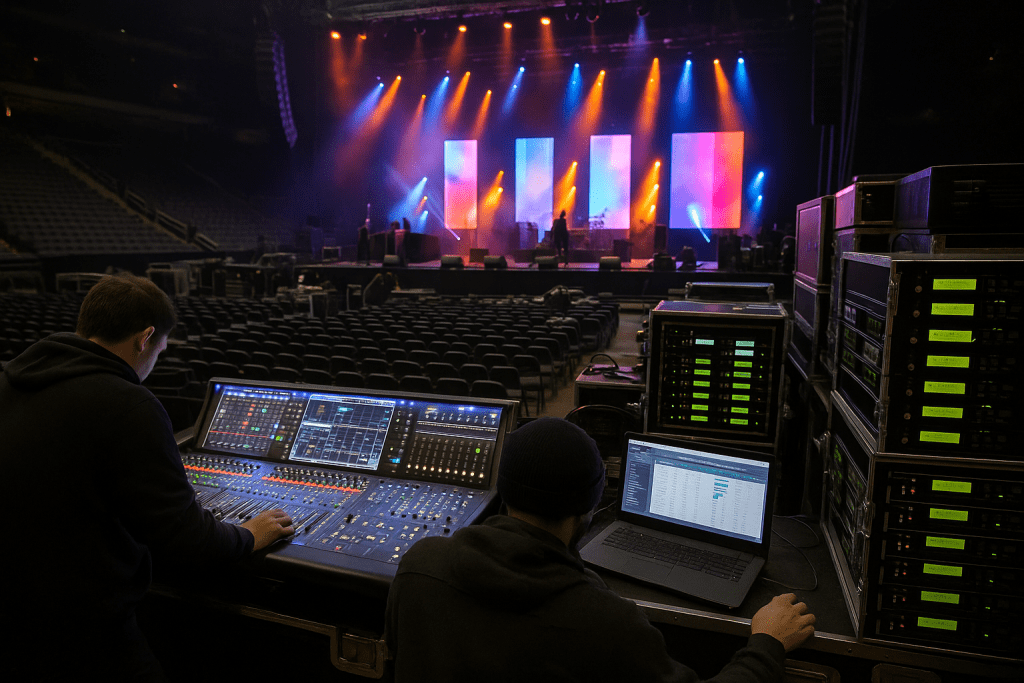
Sennheiser reports that its Spectera RF management platform was deployed across consecutive tours for Puscifer and A Perfect Circle to centralize frequency coordination and system monitoring. The software was used by the touring RF and audio teams to design, adapt, and manage wireless setups in real time as the production moved between venues and regions.
According to the manufacturer, Spectera allowed engineers to pre-plan RF layouts for each show, then adjust them on site to reflect local spectrum conditions, regulatory constraints, and additional wireless devices introduced by support acts or visiting productions. The platform was used to track in-ear monitoring channels, wireless microphones, and other RF links within a single interface.
The two tours reportedly shared workflows and configuration data, enabling crews to reuse RF planning templates and quickly transfer system designs between different legs of the production. This approach was intended to reduce setup time, minimize interference risks, and maintain consistent audio performance despite varying technical conditions.
Further technical details and product information about Spectera are available on Sennheiser’s official website.
Industry impact
Touring productions are operating in increasingly crowded RF environments, particularly in urban arenas, festival sites, and multi-use venues where several wireless systems may be active simultaneously. As spectrum availability continues to tighten in many regions, production teams are turning to software-based coordination tools to avoid dropouts and interference.
Spectera’s deployment on two consecutive tours underscores a broader industry move toward centralised RF planning platforms that can span multiple shows and lineups. By handling frequency allocation, documentation, and monitoring within one environment, these tools aim to reduce the workload on RF engineers and make it easier to scale productions up or down.
- More consistent RF performance across multi-city tours
- Reusable RF templates and show files for different acts
- Greater transparency around spectrum use for all stakeholders
For touring personnel, this can mean more predictable setup and soundcheck times, even when schedules are tight or technical conditions change at short notice.
Why this matters
For event and touring professionals, the use of an RF management platform across both Puscifer and A Perfect Circle tours highlights how software is becoming central to live production workflows. As more shows rely heavily on wireless microphones, in-ear monitoring, and control links, RF planning is no longer a task that can be handled informally on site.
The case also illustrates how shared tools and data can support multiple acts on related tours, particularly when crews, hardware, or venues overlap. Being able to carry forward RF strategies from one production to another may help reduce technical risk and improve operational efficiency.
While every tour has unique requirements, the reported use of Spectera suggests that scalable RF coordination platforms are likely to play a growing role in concert and event production, especially where spectrum conditions are unpredictable and show demands are high.