


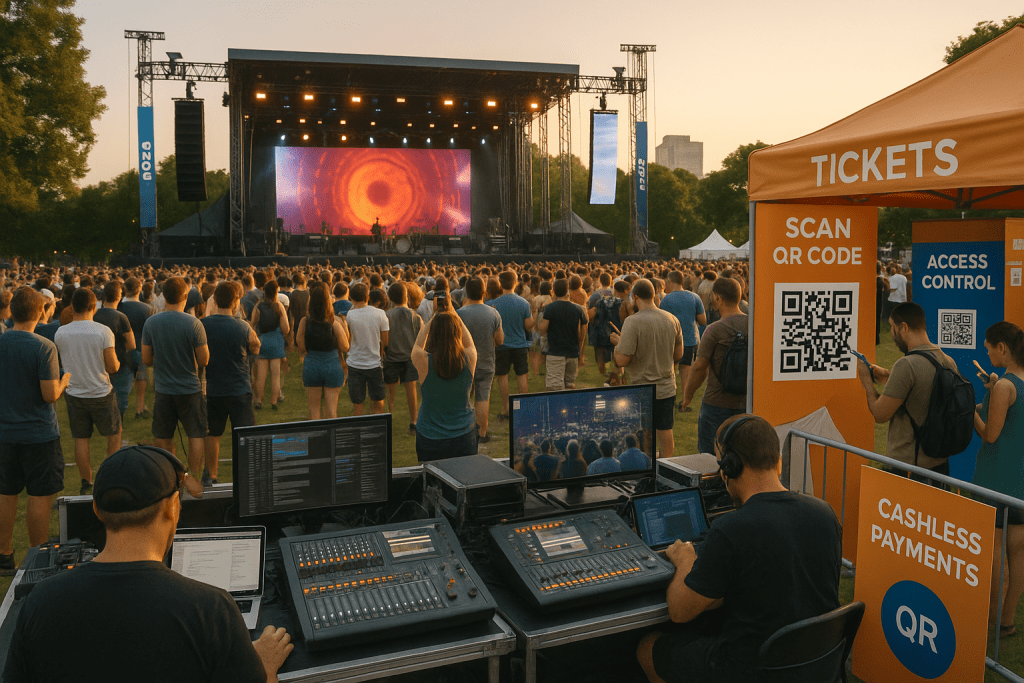
Summer 2026 is set to accelerate the return of large-scale in-person gatherings, with outdoor events once again taking centre stage in the live experience calendar. As organisers look ahead to a season of festivals, brand activations, sporting occasions and corporate experiences, attention is turning to the venues, suppliers and technologies that can support increasingly complex audience expectations.
The latest summer planning resources arriving in the market are placing particular emphasis on how the sector is blending physical environments with digital tools to manage crowds, enhance engagement and improve operational resilience.
Background: a pivotal season for live and hybrid events
Summer has traditionally been the busiest period for live events, but the current cycle carries added significance. After several years of disruption and rapid adoption of virtual formats, organisers are now rebalancing their portfolios, putting renewed investment into on-site experiences while retaining some of the hybrid capabilities developed in recent cycles.
Outdoor settings remain attractive for large audiences, both from an experiential perspective and for their flexibility in staging complex productions. Festival grounds, city centre public spaces, stadiums and temporary structures are all in demand as brands and rights holders seek to create memorable, shareable moments with attendees.
At the same time, expectations around production quality, connectivity, sustainability and data capture have risen. This is prompting a closer look at how suppliers and venues can combine infrastructure, digital platforms and specialist services to deliver reliable, measurable outcomes for organisers and sponsors.
Key developments shaping the 2026 summer season
The curated summer 2026 event guides emerging in the market are highlighting a number of recurring themes across venues, suppliers and solution providers:
- Outdoor-ready infrastructure: Venues and temporary site providers are detailing improvements in power distribution, connectivity, rigging and weather-resilient structures to support complex stage designs, LED installations and broadcast-quality audio-visual setups.
- On-site digital services: Technology partners are focusing on mobile ticketing, access control, RFID and NFC-enabled systems for cashless payments and accreditation, as well as apps that provide real-time programme updates, site maps and safety information.
- Audience engagement platforms: Engagement tools originally developed for virtual and hybrid events are being adapted to outdoor settings, enabling live polls, gamification, digital scavenger hunts and sponsor activations delivered via attendees’ own devices.
- Data and analytics capabilities: Organisers are being offered solutions to track attendee flow around a site, measure dwell times at activations, monitor capacity in key areas and gather feedback, helping to shape programming, staffing and commercial decisions.
- Operational resilience and safety: Suppliers are putting additional emphasis on incident communication tools, weather monitoring integrations and crowd management technologies that support compliance with local regulations and best practice guidelines.
Across these areas, service providers are positioning themselves not just as technical vendors but as strategic partners, helping organisers plan and deliver events across festivals, sporting fixtures, brand roadshows and corporate hospitality programmes.
Industry impact: convergence of live, digital and experiential
The concentration of solutions being showcased ahead of summer 2026 underlines how far the live events ecosystem has moved toward integrated, data-driven operations. Outdoor experiences no longer stand apart from the rest of an organisation’s event and marketing portfolio; they are expected to feed into wider customer journeys and performance metrics.
This is driving several notable shifts:
- More connected event stacks: Outdoor event tools are being integrated with CRM systems, marketing automation platforms and audience databases, enabling sponsors and organisers to track engagement before, during and after the physical event.
- Higher production expectations: As audiences grow accustomed to broadcast-quality streaming and interactive content, they expect similar standards on-site, from large-format screens to synchronised light and audio shows, all of which depend on robust technical planning.
- Evolving commercial models: Data generated from outdoor events is informing sponsorship packages, pricing strategies and brand partnerships, with measurable engagement increasingly required to secure long-term investment.
- Sustainability considerations: Venues and suppliers are foregrounding energy-efficient power solutions, waste management and transport planning as organisers look to align summer programmes with environmental targets and stakeholder expectations.
For many in the sector, summer 2026 is being treated as a proving ground for how well these converging trends can be managed at scale in outdoor environments.
Why this matters for event professionals and technology providers
For organisers, the heightened focus on summer offers both opportunity and pressure. Outdoor events provide scope for creative staging, large audiences and high-impact brand experiences, but they also expose any weaknesses in site infrastructure, connectivity or operational planning.
Having access to up-to-date guides to venues, suppliers and technologies can support more informed procurement and risk management decisions. Event professionals can benchmark options for crowd management, audience engagement, connectivity and on-site services, and identify partners with experience delivering at the required scale.
Technology providers, meanwhile, have a clear window in which to demonstrate how their solutions perform in demanding real-world conditions. Outdoor events typically involve variable weather, large and often transient audiences, and complex logistics. Systems that can operate reliably in these contexts will be well placed to secure repeat business across the wider events calendar.
The season also encourages closer collaboration between traditionally separate categories of supplier. AV companies, staging providers, connectivity partners, ticketing platforms, engagement tools and data specialists all need to work together to deliver coherent experiences. This environment can accelerate innovation as cross-functional teams address shared challenges such as crowd flow, safety and monetisation.
Conclusion
As the live events sector looks toward summer 2026, outdoor gatherings are emerging as a focal point for experimentation and investment. New and updated planning resources are spotlighting the venues, suppliers and technology platforms that can support festivals, sporting events, brand activations and corporate programmes during the busiest period of the year.
For event professionals, the coming season represents a chance to reassert the value of in-person experiences while applying the digital capabilities developed over recent years. For technology providers and infrastructure partners, it is an opportunity to demonstrate how robust, integrated solutions can underpin safe, engaging and measurable summer events at scale.
How effectively the sector leverages these tools and partnerships over the coming months is likely to influence event strategies well beyond 2026, shaping expectations around outdoor experiences and the role of technology in delivering them.