


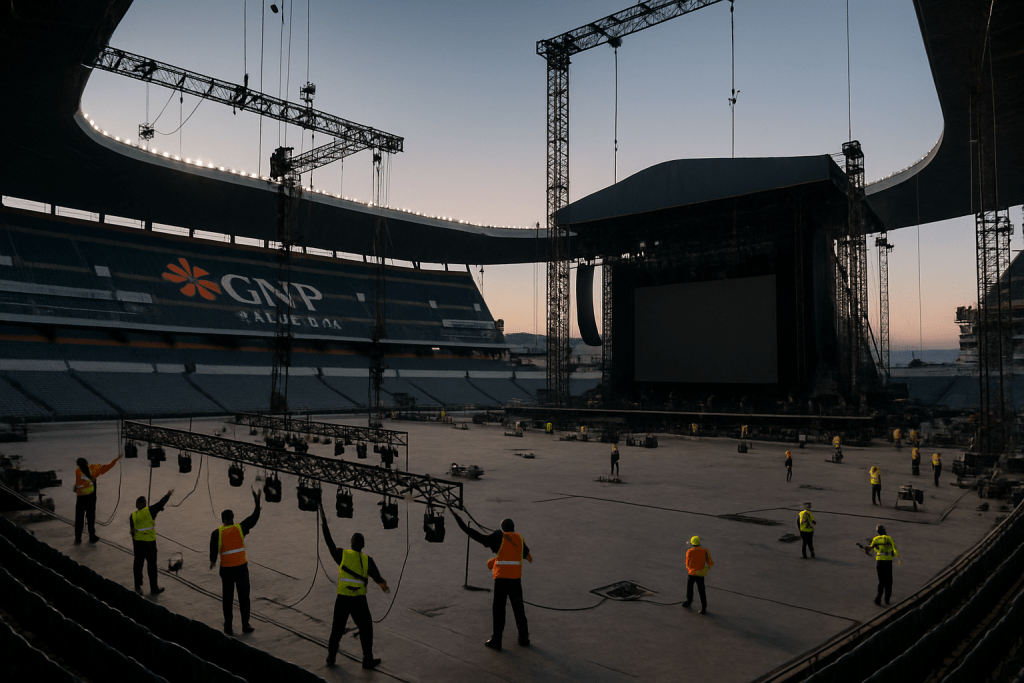
OCESA has introduced a new premium residency stage at GNP Seguros Stadium in Mexico City, positioning the venue as one of the most technically advanced large-scale concert destinations in Latin America. The project, delivered by long-term technical partner NoNonsense Group, is designed to support extended artist residencies and high-production touring shows.
The stage is described as one of the most capable concert platforms of its kind globally, bringing together structural engineering, integrated production facilities and repeatable deployment processes aimed at reducing build time, technical risk and cost for promoters and touring productions.
Background and industry context
Residency formats, once primarily associated with casino and theatre venues, have increasingly moved into sports arenas and stadiums as artists seek to maximise production value while limiting the logistical burden of traditional tours. This shift has driven demand for semi-permanent stages and infrastructure that can remain in place for multiple dates, or be rapidly re-used, without compromising on creative ambition.
GNP Seguros Stadium, one of Mexico City’s flagship venues, hosts major international tours and large-scale entertainment events. For promoters, the ability to offer artists a technically consistent, residency-ready stage can be a differentiator in a competitive market, improving show capacity, production quality and operational predictability across multiple dates.
NoNonsense Group and OCESA have worked together for nearly 15 years on concert staging and production projects, building a relationship that spans multiple tours and venue deployments. The new residency stage extends that collaboration, moving from tour-by-tour staging solutions toward a more permanent, venue-specific infrastructure model.
Key developments in the new stage project
The project encompasses the full design, engineering and delivery of a premium residency stage system tailored to the physical and operational requirements of GNP Seguros Stadium. While detailed specifications have not been publicly listed, the installation focuses on several core objectives:
- Enhanced technical capacity: The stage is engineered to support the weight and complexity of modern concert productions, including large video configurations, extensive lighting rigs and substantial audio systems, providing headroom for the most demanding show designs.
- Residency-ready design: Structural and logistical elements are configured to accommodate multiple back-to-back performances, enabling long-run engagements and reducing the need for full dismantle and rebuild between dates.
- Repeatable deployment: The system is designed with modularity and repeatability in mind, allowing production teams to work with consistent layouts, rigging points and access routes from show to show.
- Integrated engineering: The stage solution incorporates both structural engineering and production workflows, aiming to streamline load-in, set-up and load-out, and to integrate effectively with existing stadium infrastructure.
The stage is intended to serve as a flagship platform for OCESA’s major concerts and residencies, offering technical capability on par with leading global venues while aligning with the specific climate, access and regulatory conditions of Mexico City.
Industry impact and competitive positioning
For Mexico’s live entertainment sector, the introduction of a high-spec residency stage at a major stadium represents a strategic investment in long-term infrastructure rather than one-off show builds. This can influence how international artists and production managers view the market, potentially making extended runs in Mexico City more attractive from both creative and operational perspectives.
From a production standpoint, having a pre-engineered, residency-ready stage reduces the need to transport and construct entirely bespoke structures for each engagement. This can lower freight volumes, shorten installation schedules and reduce exposure to last-minute engineering changes, all of which are growing concerns in an environment of increased cost scrutiny and logistical complexity.
The move also aligns with broader trends in the global concert business, where promoters, venues and technical partners are investing in semi-permanent infrastructure to support stadium-level residencies, festival-style series and recurring large events. As artists pursue more ambitious production designs, the availability of a technically capable, proven stage system can factor into routing decisions.
Why this matters for event professionals and technology providers
For event organisers, promoters and production managers, the GNP Seguros Stadium project underscores several operational and strategic considerations:
- Infrastructure as a differentiator: Venues that can offer a pre-approved, high-capacity stage can shorten planning cycles, minimise technical uncertainty and provide clearer cost and risk profiles to touring stakeholders.
- Consistency across multiple dates: Residencies benefit from consistent rigging, sightlines and backstage logistics. A dedicated residency stage supports repeatable operations, helping technical teams refine and optimise workflows over the run.
- Efficiency and resource planning: Reduced build and strike times free up crew capacity, limit overtime requirements and decrease the duration of stadium closures. This has implications for scheduling, staffing and budget allocation.
- Collaboration with technology partners: The project illustrates how long-term relationships between venue operators, promoters and engineering firms can evolve from transactional engagements into co-developed infrastructure solutions.
For staging manufacturers, rigging companies and systems integrators, the project highlights a potential growth area in designing venue-specific, residency-capable platforms rather than purely touring solutions. As more stadiums and arenas look to host residencies and repeat events, technical providers may see increasing demand for permanent or semi-permanent installations that can be adapted to each show without starting from scratch.
Conclusion
The new residency stage at GNP Seguros Stadium marks a notable step in the evolution of concert infrastructure in Mexico City, giving OCESA a high-capacity, technically advanced platform for large-scale productions and extended artist runs. By combining structural engineering with long-term operational planning, the project reflects how major venues and their partners are rethinking staging as a strategic asset rather than a temporary fixture.
As residency formats continue to expand beyond traditional entertainment hubs, similar investments in dedicated stages and integrated production environments are likely to shape how large venues compete for artists, audiences and premium live experiences in the years ahead.