


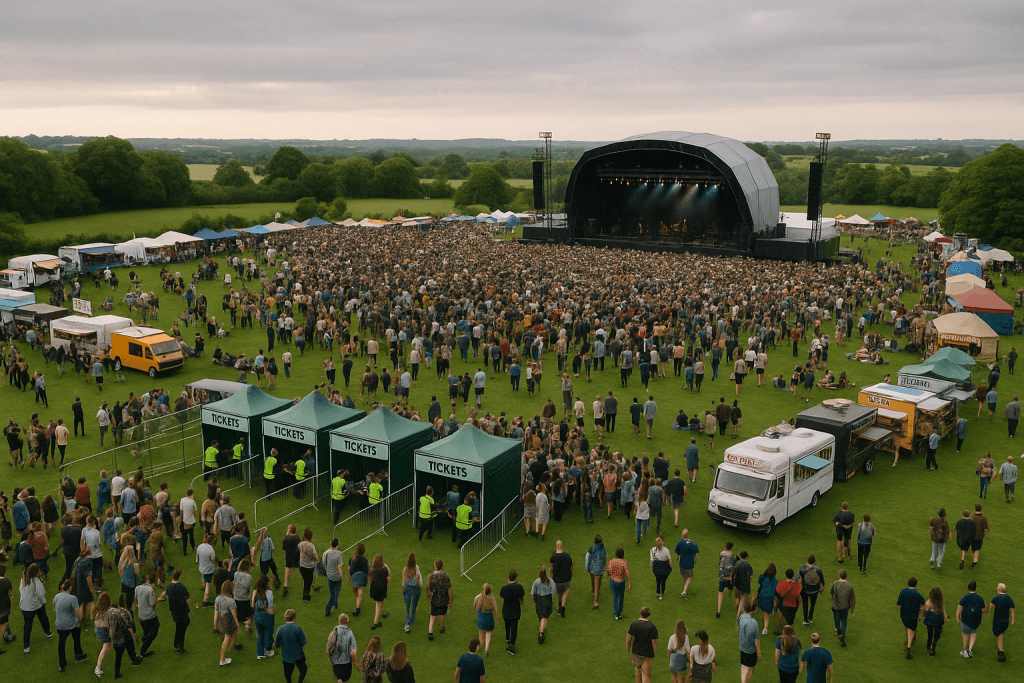
As the UK festival market recalibrates after several turbulent seasons, long‑standing ticketing and discovery platform Skiddle is using its 25th anniversary to highlight how audience behaviour, technology adoption and operational models are likely to shift by 2026. Drawing on two and a half decades of festival data and close collaboration with organisers, the company is outlining the main forces that will shape programming, ticketing and on‑site experiences in the coming years.
Skiddle, which has a strong concentration of clients in the UK festival and live music sector, has tracked the evolution of events from grassroots gatherings to large‑scale, multi‑day productions. Its latest analysis points to a festival ecosystem that is becoming more data‑driven, more fragmented in terms of audience demographics, and increasingly reliant on digital tools to manage uncertainty in both consumer confidence and operational costs.
Background: a maturing but pressured festival market
The UK festival scene has expanded significantly over the past 25 years, shifting from a calendar dominated by a handful of major events to a dense landscape of niche and regional festivals. This growth has been accompanied by rising expectations from attendees around production values, safety, accessibility and digital touchpoints before, during and after events.
At the same time, organisers are contending with higher infrastructure and staffing costs, volatile weather patterns, changing licensing pressures and a consumer base that is more cautious about upfront spending. Against this backdrop, data from ticketing platforms, marketing tools and onsite systems has become central to how festivals plan capacity, forecast demand and design experiences tailored to increasingly segmented audiences.
Skiddle’s vantage point, sitting between organisers and attendees, has given it visibility into booking patterns, geographic trends and the performance of different festival formats. Its review of festival trends leading up to 2026 suggests a consolidation phase where operators prioritise sustainable growth, repeat attendance and community building rather than rapid expansion.
Key developments shaping UK festivals by 2026
Skiddle’s trend analysis points to a cluster of developments that will influence how festivals are conceived, marketed and executed over the next two years:
- Earlier but more cautious purchasing: While some fans are returning to buying early‑bird tickets for trusted brands, a significant portion is delaying purchases until line‑ups, travel and economic conditions feel more certain. Flexible ticketing, payment plans and clear refund or resale mechanisms are becoming critical to de‑risk attendance decisions.
- Growth of niche and community‑focused festivals: Festivals aligned to specific genres, subcultures or interests continue to gain ground. Organisers who build year‑round communities via social channels, mailing lists and local partnerships are seeing more resilient sales than one‑off, headline‑led events.
- Greater emphasis on data‑led programming: Historical sales, repeat attendance patterns and regional listening habits are increasingly being used to inform line‑up curation and scheduling. Organisers are looking to granular insights from platforms like Skiddle to match artist bookings to demonstrable audience demand.
- Hybrid discovery and marketing: While on‑platform search and recommendation tools remain important, festivals are relying on a broader mix of digital channels, from social video to creator partnerships, to cut through to potential attendees. Integration between marketing activity and ticketing data is becoming a priority.
- Operational resilience and scenario planning: After recent seasons marked by cancellations and short‑notice changes, organisers are focusing on robust contingency planning. Ticketing systems that support rapid communication, slot changes and capacity adjustments are increasingly seen as core infrastructure.
Industry impact: tools, services and expectations
In response to these pressures and patterns, Skiddle has been refining tools intended to support more predictable growth for festivals, particularly within the independent and mid‑sized segment of the market. This includes analytics dashboards that give organisers clearer visibility of sales curves, geographic reach and audience demographics, enabling more informed decisions about marketing spend and capacity.
The platform’s work with organisers has also led to the development of features aimed at smoothing demand and building loyalty, such as structured pre‑sales, waiting lists and mechanisms to encourage repeat visits from previous attendees. These capabilities are designed to help festivals weather fluctuations in one‑off demand and maintain a more stable core audience over multiple seasons.
On the attendee side, Skiddle reports that audiences increasingly expect festival information, tickets and updates to be accessible in a streamlined way, whether through a mobile app, mobile‑optimised site or integrated wallet. This is influencing how organisers think about front‑end user experience and how ticketing data flows into on‑site operations such as access control and cashless systems.
For the wider event technology ecosystem, the company’s trends outlook underscores the need for interoperability between ticketing platforms, marketing tools, access control providers and on‑site services. As festivals become more dependent on real‑time data for crowd management and safety decisions, consistent data standards and reliable integrations are likely to become a differentiator.
Why this matters for event professionals and technology providers
For festival organisers, particularly those operating in competitive or saturated segments, the emerging trends highlight the value of long‑term planning anchored in data rather than short‑term sales spikes. Understanding when and how different audience segments buy, which channels drive the most engaged attendees, and how pricing structures influence conversion can directly affect financial resilience in a challenging market.
Event technology providers can read Skiddle’s insights as confirmation that ticketing and discovery platforms are no longer standalone services but core components in a broader operational technology stack. Solutions that can share data with other systems, support flexible inventory management and adapt quickly to changing event parameters will be better aligned with festival needs through 2026.
The emphasis on community building and repeat attendance also elevates the importance of CRM capabilities and retention‑focused features. Tools that help organisers maintain contact with audiences year‑round, personalise communication and track engagement over multiple editions may prove as important as front‑end ticket sales performance.
Finally, as attendee expectations continue to rise, there is an opportunity for vendors to support accessibility, inclusivity and environmental initiatives with clearer reporting and audience insight. Knowing who festivals are reaching, how they travel and which services they use on site can inform more targeted improvements and partnerships.
Conclusion
As Skiddle marks 25 years in the live events industry, its perspective on festival trends to 2026 reflects a sector seeking sustainable models rather than rapid expansion. Audience behaviour remains fluid, but patterns are emerging that favour festivals with strong community ties, robust data practices and flexible technology infrastructures.
For event professionals, the message is that reliable insight into customers, supported by interoperable digital tools, will be central to planning and delivering festivals in the next phase of market development. For technology providers, the opportunity lies in building solutions that address real operational challenges, integrate cleanly with existing stacks and help organisers navigate a period of ongoing uncertainty with greater confidence.