


Introduction
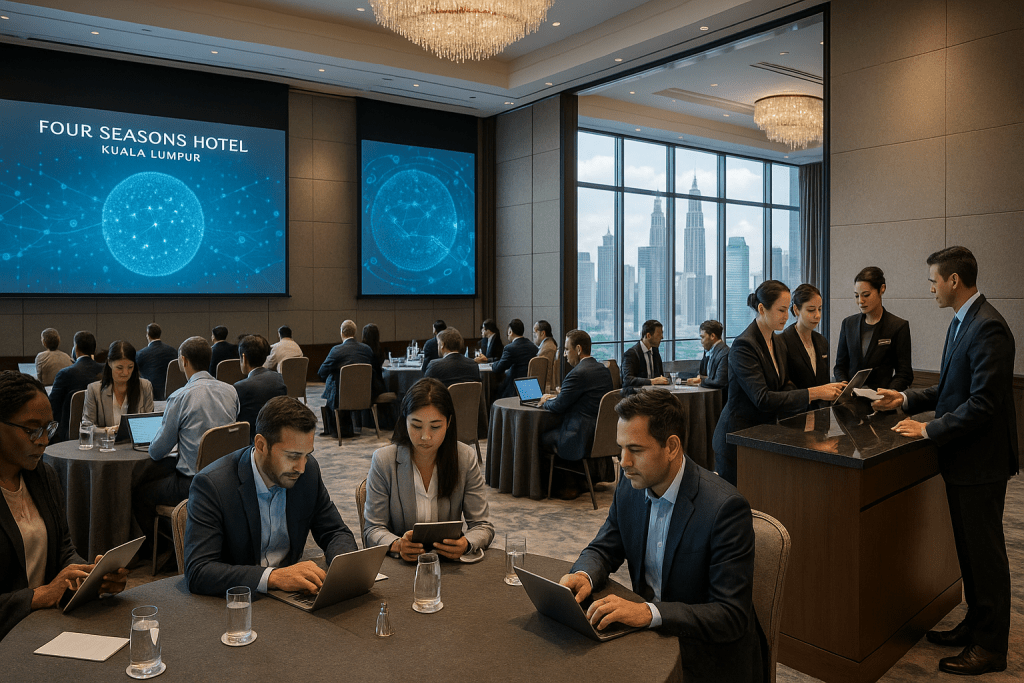
Four Seasons Hotel Kuala Lumpur has introduced a bundle of artificial intelligence (AI) capabilities designed to support meetings, incentives, conferences, exhibitions and social events hosted at the property. The move positions the luxury hotel as an early adopter of AI-driven services in Malaysia’s high-end hospitality and events market, with a focus on planning efficiency, personalised experiences and on-site support for both business and social gatherings.
Background or industry context
Event technology deployment within hotels has expanded rapidly in recent years, progressing from basic audiovisual support and Wi-Fi to integrated event platforms, virtual participation tools and data analytics. As corporate planners and organisers of social functions increasingly expect consumer-grade digital experiences, hotels are exploring how AI can streamline pre-event workflows and enhance guest interaction.
In Asia-Pacific, major urban centres such as Kuala Lumpur are competing to attract international meetings and incentive groups. Properties that can deliver technology-enabled experiences, without compromising on service standards, are using digital capabilities as a differentiator. AI is emerging as a key layer in this technology stack, supporting everything from content generation and language assistance to real-time attendee services.
Against this backdrop, Four Seasons Hotel Kuala Lumpur is using its city-centre location and existing reputation in the luxury segment to introduce AI-enabled functions that complement traditional high-touch hospitality. Rather than replacing human-driven service, the tools are intended to augment planning, communication and personalisation for organisers and guests.
Key developments or announcement
The hotel has rolled out an AI-enhanced offering that touches several stages of the event lifecycle: planning and proposal, on-site execution and post-event refinement. While specific technology vendors and platforms have not been disclosed, the initiative is anchored around three broad areas:
- AI-assisted planning and concepts: Event planners working with the property can access AI-supported tools to help generate initial event concepts, agendas and thematic ideas based on objectives, group size and budget. The system can rapidly suggest formats, room layouts and potential timelines, which can then be refined with the hotel’s meetings and events team.
- Enhanced guest and organiser communication: AI-driven support is being deployed to streamline communication before and during events. This includes tools that can assist with drafting event communications, FAQs and programme descriptions, as well as multilingual support to respond to common attendee enquiries about schedules, venue facilities and logistics.
- AI for weddings and social functions: For weddings and social events, the hotel is integrating AI features into the planning process, helping couples and planners explore décor concepts, menu ideas and running orders. The tools can help visualise different options, align them with cultural preferences and adjust quickly to changes, while the hotel’s specialists handle execution and customisation.
These capabilities sit alongside the property’s existing meetings and events infrastructure, which includes flexible event spaces, hybrid-ready meeting rooms, and access to professional audiovisual support. The AI layer is intended to accelerate decision-making and reduce the manual administrative workload for planners and in-house teams.
Industry impact
The introduction of AI-enhanced services at Four Seasons Hotel Kuala Lumpur reflects a broader trend among urban luxury hotels and convention-focused properties: the shift from passive venues to actively technology-enabled event partners. As AI tools move from experimental pilots to practical, guest-facing applications, hotels are beginning to compete not only on physical space and service, but also on digital experience design.
For the Malaysian market, this initiative signals that AI is moving into mainstream event delivery. As international and regional groups return to in-person and hybrid formats, expectations for more efficient planning and responsive on-site support are increasing. Venues that can combine AI with strong human service may gain an advantage in winning high-value corporate meetings, incentive trips and destination weddings.
More broadly, the move underscores how AI could reshape collaboration between venues, planners and technology providers. Rather than leaving all digital innovation to third-party platforms, hotels are starting to embed AI features into their own services, which could influence how RFPs are scoped, how data is shared and how event success is measured.
Why this matters for event professionals and technology providers
For event professionals, the rollout at Four Seasons Hotel Kuala Lumpur illustrates how AI is becoming part of the core toolkit for venue-based events:
- Faster proposal and design cycles: Planners can use AI-assisted tools at the venue level to experiment with formats, content flows and layouts before committing to final designs. This can shorten lead times and support more iterative collaboration with clients.
- Operational efficiency: Automating repetitive planning tasks, such as drafting communications or generating baseline schedules, allows planners and hotel teams to concentrate on strategy, stakeholder management and experience design.
- Improved personalisation: AI can help tailor event experiences by quickly mapping preferences and constraints to venue options, from seating configurations to F&B concepts, particularly important for high-touch events like weddings.
- Multilingual and hybrid support: For international groups, AI-enabled language assistance and information delivery can support diverse audiences and complement existing hybrid meeting technologies.
For technology providers, the initiative highlights a growing integration opportunity. As hotels adopt AI tools, there is potential to connect venue systems with external event platforms, registration tools and data analytics solutions. Vendors developing AI-driven planning assistants, content tools or guest-facing chat interfaces may find new partnership models with hotels looking to enhance their event offerings without building every capability in-house.
However, the rise of AI in hospitality-driven events also raises familiar questions around data governance, privacy and transparency. Planners and venues will need clear guidelines on how AI tools are used, how attendee data is processed and how recommendations are validated by human experts before implementation.
Conclusion
By deploying AI-enhanced services across its meetings, events and weddings portfolio, Four Seasons Hotel Kuala Lumpur is signalling how luxury venues in competitive urban markets intend to evolve. The property is framing AI as an extension of its service model rather than a replacement, aiming to accelerate planning, support multilingual audiences and offer more tailored experiences.
For the wider event technology ecosystem, the move underlines an emerging expectation that venues will provide not only space and service, but also a level of embedded digital intelligence. As AI tools mature and integrate with established event platforms, planners and suppliers will need to adapt workflows, collaboration models and measurement frameworks to take full advantage of these capabilities.