


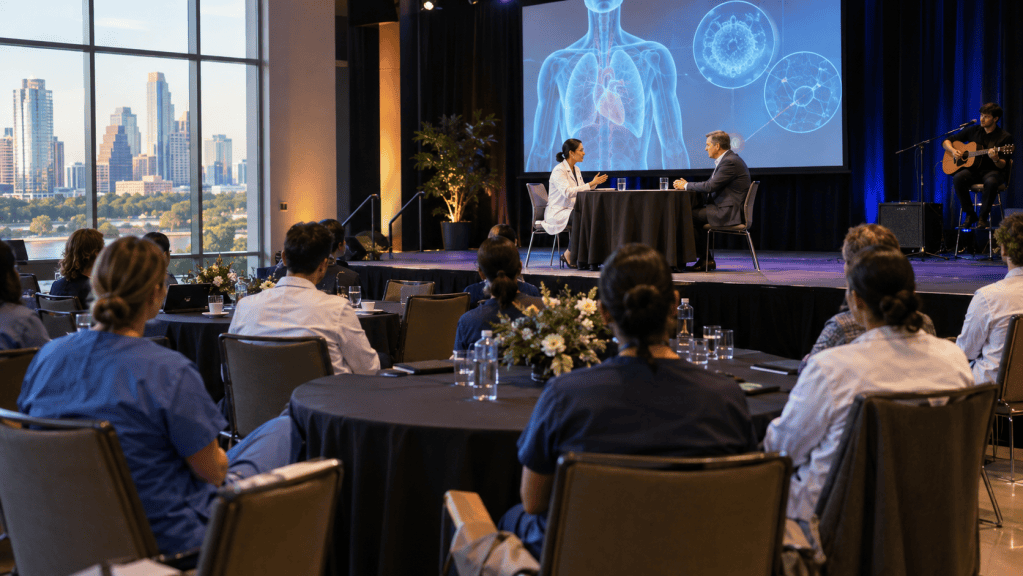
Texas Lung Cancer Conference Challenges Traditional Medical Meeting Format
The Texas Lung Cancer Conference in Austin has emerged as a standout example of how medical meetings can break away from convention while still delivering serious continuing medical education. By incorporating poker-style debates, five-minute presentations, patient storytelling, and live music, the conference created a more dynamic and memorable learning environment for clinicians and stakeholders focused on lung cancer.
Conference Format blends Education with Experiential Engagement
Instead of relying solely on long lectures and slide-heavy sessions, the Texas Lung Cancer Conference introduced a mix of formats designed to keep attendees engaged and to encourage active participation. The intent was to make complex clinical information more digestible, while also fostering discussion and reflection among participants.
One notable feature was the use of short, five-minute presentations in place of extended talks. These rapid-fire sessions required speakers to distill key insights and research into concise, high-impact segments, supporting better focus and knowledge retention for busy medical professionals.
Poker-style Debate format encourages Interactive Learning
The conference’s poker-style debates added a game-inspired dimension to clinical discourse. While still grounded in evidence-based medicine, this format encouraged speakers to stake out positions, respond quickly, and think strategically as they compared treatment approaches and emerging data. The structure helped transform traditional panel discussions into more interactive exchanges, giving the audience a clearer view of differing perspectives within lung cancer care.
Patient Storytelling brings Clinical Impact into Focus
Another defining element of the Texas Lung Cancer Conference was the inclusion of patient storytelling. By inviting real patient experiences into the program, the meeting connected complex clinical discussions to the human impact of lung cancer. These stories helped contextualize research, guidelines, and treatment decisions, reminding attendees of the lived realities behind the data.
For clinicians and researchers, this narrative layer reinforced the importance of communication, empathy, and patient-centered care, adding emotional depth to an otherwise highly technical agenda.
Live Music and Austin Setting support Informal Networking
Set in Austin, a city known for its creative culture and live music, the Texas Lung Cancer Conference integrated musical performances into its program. Live music segments contributed to a more relaxed atmosphere, giving participants a chance to reset between dense educational blocks and to connect informally with peers.
This blend of serious content and a more casual ambiance reflected a broader shift in meeting design, where organizers seek to balance rigorous learning with opportunities for authentic connection, reflection, and wellbeing.
Continuing Medical Education sees Evolving Event Design
The Texas Lung Cancer Conference illustrates how continuing medical education can adapt event formats to better support engagement without compromising scientific rigor. By combining concise presentations, debate-driven dialogue, patient narratives, and cultural elements like live music, the conference demonstrated a multifaceted approach to knowledge sharing.
For event planners and medical societies, this model highlights several design considerations:
- Use of varied session formats to maintain attention and accommodate different learning styles.
- Integration of real-world stories to connect clinical data with patient outcomes.
- Inclusion of local cultural elements to enhance sense of place and attendee experience.
- Creation of structured yet playful formats, such as poker-style debates, to promote interaction.
As expectations for professional education continue to evolve, the Texas Lung Cancer Conference offers a reference point for how medical meetings can remain both innovative and impactful.

