


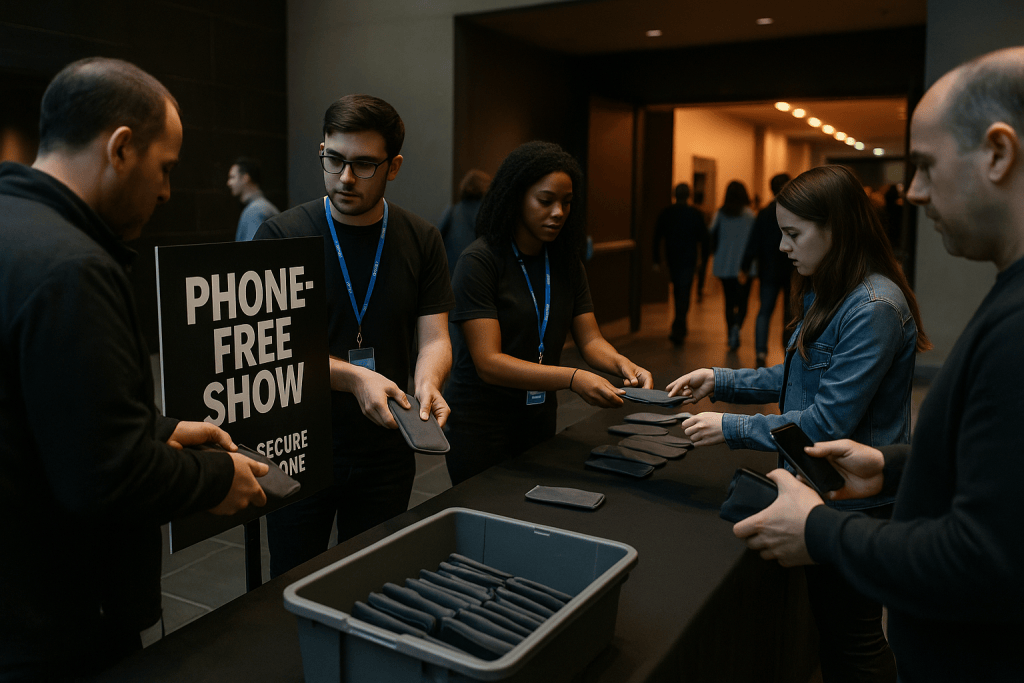
Event organisers are increasingly looking for practical ways to manage smartphone use at live experiences, balancing attendee expectations with concerns over filming, spoilers and content leaks. Phone Locker®, a dedicated phone-locking solution for venues and organisers, is positioning itself as a low-friction way to protect sensitive moments and reduce mobile distraction during performances, conferences and brand activations.
Background: phones, spoilers and sensitive content
As smartphones have become ubiquitous at concerts, conferences and product launches, they have also introduced operational and commercial risks. Unauthorised filming can undermine intellectual property, reveal confidential material ahead of schedule and dilute carefully planned marketing campaigns.
In sectors such as entertainment, stand-up comedy and theatre, recording can spoil new material before a tour is complete. In the corporate and technology space, pre-release product demonstrations, investor presentations and internal announcements are increasingly delivered in live formats where any leak can have reputational or financial implications.
While some organisers attempt to control recording through signage, announcements or security checks, these approaches can be inconsistent and resource-intensive. At the same time, event teams are aware that phones also serve important attendee needs, from transport coordination to safety and accessibility, making any restriction a sensitive issue for guest experience.
Key development: a dedicated phone-locking solution
Phone Locker® has entered this space as a focused solution designed specifically to help events manage smartphone use inside controlled environments. The concept is intentionally simple: attendees place their phones into secure pouches or lockers at the point of entry to a defined area, such as a show, session or launch, and retain control of the device but are unable to use it until they exit the restricted zone.
The system is designed to be deployed at a range of event types, including live entertainment, conferences, press launches, corporate town halls and exclusive previews. The intention is not to remove phones entirely from the attendee journey, but to create phone-free zones at critical moments where organisers need tighter control of recording and sharing.
For organisers, this can offer an additional layer of protection on top of non-disclosure agreements or confidential briefings. By physically limiting access to phones at key points, the risk of real-time posting, live-streaming or discreet filming is significantly reduced, helping preserve surprise elements and embargoes.
Industry impact: operational control and audience focus
Solutions such as Phone Locker® reflect a wider trend in the live events sector toward more controlled content environments. As event formats diversify, with many organisers adopting hybrid and on-demand strategies, there is growing recognition that not every moment is suited to unrestricted recording and distribution.
For event operations teams, a physical phone-locking system can help streamline enforcement. Rather than relying on stewards to identify and intervene with individual attendees using phones, the process is moved to an access-control checkpoint. This can free up front-of-house teams to focus more on safety, hospitality and crowd flow.
There is also an audience experience dimension. Some organisers report that attendees in phone-restricted environments tend to engage more closely with content, performers and each other. For certain formats, such as storytelling, comedy or immersive theatre, this can support a more focused and consistent atmosphere throughout the room.
At the same time, any solution that restricts personal devices must be deployed transparently and with clear communication. Many attendees rely on their phones for health, accessibility or caregiving reasons, so organisers typically need defined exception processes, clear signage and staff trained to address concerns or special requirements sensitively.
Why this matters for event professionals and technology providers
For event professionals, the emergence of specialised tools like Phone Locker® highlights the need to integrate device management into wider event design and risk planning. Key considerations include:
- Content strategy: Deciding where phone-free policies make sense, such as keynotes with embargoed announcements, creative showcases or premium experiences where surprise is integral.
- Security and compliance: Aligning any phone-locking approach with confidentiality requirements, intellectual property protection and data privacy policies.
- Audience communication: Setting expectations early in the registration and pre-event communication process, explaining the rationale for restrictions and how they will be implemented onsite.
- Operational design: Integrating phone-locker workflows with existing access control, ticket scanning and bag-check procedures to avoid bottlenecks at entry and exit points.
- Hybrid and recording plans: Coordinating official filming, streaming and on-demand content strategies so that controlled environments still support post-event marketing and stakeholder engagement.
Technology providers that support live and hybrid events may also see opportunities to complement physical phone-locking systems with software-based controls, such as watermarking, controlled access video platforms and rights management. Together, these tools can help organisations create multi-layered protection for high-value content while still enabling measured sharing and amplification.
Conclusion
As live events continue to evolve in a highly connected world, managing smartphone use is becoming a core operational and strategic question. Phone Locker® represents one of the more tangible responses: a physical, event-focused tool that seeks to limit filming and leaks at critical moments without fully removing devices from attendees.
For organisers, the decision is no longer simply whether to allow or ban phones, but how to shape phone use in ways that protect content, respect audience needs and support commercial objectives. As more venues and producers experiment with phone-locking and related controls, these practices are likely to inform future standards around confidentiality, audience experience and event technology integration.

