


Aanmelder.nl is sharpening its focus on modular event technology as organisers continue to seek integrated tools for planning, delivering and analysing events across in-person, virtual and hybrid formats. The Netherlands-based provider is promoting an end-to-end platform that connects event management, attendee check-in and online event hosting in a single system, while allowing teams to select only the components they need.
The move reflects a broader shift among event technology vendors towards flexible, interoperable solutions. Rather than forcing organisers to adopt all-in-one suites with fixed functionality, modular platforms are designed to plug into existing processes and scale as event programmes evolve.
Background: demand for integrated yet flexible tools
Over the past several years, event organisers have had to manage increasingly complex requirements: fluctuating attendance models, stricter data and security standards, and higher expectations for attendee experience and measurement. This has driven interest in platforms that can manage the full event lifecycle without sacrificing configurability.
At the same time, many event teams operate with a patchwork of tools for registration, on-site operations, virtual streaming, community engagement and reporting. Integrating these systems can be resource-intensive, and data fragmentation often limits the depth of insight available to organisers and sponsors.
In this climate, vendors that can simplify workflows while still offering choice are seeing growing attention from corporate event teams, associations, congress organisers and agencies. Aanmelder.nl is positioning its platform squarely in this space, emphasising modularity rather than a monolithic approach.
Key developments: a modular stack from setup to delivery
Aanmelder.nl’s platform is built around several core modules that can be deployed independently or as a combined stack. While each component targets a specific stage of the event lifecycle, the company emphasises that the system is designed to function most effectively when these modules work together on a shared data layer.
The event management module is the foundation of the platform. It allows organisers to configure event programmes, set up registration flows and manage attendee information. Within this environment, teams can create registration forms, define ticket types, manage quotas and handle automated confirmations and communications.
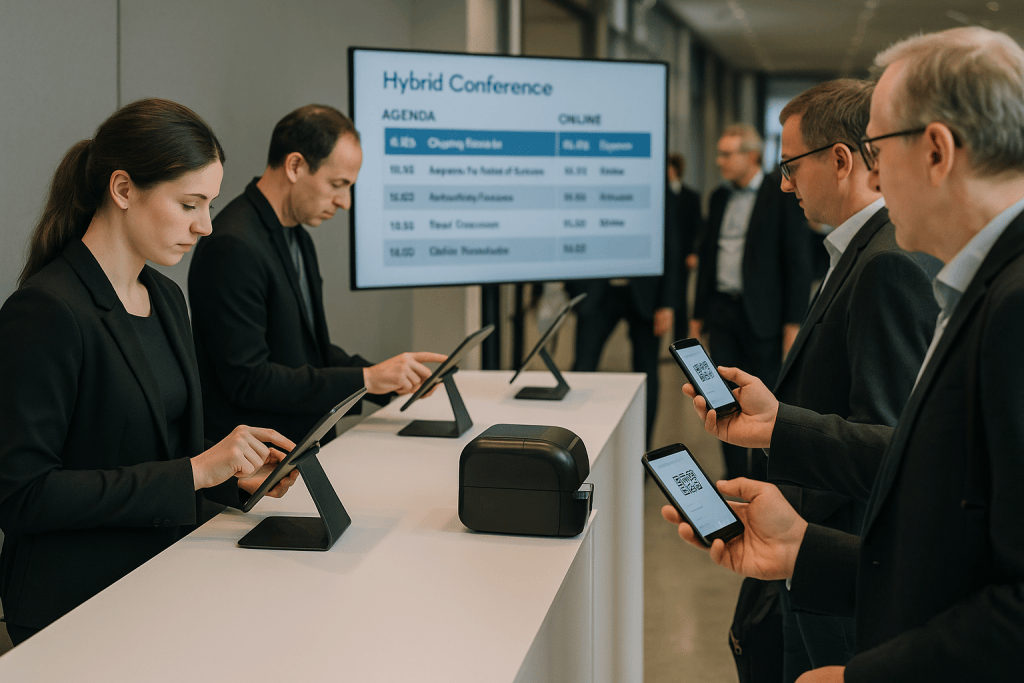
On-site operations are supported by a dedicated check-in module. This component is designed for front-of-house teams managing arrivals at conferences, exhibitions and corporate events. Features typically include attendee lookup, badge printing and real-time attendance tracking, helping organisers monitor capacity and flows across sessions or venues.
For events that include a virtual component, Aanmelder.nl offers an online hosting module that supports live online participation. This module is intended to connect with registration data so that access rights, attendee journeys and reporting are consistent across in-person and digital audiences. The result is a single environment where hybrid event participants can be managed without duplicating data in separate systems.
Although the provider promotes the benefits of using the modules in combination, each part of the platform can be introduced separately. This allows organisations to start with a specific requirement—such as registration or check-in—and expand their use of the platform as needs change.
Industry impact: consolidation without lock-in
The approach taken by Aanmelder.nl mirrors a trend across event technology: balancing consolidation with the need to avoid vendor lock-in. Many event professionals are seeking to reduce the number of separate systems in use, but remain cautious about adopting tools that are difficult to adapt or replace.
By emphasising modular deployment, Aanmelder.nl is contributing to an environment where organisers can gradually connect more of the event lifecycle to a single platform, while still retaining the option to integrate alternative tools or maintain existing processes around specific components.
For the wider market, platforms that unify registration data, on-site activity and online engagement have the potential to improve data consistency and reporting. Sponsors and stakeholders increasingly expect accurate, cross-channel metrics that cover both physical and digital touchpoints. Systems built around a shared dataset are better positioned to meet these expectations.
Why this matters for event professionals and technology providers
For event organisers, the availability of modular systems such as Aanmelder.nl’s platform can influence how technology strategies are developed over multiple event cycles. Instead of conducting large, infrequent technology overhauls, teams can adopt a phased implementation model—deploying one module, optimising workflows, then extending adoption to additional components.
This approach can help reduce risk, ease change management and provide clearer ROI calculations, as each module’s impact on efficiency, attendee experience and data quality can be evaluated in isolation. It also gives organisers more flexibility to pilot new event formats, such as hybrid programmes with both in-person and virtual participants, using common infrastructure rather than separate tools.
For technology providers and platform integrators, the rise of modular event systems underscores the importance of open architectures and clear APIs. As organisers assemble technology stacks tailored to their specific needs, vendors that can interoperate with registration, CRM, marketing automation and virtual event tools are more likely to be included in long-term strategies.
Aanmelder.nl’s positioning also highlights a continued blurring of lines between traditional event registration software and broader event experience platforms. Providers in adjacent categories—such as marketing technology, community platforms and digital signage—may see new integration opportunities as organisers seek tighter connections between pre-event campaigns, on-site participation and post-event engagement.
Conclusion
Aanmelder.nl’s focus on a modular, integrated platform for event management, check-in and online hosting illustrates how event technology vendors are responding to changing expectations from organisers. As events continue to span physical and digital environments, tools that can manage the full lifecycle while allowing flexible deployment are likely to play an increasingly central role.
For B2B event professionals, the development of platforms like Aanmelder.nl’s offers a route to streamline operations, unify data and support hybrid formats without committing to an all-or-nothing technology overhaul. For technology providers, it reinforces the value of interoperability and modular design in an evolving event ecosystem.