


Background and context
Live shopping network QVC used its 40th anniversary as a moment to highlight how commerce, content creation, and social platforms are converging. Long known for televised product demonstrations and real-time audience interaction, the company is increasingly extending that model into digital and social environments.
The anniversary activity was timed to coincide with TikTok Shop Super Brand Day, a promotional initiative on the short-form video platform that puts a spotlight on featured retailers and brands. By aligning with this program, QVC positioned its celebration as both a milestone and a testbed for creator-driven commerce formats.
This move reflects a wider industry shift in which broadcasters, retailers, and platforms are experimenting with ways to integrate live, shoppable content across channels rather than relying on traditional linear TV alone.
Key announcement
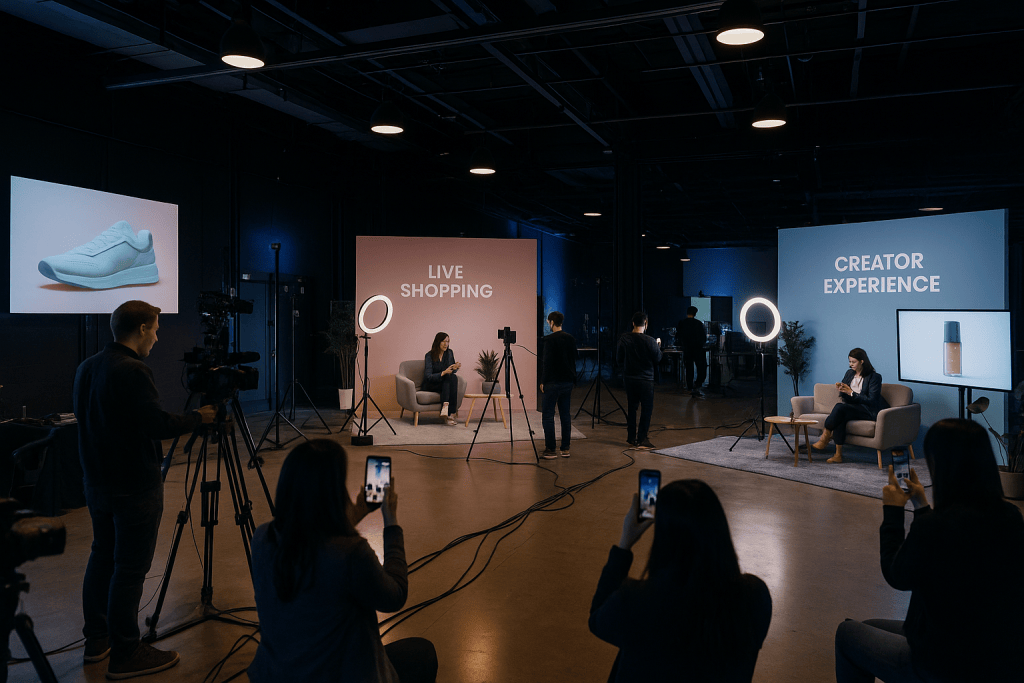
To mark the occasion, QVC hosted an in-person, creator-first commerce experience that invited content creators to explore a series of immersive activations. The event was structured as a hands-on environment where influencers could discover products, capture content, and experiment with live shopping-style storytelling.
Rather than building the experience around a consumer audience, the focus was on the creators themselves: how they work, what tools they need, and how social-native content can translate into measurable sales. The activations were designed to be visually engaging and easily captured on mobile devices, encouraging creators to film, post, and go live from the space.
While QVC’s legacy is tied to its broadcast channels, the anniversary event underlined its intention to serve as a commerce partner within newer ecosystems such as TikTok Shop. The company’s broader product and live shopping information can be found on its official website, qvc.com.
Industry impact
For event professionals, the QVC initiative illustrates how retail and media brands are rethinking what a “commerce event” looks like. Instead of staging a conventional product showcase or anniversary gala, QVC treated creators as the primary audience and distribution channel.
This approach shifts the role of experiential design. Installations now need to function simultaneously as physical engagement zones and content studios. Lighting, audio, and staging must be optimized not only for in-person visitors but also for short-form vertical video and live streaming.
As social commerce platforms push further into live and interactive formats, AV and event technology teams are likely to see growing demand for setups that support multi-camera capturing, reliable connectivity for live posting, and adaptable sets that read well on screen.
Why this matters
QVC’s anniversary activation signals that creator-first events are moving from experimental to strategic. For brands, influencers are no longer just invited guests; they are core infrastructure for distribution, discovery, and sales.
For the event technology sector, this raises practical questions about how to design environments that simplify content creation. Key considerations include robust lighting for mobile devices, sound reinforcement that works for both the room and on-camera audio, and scenic elements that translate cleanly to multiple formats and platforms.
As more retailers and media companies explore live shopping and social commerce integrations, similar hybrid activations are likely to become part of the standard event mix. QVC’s creator-first approach provides an early example of how anniversary campaigns and brand moments can double as production-ready spaces for a network of digital storytellers.