


Background and context
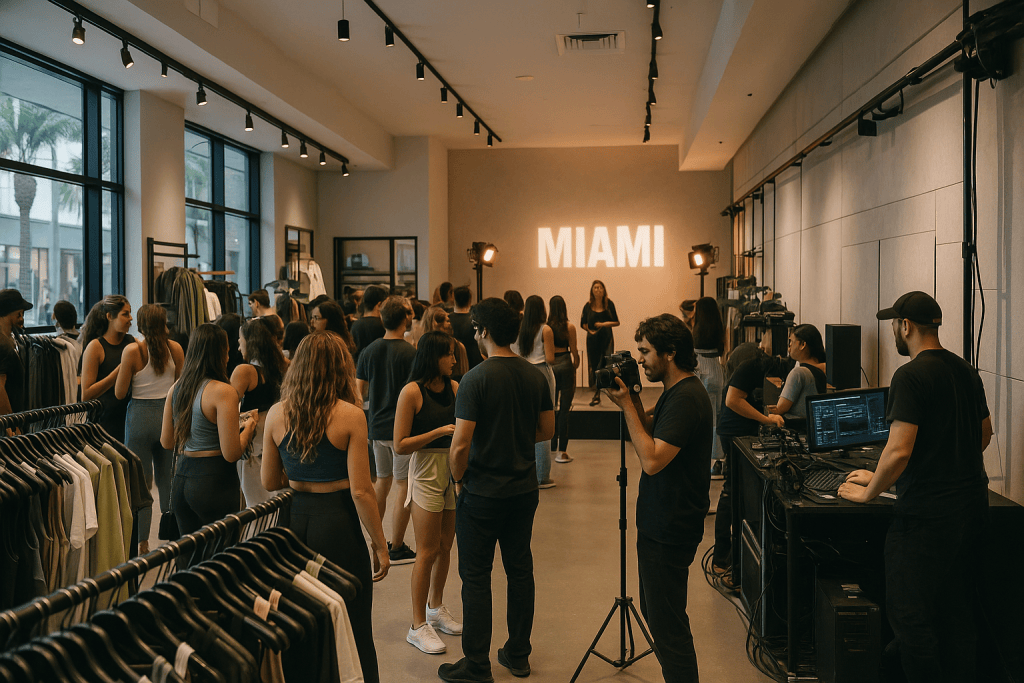
A major sportswear brand recently used an in-store influencer event in Miami to introduce its new Originals Sport collection, underscoring how retail spaces are increasingly doubling as experiential venues.
The activation brought together content creators and brand partners for a full day of on-site programming. Rather than a traditional press preview, the format blended community-building, live content creation, and product discovery inside a functioning retail environment.
This type of event reflects a broader shift in how brands approach launches, prioritizing social reach and on-site storytelling over static displays or purely transactional store visits.
Key announcement
The event centered on the unveiling of the Originals Sport collection, positioned as a lifestyle-focused extension of the company’s heritage lines. Creators were invited to explore the range through curated experiences inside the Miami store.
Programming typically included:
- Guided walk-throughs of new apparel and footwear, emphasizing styling and fit in real-world scenarios.
- Dedicated content areas designed for photo and video capture, allowing influencers to produce social media material on-site.
- Interactive components such as styling sessions, light fitness or movement-focused activities, and informal Q&A opportunities with brand representatives.
The retail environment was adapted to accommodate both standard shoppers and invited guests, with visual merchandising and event layouts optimized for camera-friendly moments. More information about the collection can be found on the manufacturer’s official website.
Industry impact
For the event and experiential sector, this activation illustrates how brands are leveraging existing brick-and-mortar locations as flexible event spaces. Instead of investing solely in off-site venues, companies are repurposing their own stores for hybrid retail-and-media productions.
From a technical and operational point of view, these events often require:
- Adaptable lighting that works for both in-person shopping and social content capture.
- Robust in-store connectivity to support live posting and streaming by dozens of creators simultaneously.
- Sound systems calibrated to balance background audio, MC segments, and ambient music without disrupting everyday shoppers.
Vendors in AV, staging, and experiential production are increasingly being asked to design temporary overlays that sit on top of standard retail fixtures, with rapid setup and minimal store downtime.
Why this matters
For event professionals and experiential producers, the Miami in-store gathering is a clear example of how influencer marketing and live events are converging. Launches that previously might have been handled through lookbooks or digital campaigns are now being translated into physical, content-driven experiences.
These formats create several opportunities and challenges for the industry:
- Growing demand for compact, visually appealing staging and lighting solutions that fit within existing store layouts.
- Shorter lead times, as brands increasingly tie event dates to social content calendars, collection drops, and retail promotions.
- Measurement models that combine traditional event KPIs—such as attendance and dwell time—with social metrics like reach, engagement, and content volume.
As more brands experiment with similar activations, event technology providers that can support flexible, media-ready setups in non-traditional venues are likely to see rising demand. The Miami event offers a glimpse into how retail spaces may evolve into ongoing hubs for creator-led experiences, rather than hosting one-off launch parties.