


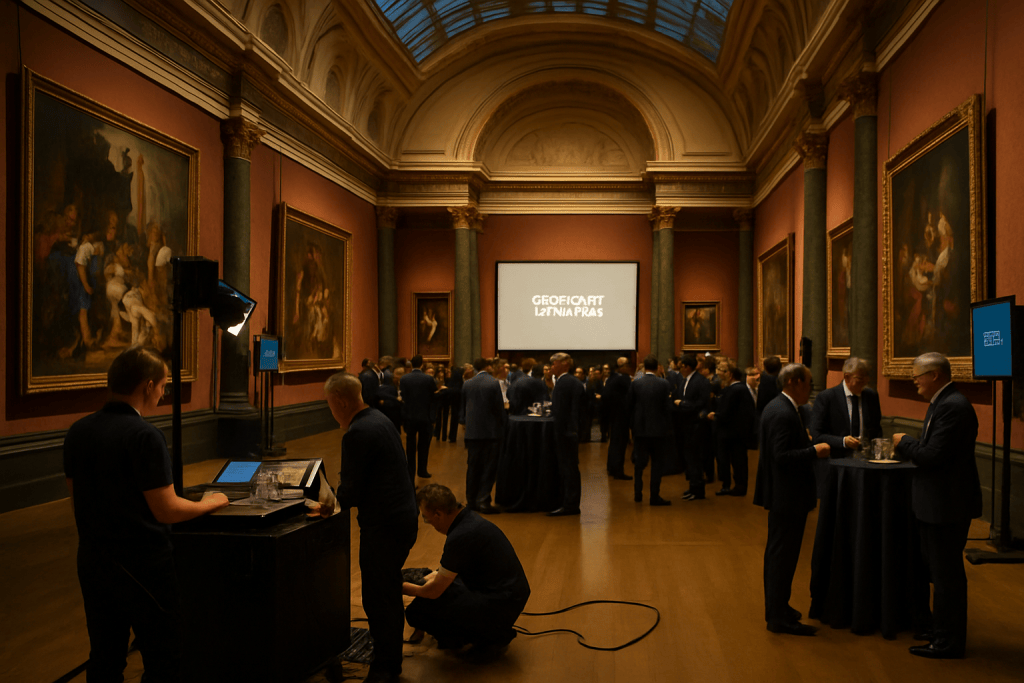
London’s National Gallery has reported its strongest year on record for commercial events, driven by rising demand from brands, broadcasters and corporate clients seeking high-profile cultural backdrops for launches, premieres and business gatherings.
The institution, located on Trafalgar Square, recorded a 150% year-on-year increase in events revenue alongside a 172% rise in the number of events delivered. The figures underline how major cultural venues are becoming central to the live and hybrid event mix for global brands and production companies.
Background: cultural spaces as event destinations
Cultural institutions across Europe and beyond have increasingly diversified their income streams, with commercial venue hire playing a growing role in financial resilience. Museums and galleries, traditionally focused on exhibitions and education, are increasingly competing with purpose-built venues for corporate and experiential briefs.
For event organisers, these spaces offer a combination of heritage, central locations and ready-made visual impact that can reduce the need for extensive set design. For the institutions, events activity can help fund core programmes, while also exposing new audiences to their collections.
The National Gallery has been part of this shift for several years, but the latest figures suggest a step-change in how brands and agencies are using high-profile cultural settings as part of their events strategy.
Key developments in the past year
The gallery’s latest results reflect both higher volumes of bookings and a broader mix of clients. Demand has come from major consumer brands, fashion houses, digital platforms and broadcasters, as well as from corporate and financial services companies looking for distinctive venues for internal and external events.
While specific event case studies were not detailed, organisers have increasingly sought venues that can support:
- Product launches and brand experiences requiring strong visual identity
- Red-carpet premieres and media events
- Corporate receptions, awards and dinners
- Content-led activations and filming for broadcast or streaming
The 150% growth in events revenue, outpacing even the sharp rise in event numbers, suggests a trend towards higher-value bookings, larger-scale productions or more complex formats. This may include hybrid components, enhanced production requirements or extended hire periods to support builds and technical rehearsals.
The gallery’s performance also aligns with a broader post-pandemic pattern: brands are prioritising fewer but more impactful in-person moments, often hosted in spaces that offer strong narrative and visual storytelling potential.
Industry impact and venue technology implications
The National Gallery’s record year adds further weight to the view that heritage and cultural venues will be key competitors in the mid-to-premium events market, particularly for experiential and brand-led activity. For technology and production providers, this shift is reshaping how projects are scoped and delivered.
Historic buildings typically have strict preservation requirements and limited scope for invasive installations, which places greater emphasis on flexible, temporary and low-impact technologies. This can include:
- Modular AV systems and projection solutions that minimise physical contact with the building
- Mobile connectivity and temporary network infrastructure to support streaming and hybrid formats
- Portable staging, rigging and lighting designed to work within tight heritage constraints
- Silent or low-noise solutions to protect both the visitor experience and delicate collections
As more cultural institutions report strong demand for commercial hire, there is also growing expectation that they will offer robust baseline technical capabilities and clear guidelines for external suppliers. Venue teams are increasingly collaborating with production companies and technical partners to develop standard packages, approved supplier lists and pre-configured layouts.
Why this matters for event professionals and technology providers
For event planners, the National Gallery’s results highlight several practical considerations when working with similar cultural venues:
- Lead times and availability: As demand grows, prime dates at flagship institutions are likely to book out earlier, requiring longer planning cycles and flexible event calendars.
- Format design: The physical constraints of heritage spaces may influence staging, audience flow, content capture and hybrid integrations, driving closer early collaboration between creative, production and technical teams.
- Compliance and risk management: Working within conservation rules and security protocols can add layers of approval and documentation that need to be factored into timelines and budgets.
- Content value: Visually distinctive spaces can significantly increase the impact of photography, video and social content, making these venues attractive for campaigns that extend beyond the live audience.
For technology vendors and production companies, the trend underscores the need to tailor offerings to heritage venues, including:
- Compact, rapidly deployable AV and streaming solutions
- Wireless or minimally cabled setups to reduce installation impact
- Training and accreditation aligned with venue requirements
- Data and analytics tools that can help organisers measure the extended reach of events held in such high-profile settings
In parallel, venue operators are under pressure to modernise their infrastructure discreetly. Investment priorities frequently include improved back-of-house connectivity, power distribution, visitor Wi-Fi, and broadcast-ready facilities that do not compromise the integrity of historic interiors.
Outlook for cultural venues in the events market
The National Gallery’s performance suggests that the appetite for live experiences anchored in culturally significant venues is unlikely to be a short-term spike. As brands refine their experiential strategies, such locations offer a way to combine storytelling, prestige and content creation in a single activation.
For the wider event technology ecosystem, this is likely to mean more projects in architecturally complex and operationally sensitive environments, where innovation is measured as much by subtlety and adaptability as by scale. Technology partners that can operate effectively within these parameters will be well positioned as cultural spaces continue to expand their role in the global events landscape.
While further details on the National Gallery’s future plans for its events operations have not been disclosed, the latest figures indicate that commercial events are now a firmly established pillar of its activity, with implications for how organisers, suppliers and venues collaborate in the years ahead.

