


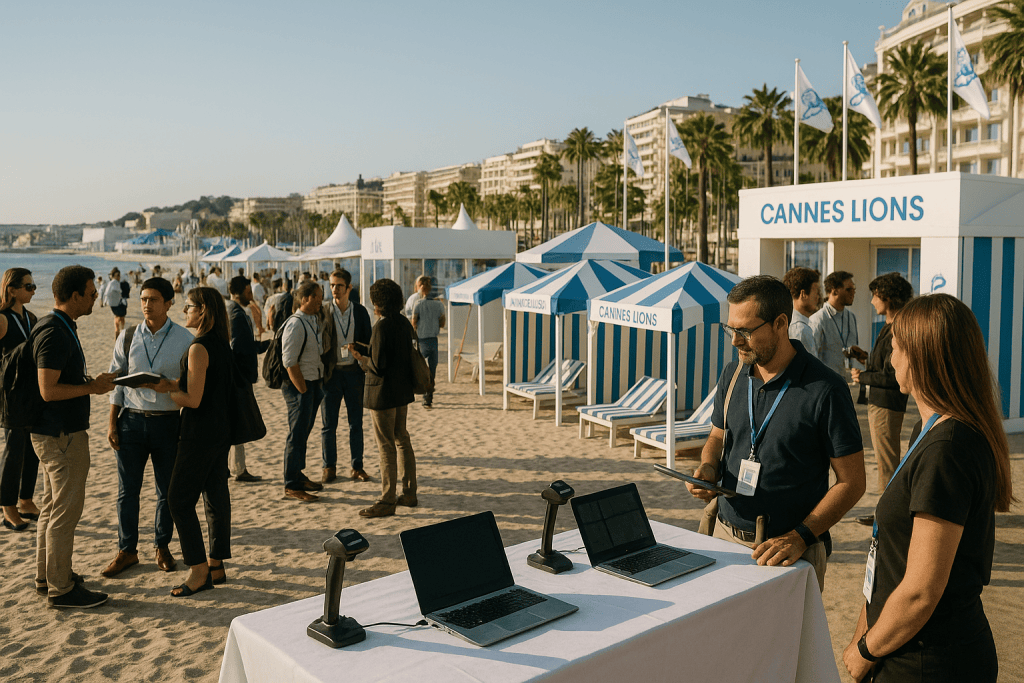
Major brand activations at the Cannes Lions International Festival of Creativity have become an annual showcase of high-budget experiences, beachside takeovers and invitation-only networking. Yet behind the headline-grabbing installations, a growing number of event strategists are questioning whether the metrics used to judge success at Cannes truly reflect the value these projects are meant to deliver.
Recent work on the Cannes programme for BBC Studios, viewed both from inside the organising team and from an external technology provider’s perspective, has highlighted how the industry’s current focus on surface-level indicators can obscure more meaningful measures of audience engagement and business impact.
Background: a showcase for brand experiences
Cannes Lions has long been a proving ground for ambitious experiential campaigns, particularly in media and entertainment. Beach pavilions, branded yachts, cabanas and pop-ups line the waterfront, each competing for attention through design, celebrity appearances, screenings, and immersive content.
For content owners, broadcasters and streaming providers, Cannes offers a concentrated audience of advertising decision-makers, media buyers and brand leaders. The stakes are high: activations are often justified on the basis of deepening partner relationships, driving future commercial conversations, and reinforcing a distinctive brand position in a crowded marketplace.
These objectives, however, are not always reflected in how success is reported back internally once the festival closes. Many teams still rely heavily on metrics that are easy to collect but only loosely connected to long-term outcomes.
Key developments: shifting perspective on measurement
In the case of BBC Studios’ presence at Cannes, the programme was first shaped from the inside, with a focus on physical design, audience flow and content strategy. Later, from the vantage point of a technology partner supporting measurement and attendee management, it became clear that the same activation could be interpreted in very different ways depending on which metrics were prioritised.
Traditional success indicators at Cannes typically include:
- Footfall and basic headcounts across branded spaces
- Social media impressions and hashtag mentions
- Volume of hospitality delivered (meetings, cocktails, screenings)
- Press coverage and influencer activity around the activation
While these numbers help demonstrate visibility and scale, they provide limited insight into whether the right people engaged with the content, whether conversations progressed beyond superficial interactions, or whether the experience supported commercial objectives in meaningful ways.
From a technology and data standpoint, the more revealing signals are often subtler: who attended which session, how long they stayed, how many touchpoints they had with the brand across the week, and whether key stakeholders returned multiple times or brought colleagues and clients back with them.
Industry impact: the metric many Cannes activations miss
The emerging view from practitioners involved in both creative production and data-led event design is that Cannes activations frequently underweight one critical dimension: depth of engagement among priority audiences.
Instead of simply counting raw visits to a stand or beach, more nuanced metrics can be used to judge whether the activation is cutting through with the people who matter most. These might include:
- Number of pre-identified target accounts that engaged with the space at least once
- Repeat visitation rates among high-value decision-makers
- Attendance and participation in curated briefings, screenings or roundtables
- Quality and duration of meetings held onsite, rather than just their total number
- Post-event follow-up activity and progression of opportunities linked back to Cannes touchpoints
For media, entertainment and technology brands that invest heavily in VIP-led hospitality, these relationship-based indicators often align more accurately with internal KPIs than mass audience numbers. However, they require integrated registration, access control, and data capture tools, as well as clear agreement between marketing, events and commercial teams on which behaviours matter most.
Technology providers working on Cannes programmes report that many activations still operate as if the primary goal is visibility, while sales and partnership teams increasingly seek insight into behavioural patterns: who moved between which sessions, which content formats held attention, and where spontaneous conversations actually took place.
Why this matters for event professionals and technology providers
For event professionals designing large-scale activations, the debate over metrics goes beyond Cannes. It reflects a broader shift across the event and exhibition sector towards outcome-based planning and measurement, where creative concepts are developed with clearer data strategies from the outset.
On the organiser side, this means:
- Defining success in collaboration with commercial and partnership teams, not just marketing
- Mapping key audience journeys and prioritised behaviours before committing to layouts and programming
- Building data capture points into hospitality, content sessions and informal networking spaces, not just registrations
- Choosing technology platforms that allow for granular reporting on specific target groups rather than aggregated attendance figures
For technology providers supporting Cannes-style activations, there is an opportunity to move beyond transactional services and into strategic enablement. This can include:
- Advising clients on realistic, evidence-based KPIs aligned with their commercial goals
- Implementing tools for contact-level tracking across multiple venues and formats within a single programme
- Providing dashboards that distinguish between general traffic and engagement from defined priority segments
- Supporting post-event attribution by linking onsite interactions to subsequent meetings, pitches or deals
As the events industry continues to integrate digital and physical channels, hybrid-ready infrastructure can also help Cannes activations capture value that extends beyond the week itself. Recorded sessions, digital briefing packs and follow-up content can be used to deepen relationships with those who engaged onsite while reaching stakeholders who were not present at the festival.
Conclusion: aligning creative ambition with measurable outcomes
Cannes Lions will likely remain a flagship showcase for high-impact experiential builds and hospitality-led engagement. However, as budgets come under scrutiny and commercial teams demand clearer evidence of return, the metrics used to judge success are evolving.
The experience of viewing a single Cannes activation from both the client and provider perspectives underlines a central lesson: the most important measure is not how many people stepped onto the sand or into a branded space, but whether the right people engaged in ways that advance long-term relationships and opportunities.
For event professionals and technology partners, the challenge is to design Cannes programmes where creative ambition and measurement strategy are developed in tandem. By focusing less on volume and more on depth of engagement among priority audiences, brand activations at Cannes and similar festivals can deliver clearer value to stakeholders, while giving teams the data they need to refine and justify future investments.