


Background and context
The greater Phoenix and Scottsdale region continues to invest in new meeting and event infrastructure, preparing for what is expected to be a competitive period for group business in 2026.
A mix of restaurants, hotels, resorts, and flexible event facilities have recently opened or completed renovations across the metro area. Together, they expand the range of options for conferences, corporate retreats, incentive programs, and social events during the busy summer season.
This growth aligns with broader trends in the meetings and events industry, where destinations are refreshing their offerings with more built-in technology, flexible floor plans, and outdoor spaces designed to support hybrid and experiential formats.
Key announcement
Across Phoenix and Scottsdale, nine notable venues have come online or undergone significant updates in time for summer 2026 events. While each property targets a slightly different segment of the market, several themes are consistent: multipurpose layouts, integrated audiovisual capabilities, and an emphasis on indoor-outdoor use despite high temperatures.
- New full-service hotels have added ballroom and breakout space suited to mid-size meetings, with infrastructure for projection, audio, and lighting built into function rooms.
- Refreshed resorts are focusing on group experiences, expanding poolside and terrace areas that can be configured for receptions, product launches, and evening programming.
- Restaurants with private dining rooms and semi-private zones are positioning themselves as off-site dinner and networking venues, often providing basic sound and display support for presentations.
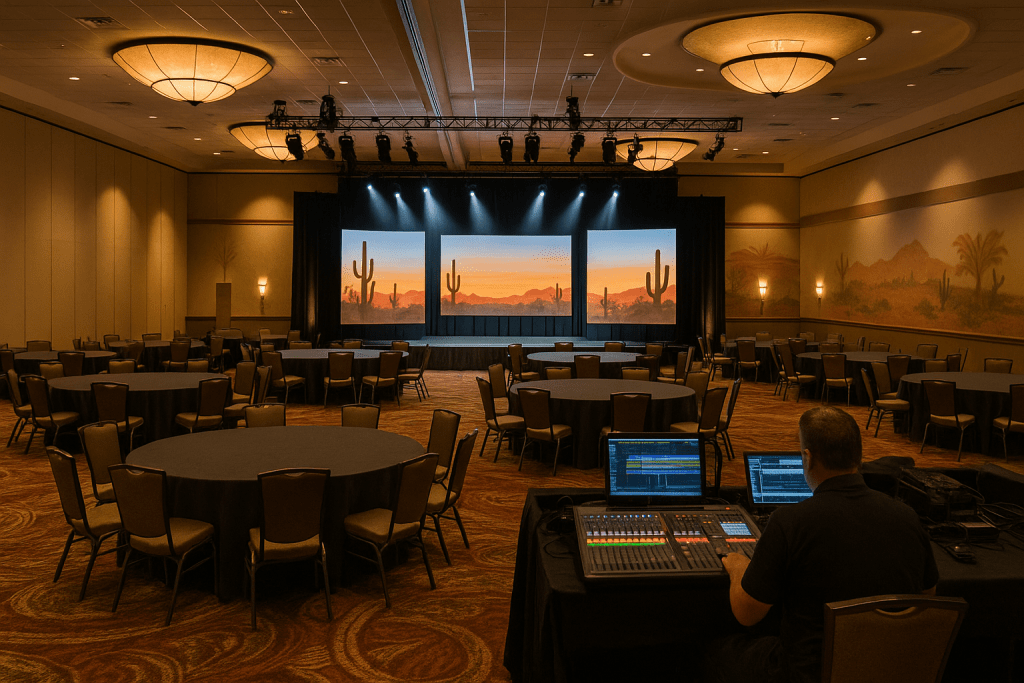
- Dedicated event spaces and mixed-use facilities are being fitted with flexible staging, rigging points, and power distribution to accommodate more complex AV requirements.
Most of these venues are promoting support for hybrid and tech-enabled meetings, with upgraded connectivity, expanded Wi‑Fi capacity, and in some cases partnerships with local AV providers. Further details and technical specifications are typically available via each venue’s official website or event-planning pages.
Industry impact
For planners, the cluster of new and renovated sites provides more choice at different budget levels and room counts, which may help distribute group demand beyond a small number of legacy properties. This can ease pressure on availability during peak periods and create leverage for organizers seeking specific dates or configurations.
From an event technology standpoint, the trend toward more built-in AV and connectivity reduces the amount of temporary infrastructure needed for standard corporate programs. Basic sound reinforcement, projection, and display needs can often be handled by in-house systems, allowing external providers to focus on higher-end elements such as broadcast-quality streaming, advanced lighting, or immersive content.
The presence of newer venues also encourages existing properties to update their own technology and services. Competitive markets tend to accelerate investment in upgraded control systems, more robust network backbones, and better support spaces for production crews.
Why this matters
Phoenix and Scottsdale have long positioned themselves as year-round destinations for corporate and association events, even during the summer when rates are often more flexible. The arrival of additional venues in 2026 broadens the toolkit for planners building multi-day programs that mix traditional meeting space with off-site experiences.
For AV and production teams, a larger inventory of tech-ready venues can streamline site selection, pre-production planning, and logistics. When properties are designed or renovated with group business in mind, they tend to offer clearer rigging options, better load-in routes, and more predictable power and connectivity.
As competition among destinations intensifies, regions that pair appealing hospitality offerings with reliable event infrastructure are better positioned to win large programs. The continued venue development in Phoenix and Scottsdale underscores how important integrated technology and flexible space design have become in the broader meetings and events landscape.