


Background and context
Event venues worldwide are entering a new phase of development as they prepare for a busy calendar of sports, business, and cultural gatherings. Hotels, convention centers, meeting spaces, and restaurants are adapting their facilities to meet rising expectations for live experiences and hybrid formats.
Driven by large-scale sporting events and the steady return of in-person meetings, operators are rethinking how spaces are configured, equipped, and monetized. This includes investments in technology, flexible layouts, and hospitality-focused fan experiences that can be scaled for different audience sizes.
Key announcement
Recent activity across the sector includes the rollout of World Cup watch parties, significant renovation projects, and a series of acquisitions that are reshaping local markets. Many properties are positioning themselves as multifunctional hubs capable of hosting both traditional conferences and high-energy public viewings.
-
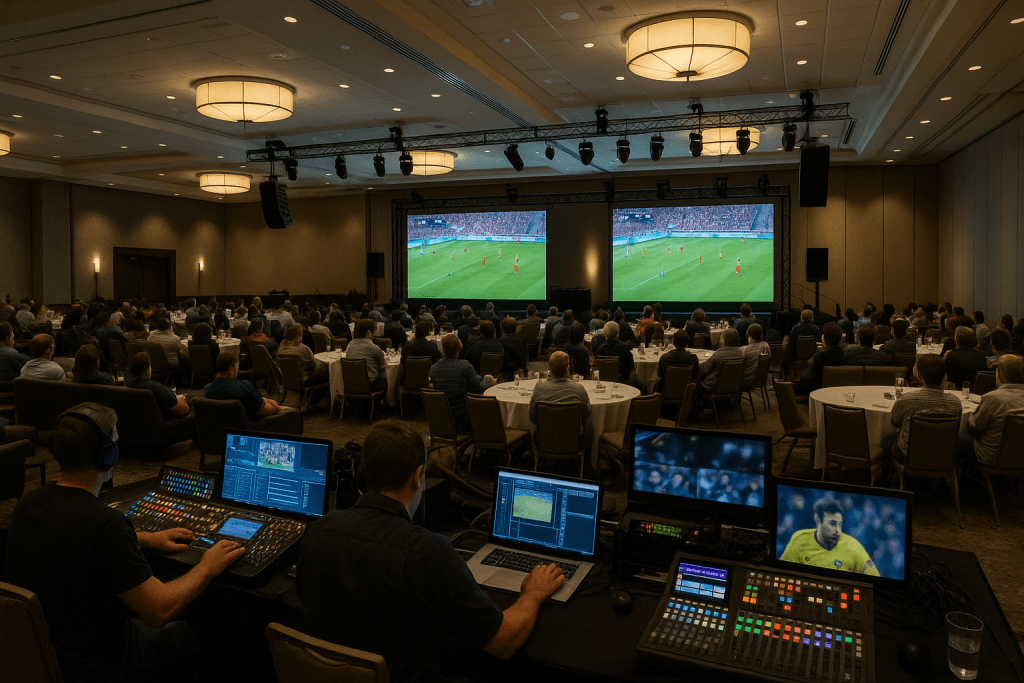
World Cup watch parties: Venues in major cities are converting ballrooms, restaurants, and outdoor terraces into fan zones with large-format displays, upgraded sound systems, and themed food and beverage offerings. These events are designed to accommodate both private bookings and general admission crowds.
-
Renovations: A number of hotels and convention centers are undertaking upgrades to audiovisual infrastructure, lobby areas, and meeting rooms. Improvements typically focus on enhancing screen visibility, acoustic treatment, lighting, and connectivity to support broadcast-quality viewing and content sharing.
-
Acquisitions and ownership changes: Some independent venues and regional operators have been acquired by larger hospitality groups or investment firms. These deals often come with plans for capital improvements and expanded event services, including upgraded AV capabilities and more flexible booking options.
Across these developments, technology integration is a recurring theme. From LED walls and projection systems to improved Wi‑Fi and streaming support, many operators are framing upgrades as essential for attracting both event organizers and sports fans.
Industry impact
For event planners, the recent wave of changes broadens the range of spaces that can support experience-driven programming. Venues that historically focused on meetings and banquets are now experimenting with fan-oriented layouts, tiered seating, and immersive AV setups that can be repurposed for corporate content, product launches, and hybrid events.
These investments also influence competitive dynamics. Properties that add high-quality displays, robust sound, and reliable connectivity may gain an edge when bidding for conferences that require complex production elements. At the same time, restaurant and hospitality venues are positioning themselves as alternatives to traditional arenas for viewing parties and brand activations.
Acquisitions can accelerate these shifts by bringing standardized processes, larger marketing networks, and centralized technology partnerships to newly acquired properties. Event organizers may see more consistent AV offerings across portfolios, though local differentiation and pricing will continue to vary.
Why this matters
The latest venue activity underscores how closely live events, hospitality, and sports-related programming are converging. For the event technology community, this means more demand for scalable AV packages, flexible control systems, and production support that can move quickly between corporate and fan-heavy formats.
Planners considering venues for upcoming programs should watch how spaces are being renovated and rebranded, particularly around screen size, sightlines, sound coverage, and bandwidth. The same infrastructure that powers a World Cup watch party can serve as a foundation for town halls, keynote broadcasts, and experiential marketing campaigns.
As this trend continues, event professionals may benefit from closer collaboration with venue AV teams early in the planning process. Understanding each property’s technical capabilities—often detailed on their official websites and product pages—will be key to matching event goals with the right space and setup.