


Background and context
The Eurovision Song Contest has evolved into one of the most technically demanding live television events in the world, with dozens of performers, multiple broadcasters, and a dense RF environment that pushes wireless systems to their limits.
Ensuring reliable wireless audio, in-ear monitoring, and intercom across the contest requires specialist coordination between production, broadcast, and frequency management teams. Over the last decade, engineering partners with deep RF experience have become as critical to Eurovision as the audio and lighting vendors on site.
Spectera, a company focused on RF coordination and wireless audio solutions, has been involved in a number of large-scale music and television productions in Europe, including previous editions of Eurovision. The 2026 contest marks a continuation of that involvement, bringing the company back to a familiar but technically challenging environment.
Key announcement
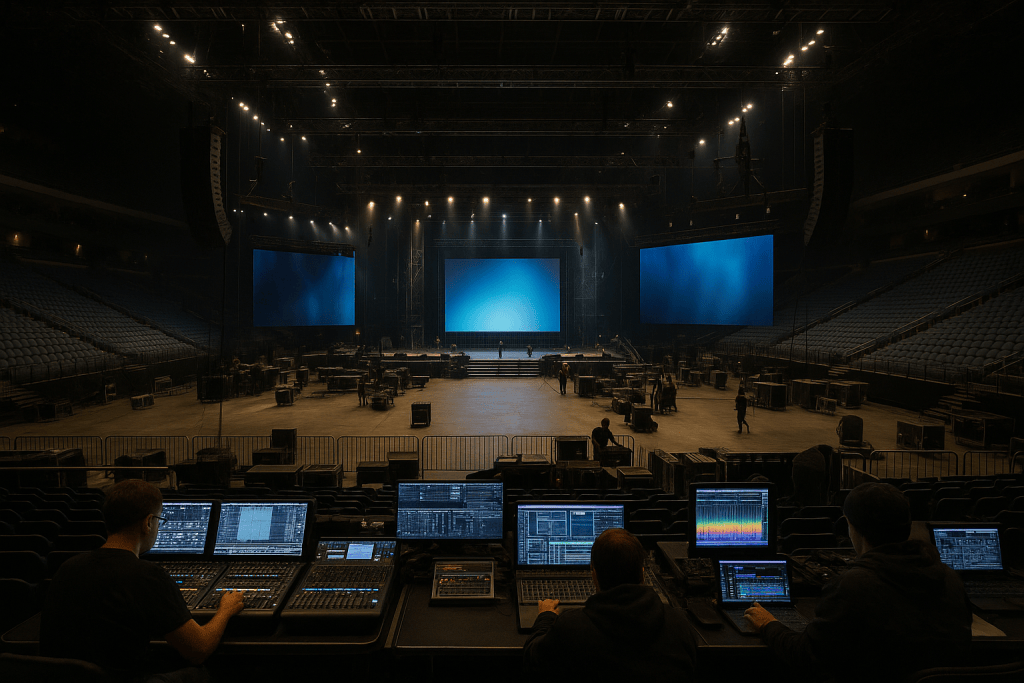
Spectera is set to return as a key RF and wireless coordination partner for the Eurovision Song Contest 2026. The company will work with the host broadcaster and the wider technical crew to design, deploy, and supervise the event’s wireless infrastructure.
This role typically covers spectrum planning, coordination of wireless microphones and in-ear systems, and the management of RF resources for production, press, and ancillary events around the main show. For a contest that spans rehearsals, semi-finals, and a grand final broadcast to a global audience, the RF plan must handle high channel counts and constant changeover between acts.
According to information published by the manufacturer, the 2026 edition will again rely on tried-and-tested workflows developed over several years of collaboration. This includes pre-event spectrum analysis, on-site RF monitoring, and live adjustments during rehearsals and broadcasts to mitigate interference and maintain consistent signal quality.
Further technical details and equipment references are available via the manufacturer’s official website at sennheiser.com.
Industry impact
For the wider event technology sector, Spectera’s continued involvement underscores the increasing importance of dedicated RF engineering on large productions. As spectrum availability tightens and more devices compete for bandwidth, ad hoc or last-minute frequency planning is no longer viable for shows of this scale.
Eurovision’s complex environment — with multiple delegations, parallel media operations, and extensive wireless requirements inside and outside the arena — has become a practical test bed for modern RF strategies. The solutions and workflows proven there often inform best practices for other festivals, televised competitions, and arena tours.
- High channel-density wireless microphone and IEM setups
- Coexistence between production RF, broadcast links, and press equipment
- Rapid changeovers between performances with minimal retuning
- Compliance with national and regional spectrum regulations
Why this matters
For event professionals, Eurovision 2026 offers another reference point for how to approach RF-heavy productions. The return of an experienced coordination team suggests that organizers continue to prioritize predictable, well-engineered wireless infrastructure rather than relying solely on hardware specifications.
Production managers, system integrators, and rental companies can watch how large events like Eurovision structure their RF roles, from pre-production planning through to show control. Lessons from these broadcasts — such as early spectrum scanning, strict channel management, and clear division of responsibilities — can be scaled down to regional contests, corporate shows, and touring productions.
As wireless usage grows and spectrum becomes more constrained, the Eurovision Song Contest remains a high-profile example of how coordinated RF planning and specialist partners like Spectera can help maintain audio reliability under intense technical and operational pressure.