


Background and context
As experiential marketing continues to regain momentum, major consumer brands are using live events to test how audiences want to interact in person. Recent activations from companies including Morton Salt, Secret Deodorant, and Garnier reflect a broader shift toward highly visual, shareable experiences designed for both on-site attendees and digital audiences.
While each activation addressed different demographics and product categories, they shared several common themes: a stronger focus on participation instead of passive viewing, visually distinctive environments that translate well on social media, and event formats that can be scaled for multiple markets.
For event professionals, these examples offer a snapshot of how brands are currently framing physical experiences as part of integrated campaigns, rather than one-off stunts. They also highlight where budget, creativity, and measurement are converging in the current cycle of live brand experiences.
Key announcement
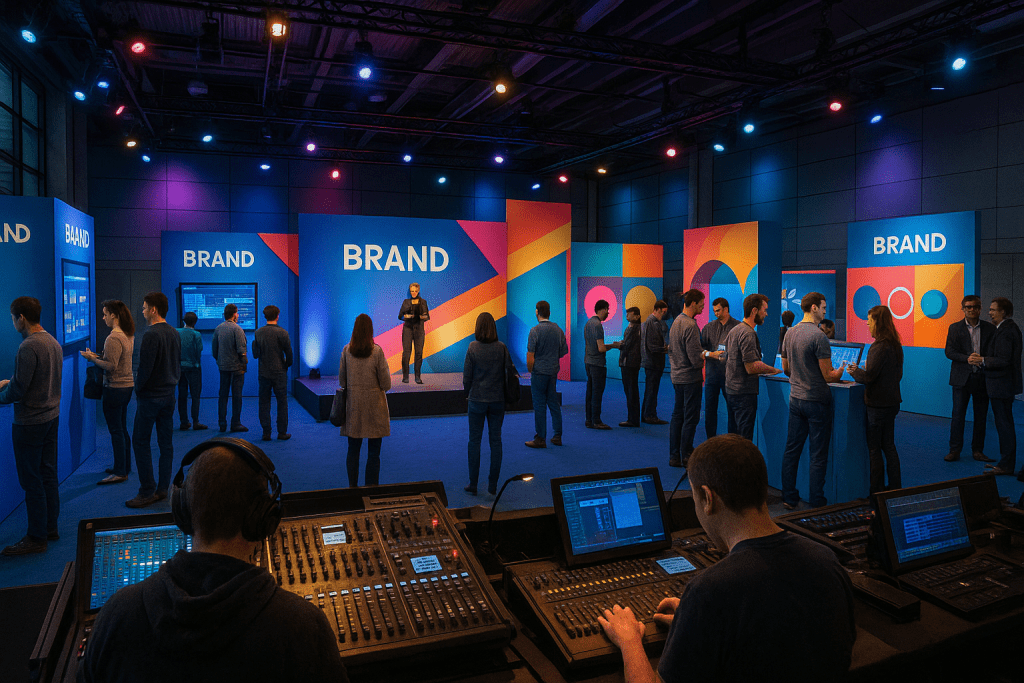
The latest wave of brand activations showcased a variety of approaches to on-site engagement. While exact formats varied, several trends stood out across multiple executions:
- Interactive installations: Many experiences moved beyond static photo backdrops to include hands-on elements, such as customizable product displays, tactile set pieces, or small participatory moments that rewarded visitors with samples or content.
- Cause and purpose integration: Some brands linked their in-person activations to broader messaging around well-being, sustainability, or community, using educational touchpoints or story-driven design to extend the narrative beyond product features.
- Compact, modular builds: Instead of large, single-use environments, several concepts relied on modular scenic elements that can be transported, reconfigured, and reused across different venues and event footprints.
- Content-ready layouts: Spaces were planned with camera angles and user-generated content in mind, prioritizing clean sightlines, recognizable vignettes, and consistent lighting to support short-form video and social sharing.
Manufacturers and solution providers in AV, staging, and scenic design are increasingly adapting their offerings to support this kind of flexible, content-friendly environment. Many detail their modular and rental-friendly systems on their official product pages and websites, positioning them for use in rapid-deployment brand experiences.
Industry impact
For agencies and in-house event teams, these activations underline a continued demand for hybrid-ready experiences. Even when events are primarily in-person, design decisions now routinely account for streaming, post-event recaps, and social media amplification.
This is shaping procurement and technical planning in several ways:
- Lighting and video: More attention is being paid to lighting that works for both attendees and cameras, with LED backdrops, flexible wash lighting, and compact camera positions integrated into the floor plan.
- Audio planning: Pop-up brand events in unconventional spaces require portable sound systems that are easy to deploy yet capable of handling presentations, music, and content capture.
- Data and feedback loops: QR-based interactions, digital registration, and on-site kiosks are becoming standard, giving brands real-time data on engagement and helping teams justify spend on experiential campaigns.
These requirements are driving closer collaboration between creative agencies, production vendors, and technology providers, with a premium on gear and designs that can move quickly from concept to execution.
Why this matters
For event technology professionals, the latest round of consumer brand activations points to a steady normalization of experiential tactics once considered niche. Interactive sets, modular staging, compact AV kits, and content-first layouts are now baseline expectations for many brand campaigns.
Vendors that can offer scalable, repeatable, and camera-ready solutions are well positioned as brands look to roll successful concepts into multi-city tours or recurring experiences. At the same time, agencies are under pressure to demonstrate measurable outcomes, pushing them to integrate data capture and analytics into otherwise highly visual builds.
As more brands follow the lead of companies like Morton Salt, Secret Deodorant, and Garnier, event professionals can expect ongoing demand for flexible production infrastructure, fast-turn creative development, and technology that supports both on-site impact and digital reach.