


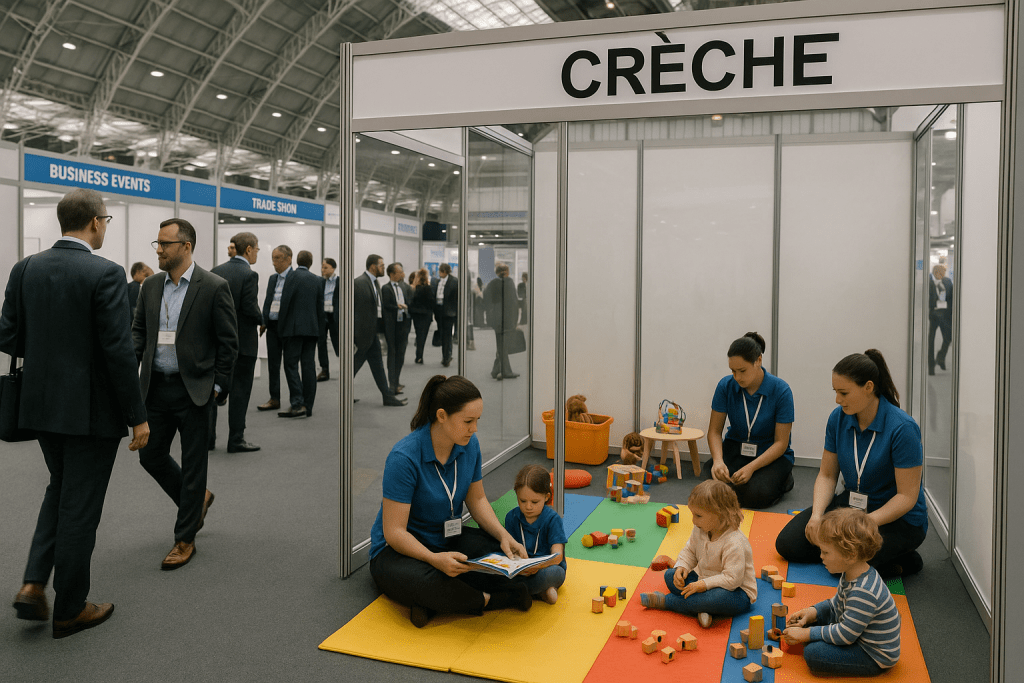
The Meetings Show is set to introduce a fully staffed on-site crèche at its next edition, positioning itself as an early mover among meetings, incentives and events trade shows in offering structured childcare for delegates. The initiative is being delivered in collaboration with specialist provider Nipperbout and is framed as part of a broader drive to make the event more inclusive and accessible for professionals with caring responsibilities.
The new facility will allow attendees to bring their children to the show and leave them in the care of trained staff during opening hours, potentially lowering a key barrier to participation for parents and guardians working in the sector.
Background and industry context
Flexible and family-friendly working practices have been rising up corporate agendas for several years, accelerated by the pandemic and the shift towards hybrid work. While many companies have adopted policies to accommodate staff with childcare needs, trade shows and large-scale business events have generally been slower to adapt, often assuming participants are able to travel and attend without dependants.
For event organisers, the issue is becoming more visible as talent demographics evolve. Younger professionals are moving into senior positions and expect employers and industry forums to recognise caring responsibilities. In parallel, diversity, equity and inclusion strategies increasingly address not only gender and ethnicity, but also the experiences of working parents and caregivers.
Against this backdrop, the introduction of a crèche at a major meetings industry trade show underscores how accessibility is extending beyond physical infrastructure and pricing models into the lived realities of attendees’ home lives. It also reflects a wider recognition that the ability to attend in person can be limited by non-work factors that organisers do not traditionally control.
Key details of the new crèche offering
The Meetings Show’s childcare provision will be managed by Nipperbout, a company that focuses on delivering temporary childcare services for conferences, exhibitions and public events. The partnership is intended to ensure that the facility meets safeguarding and operational standards appropriate for a professional environment.
Although detailed operational guidelines may vary, on-site crèches of this type typically include:
- Qualified childcare professionals responsible for supervising children within a dedicated, secure area of the venue.
- Structured activities designed to be age-appropriate, helping keep children engaged for the duration of parents’ meetings, sessions or appointments.
- Clear registration and check-in/check-out procedures to maintain security and ensure that only authorised adults collect children.
- Defined capacity limits and booking processes so that places can be allocated and managed ahead of the event.
The organisers are presenting the service as part of an ongoing programme to make the show more welcoming to a wider range of participants, including those who might otherwise reduce or cancel attendance because of childcare constraints. By locating the crèche within the event footprint rather than off-site, the show aims to provide parents with proximity and reassurance while they engage in meetings, education sessions and networking.
Industry impact and competitive landscape
While some conferences in sectors such as academia, healthcare and technology have experimented with childcare solutions, it remains unusual in the trade show environment, particularly in the business events and meetings space. The Meetings Show’s move may prompt other organisers to reassess attendee needs and consider whether childcare could support their own growth or retention objectives.
For exhibition venues and destination partners, the addition of a crèche also introduces new operational considerations, from health and safety protocols to insurance and space planning. If more organisers follow suit, venues may look to standardise guidelines or build dedicated family facilities into future refurbishments and expansions.
Suppliers that already operate in this area, such as specialist childcare agencies and family services providers, could see increased demand as organisers test different models. At the same time, the initiative may trigger discussion about the costs and responsibilities associated with offering childcare, including who funds the service, whether usage is subsidised, and how it is integrated into pricing for exhibitors and attendees.
Why this matters for event professionals and technology providers
For event planners and organisers, the introduction of an on-site crèche highlights a broader shift in expectations around attendee experience. Accessibility is no longer confined to physical access or digital inclusion; it also encompasses life-stage factors that influence whether someone can realistically attend. As organisers collect more data on attendance patterns, the impact of childcare support on delegate numbers, dwell time and satisfaction may become quantifiable.
Technology providers serving the events sector also have a stake in this evolution. Registration platforms and event apps may need to support additional data fields, workflows and consent mechanisms related to children, guardians and emergency contacts. Scheduling tools could incorporate childcare session bookings, while access control systems might be adapted to manage secure entry and exit for family areas.
Hybrid and virtual event platforms may see complementary opportunities. For some parents, remote participation remains the most practical solution; for others, on-site childcare could make in-person attendance viable for at least part of the programme. A more nuanced approach to participation models could emerge, combining flexible content access with physical support services.
From a policy standpoint, the move also intersects with corporate ESG and wellbeing agendas. Organisations encouraging staff to attend events may increasingly ask about childcare arrangements in the same way they currently question accessibility, sustainability or diversity commitments. This could influence how events are selected for sponsorship, exhibiting and attendance.
Conclusion
The decision by The Meetings Show to introduce a fully staffed crèche signals an important development in how business events address the realities of modern working life. By bringing professional childcare into the exhibition hall, the organisers are testing a model that could expand access for parents and caregivers who might otherwise stay away.
Whether this becomes a standard feature across the industry will depend on demand from attendees, support from exhibitors and sponsors, and the ability of organisers to manage the operational and financial implications. For now, the initiative provides a tangible example of how inclusivity can be translated into practical services on the show floor, and it is likely to be closely watched by event professionals, venues and technology providers considering their own responses to evolving delegate expectations.