


Introduction
As international summits proliferate and competition for senior delegates intensifies, organisers are under pressure to move beyond traditional conference formats. A growing number of high-profile gatherings, from creative industry festivals to climate negotiations, are rethinking how content is structured, how audiences participate and how outcomes are captured. Recent analysis of leading global summits suggests that the events creating the greatest impact share a common set of design principles that prioritise transformation over spectacle.
Background or industry context
The global summit market has expanded rapidly over the past decade. Flagship events such as Cannes Lions, COP climate conferences, the World Economic Forum’s Annual Meeting and major technology forums have become fixtures in corporate calendars. At the same time, digital platforms, hybrid formats and regional spin-offs have made high-level content widely accessible, eroding the exclusivity that once differentiated these gatherings.
Delegates are increasingly selective about travel and time away from their organisations. Many now benchmark summit experiences not only against other conferences, but also against consumer media, on-demand learning and internal leadership programmes. For event strategists, this means the traditional model of keynote-led programming, supplemented by exhibition areas and networking, is no longer sufficient to justify the investment of senior stakeholders.
In response, some of the world’s most watched summits are evolving into structured, multi-layered experiences that emphasise collaboration, experimentation and measurable outcomes. Rather than prioritising high-production plenary sessions alone, they are rebalancing effort and budget towards formats that support co-creation, policy shaping and long-term community building.
Key developments or announcement
Analysis of recent editions of prominent summits highlights five recurring principles in their design and delivery:
- 1. Purpose-led architecture of the programme
Leading summits are being built around clearly articulated missions rather than broad thematic tracks. Whether the stated goal is accelerating industry decarbonisation, setting creative benchmarks or aligning cross-sector regulation, the programme structure is designed backwards from defined outcomes. This often manifests as focused content streams, curated working groups and time-boxed initiatives that converge on specific deliverables, instead of loosely connected sessions under a general theme. - 2. Blended formats that value participation over passive consumption
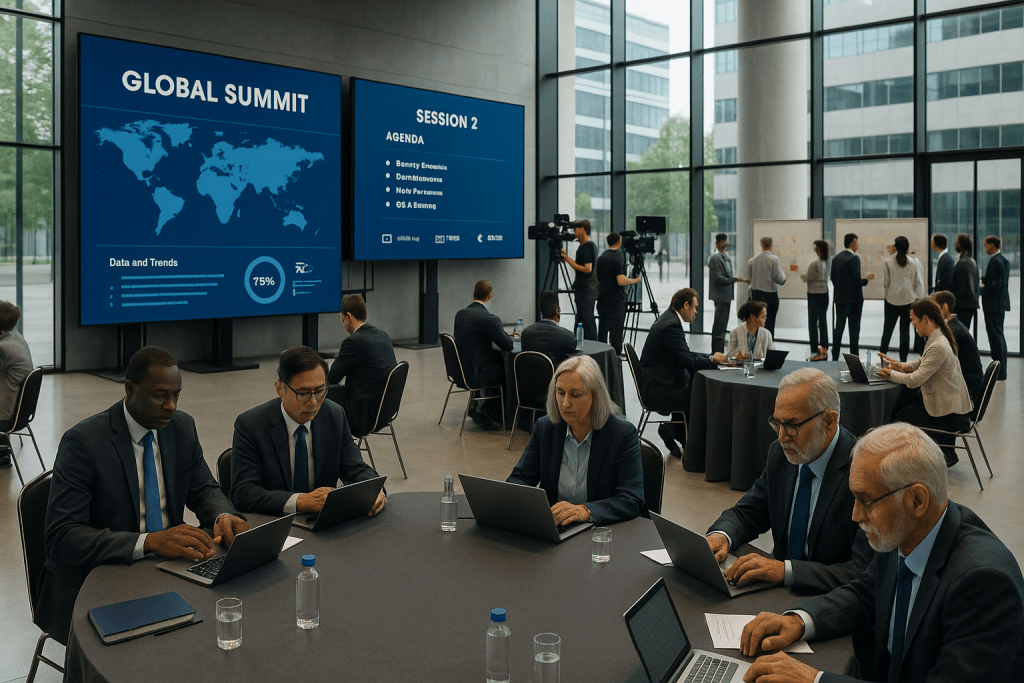
Instead of relying predominantly on keynote speeches and panel discussions, organisers are expanding the mix of interactive formats. Roundtables, labs, simulations, design sprints and small-group clinics increasingly sit alongside main-stage presentations. Delegates are invited to contribute expertise, test ideas and interrogate data, with content frequently designed for two-way or multi-way engagement. This shift is reinforced by spatial design, with floor plans allocating as much attention to collaborative zones as to auditoriums and stages. - 3. Data-informed curation and responsiveness
The most effective summits are using data before, during and after the event to refine content and participation. Pre-event surveys, community platforms and partner advisory boards shape agendas in advance. Onsite, organisers track session demand, audience sentiment and engagement patterns to adjust room allocations, repeat popular sessions or reframe discussions. Post-event analysis feeds into the design of subsequent editions, creating a feedback loop that incrementally improves relevance for returning delegates and sponsors. - 4. Integration of physical and digital journeys
Hybrid design is no longer confined to live streaming and on-demand recordings. Summits with global reach are deliberately crafting parallel yet connected experiences for in-person and remote participants. This can include dedicated online facilitation, digital matchmaking, asynchronous collaboration spaces and staggered content releases across time zones. The physical and digital journeys are conceived as one ecosystem, enabling extended engagement before and after the core event window. - 5. Emphasis on tangible legacy and continuity
A defining characteristic of transformational summits is their focus on what happens once the lights go down. Outcomes are captured not only in highlight reels and media coverage, but also in working papers, commitments, frameworks and pilot projects that extend beyond the venue. Organisers are establishing mechanisms for follow-up—such as year-round communities, steering groups, digital hubs and scheduled check-ins—to track progress on initiatives launched or accelerated during the summit.
Industry impact
These principles are starting to influence how organisers, agencies and technology providers approach summit design. For event strategists, the move towards outcome-focused architecture changes the metrics of success. Attendance figures and satisfaction scores still matter, but they are increasingly joined by indicators such as policy shifts, partnership announcements, project launches and community growth.
Production methodologies are also evolving. Creative and technical teams are being briefed earlier and asked to support more adaptive environments, with flexible staging, reconfigurable seating and spaces designed for both broadcast and collaboration. This in turn affects technology procurement, as organisers prioritise tools that support interactivity, data capture and hybrid participation over single-purpose show technologies.
Agencies and in-house teams are reporting greater demand for content strategy, facilitation expertise and stakeholder management, not just logistics and production. The role of the summit producer is becoming closer to that of a convenor or ecosystem orchestrator, tasked with aligning diverse stakeholders around common goals and ensuring that the event functions as a catalyst rather than an isolated moment.
Why this matters for event professionals and technology providers
For event professionals, these shifts carry operational and strategic implications:
- Programme design: Curating transformation-focused agendas requires deeper engagement with stakeholders well ahead of the event. Teams may need to incorporate research, audience mapping and co-design sessions into pre-production phases.
- Skills and roles: There is growing value in capabilities such as facilitation, experience design, data analysis and community management. Traditional roles around staging and logistics are now complemented by functions that focus on participation models and knowledge outcomes.
- Partnership structures: Sponsors and partners increasingly expect involvement in shaping content and initiatives, rather than visibility alone. This may lead to more collaborative programme development and multi-year partnership frameworks anchored in shared objectives.
For technology providers, the emerging summit model highlights specific product and integration opportunities:
- Engagement platforms: Tools that support small-group collaboration, structured dialogue, polling and moderated discussion are in higher demand, particularly those that work seamlessly across in-person and remote audiences.
- Data and analytics: Solutions that aggregate behavioural, engagement and sentiment data into actionable insights can directly influence how agendas are refined in real time and between editions.
- Community and continuity: Platforms enabling year-round communities, content libraries, working groups and project tracking can help summits demonstrate ongoing impact and maintain relevance between annual gatherings.
- Flexible infrastructure: AV, staging and broadcast tools that can quickly adapt to different formats—plenary, workshop, hybrid studio, or lab environment—support the kind of varied programming that transformational summits require.
Conclusion
The evolution of global summits from speaker-centric conferences to outcome-driven convenings is reshaping expectations across the business events ecosystem. Delegates are no longer satisfied with inspirational keynotes alone; they are looking for forums where they can actively shape agendas, build alliances and contribute to concrete progress on complex challenges.
For organisers and their technology partners, this creates both pressure and opportunity. Summits that embed clear purpose, participatory design, data-informed iteration, integrated hybrid journeys and strong legacy mechanisms are better positioned to stand out in a saturated market. As these principles gain traction, they are likely to influence not only high-profile global gatherings, but also regional conferences, sector-specific forums and corporate leadership events seeking to deliver more meaningful, measurable impact.