


Introduction
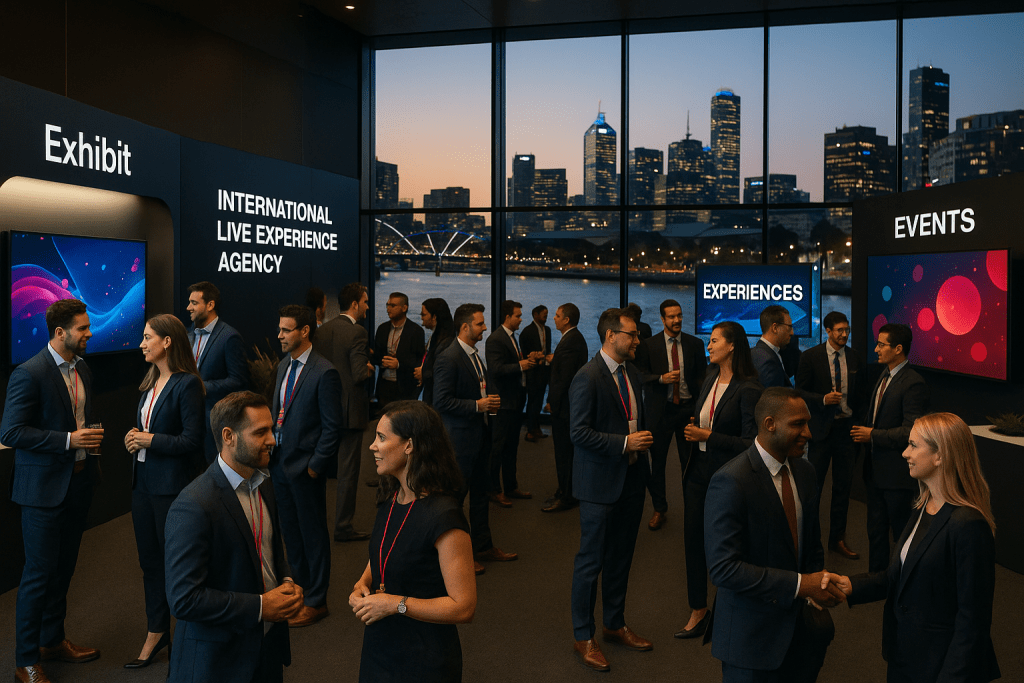
Asembl.group, a collective of specialist agencies focused on live experiences, has established a permanent presence in Australia, marking its latest step in a rapid global expansion. The new base in Melbourne will be led by partnerships manager Mike Linford and comes as the group reports more than £40 million in combined revenues within just 18 months of its launch.
The move aligns with what many in the sector describe as a renewed growth phase for Australia’s events and live experiences market, driven by in-person conferences, exhibitions and brand activations returning at scale.
Background or industry context
Formed as a global collective, asembl.group brings together specialist live experience agencies under a single umbrella, aiming to provide brands and organisers with integrated services across strategy, creative, production and experiential delivery. The model reflects a wider trend in the events and experiential sector, where independent agencies are increasingly consolidating or aligning in networks to serve international clients and hybrid event formats.
Australia has emerged as a strategically important market within this landscape. The country has a mature business events ecosystem, strong convention infrastructure and a growing appetite for experience-led marketing. Following pandemic-related disruption, the region has seen steady recovery in delegate numbers and spend, particularly across technology, financial services and government events.
Industry bodies and venues in Australia have also been investing in digital capabilities, data analytics and hybrid event infrastructure. This has opened opportunities for agencies that can combine creative live experiences with technology-enabled measurement and extended audience reach. For international groups such as asembl.group, the region offers access not only to the domestic market but also to Asia-Pacific hubs that rely on Australian venues and suppliers.
Key developments or announcement
The core development is asembl.group’s decision to set up a permanent operation in Melbourne, formalising what had previously been project-based or remote engagements in the region. Partnerships manager Mike Linford will lead the Australian presence, tasked with building relationships with brands, rights holders, venues and event technology providers.
According to the group, the launch coincides with its network surpassing £40 million in combined revenues, achieved in a year and a half since it formally began operations. While detailed financial breakdowns have not been disclosed, the figure signals significant client demand across the group’s portfolio of live experience services.
The Melbourne base is expected to focus on:
- Supporting global clients that are delivering events and brand experiences in Australia and wider Asia-Pacific markets
- Developing partnerships with local organisers, sports and entertainment rights holders, and corporate event teams
- Connecting Australian projects into asembl.group’s wider network of specialist agencies and capabilities
- Exploring collaborations with event technology platforms, production suppliers and digital experience partners in the region
The timing of the expansion reflects increasing confidence in Australia’s event pipeline, with major exhibitions, conferences and live activations returning to physical formats while maintaining digital components for remote audiences.
Industry impact
Asembl.group’s move adds another international player to the Australian live experience and events market at a time when competition for large-scale projects is intensifying. For local agencies and suppliers, the presence of a global collective may introduce new partnership models as well as additional pressure on pricing and innovation.
By integrating Australian operations into its network, asembl.group can offer multi-market campaigns and cross-border experience design, which may appeal to global brands seeking consistency across regions. This could see more events designed centrally while executed with regional nuance, enabling shared technology stacks, data standards and measurement frameworks.
For the broader industry, the expansion reinforces Australia’s position as a hub for experiential activity in Asia-Pacific. An increased footprint of global agencies and collectives often correlates with greater expectations around audience analytics, content personalisation and technology integration at events. This, in turn, can accelerate adoption of tools such as event apps, engagement platforms, livestreaming infrastructure and on-site data capture solutions.
The move may also influence talent flows and skills development. As international networks grow locally, they typically bring additional training, exposure to global best practices and opportunities for Australian professionals to work on international programs, potentially raising the bar for creative and technical execution in the region.
Why this matters for event professionals and technology providers
For event organisers and brand-side teams, asembl.group’s arrival in Australia signals a broader shift toward integrated, experience-led campaigns that span physical and digital channels. Organisers may see:
- More offers for end-to-end event services combining strategy, creative, production and measurement in a single framework
- Increased availability of global experiential formats and playbooks adapted for local audiences
- Heightened focus on data-driven decision-making around event design, audience engagement and ROI
Technology providers stand to be directly affected as well. International collectives often prefer scalable, interoperable technology stacks that can be deployed across multiple markets. This can create demand for platforms that support:
- Hybrid and virtual components integrated with in-person events
- Unified attendee data and analytics across regions
- Content distribution, on-demand viewing and extended event life cycles
Local event tech companies may find new partnership opportunities by aligning with agencies embedded in large international networks, gaining access to wider client bases and multi-territory projects. Conversely, they may also face competition from global technology vendors that already have established relationships with groups like asembl.group.
For venues and destinations, the development underscores the importance of strengthening their digital and production capabilities. International experiential networks often look for locations that can support complex technical requirements, from high-bandwidth connectivity to flexible spaces suitable for immersive installations and broadcast-quality streaming.
Conclusion
Asembl.group’s establishment of a permanent base in Melbourne, coupled with its reported £40 million in combined revenues just 18 months after launch, highlights both the speed of its growth and the strategic importance of the Australian market in the global live experiences ecosystem. As business events and experiential marketing continue to recover and evolve, the presence of global collectives is likely to shape how campaigns are conceived, resourced and measured.
For event professionals, suppliers and technology providers in Australia and beyond, the expansion is a reminder that the live experience landscape is increasingly interconnected. Those able to integrate creative, operational and digital capabilities—either independently or through partnerships—will be best placed to respond to rising expectations around engagement, measurement and cross-market consistency.