


Introduction
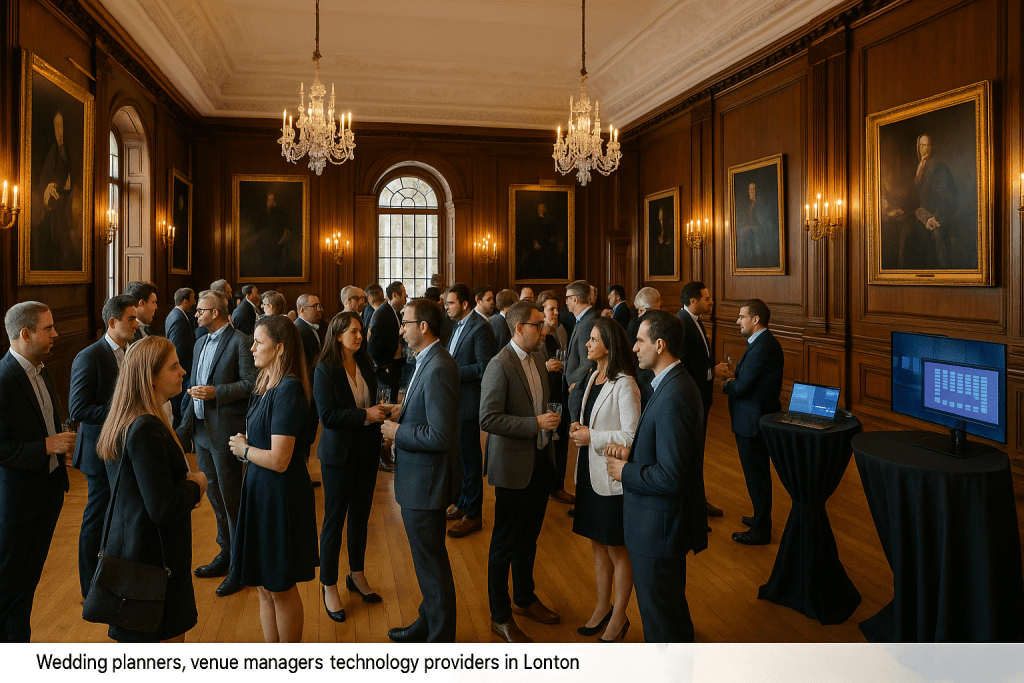
The UK Wedding Association (UKWA) recently held its second networking event at London’s Trinity House, bringing together planners, venues and suppliers to examine how the wedding sector is evolving and how technology is reshaping operations. The gathering offered a forum for industry stakeholders to discuss scaling strategies, client expectations and the tools now underpinning modern wedding experiences.
Background or industry context
The UK wedding market has undergone a period of rapid adjustment. Post-pandemic backlogs, shifting consumer priorities and economic pressure have all influenced how couples plan and purchase wedding services. At the same time, digital-first behaviours adopted during lockdown—such as virtual venue tours, online planning tools and hybrid attendance options—continue to influence how wedding events are designed and delivered.
For many wedding businesses, this has created a dual challenge: managing increased operational complexity while maintaining the high-touch, personalised service couples expect. Event technology is increasingly being used to bridge this gap, from customer relationship management (CRM) and automation tools to virtual guest management and live streaming services. Industry networking events, such as the UKWA gathering at Trinity House, are becoming key forums for sharing practical approaches to scaling responsibly and integrating technology without losing the personal element that defines weddings.
Key developments or announcement
The UKWA event at Trinity House was designed as a focused networking and knowledge-sharing session. While not structured as a large-scale conference, it combined informal discussion with structured content around growth, collaboration and operational efficiency. Attendees included independent planners, venue representatives, production companies, caterers and specialist suppliers from across the UK wedding ecosystem.
Discussions at the event centred on several common themes:
- Scaling service delivery: Many attendees reported increased demand, driven by postponed weddings and a rise in multi-day celebrations. The conversation focused on how to expand capacity—through staffing, partnerships and technology—without compromising service quality.
- Digital enquiry and booking journeys: Suppliers and venues shared experiences of redesigning their enquiry, proposal and booking workflows using CRM systems, online forms and automation tools to handle higher volumes and improve response times.
- Hybrid and remote participation: Although weddings have largely returned to in-person formats, planners noted continued interest in streaming ceremonies for remote guests, particularly for destination weddings and international families.
- Data and client insight: Some businesses highlighted how they are using data from website analytics, social platforms and email campaigns to refine their marketing and tailor offerings to specific segments, such as micro-weddings or eco-conscious couples.
Trinity House itself, a heritage venue overlooking the Tower of London, provided a case study in balancing tradition with contemporary event requirements. Venue representatives discussed how historic spaces are adapting to modern production standards, connectivity demands and the integration of discreet technical infrastructure.
Industry impact
While the UKWA networking event was relatively intimate compared with large-scale trade shows, it reflected broader movements across the event and wedding sectors. Several shifts discussed at Trinity House have direct implications for how suppliers, venues and planners operate:
- Normalisation of tech-enabled planning: Tools such as shared digital timelines, online guest portals, collaborative floorplans and project-management software are moving from optional extras to expected components of the planning process.
- Increased reliance on integrated platforms: Businesses are looking for systems that connect enquiry management, contracts, invoicing and communication in a single workflow. This trend mirrors adoption patterns in the wider event technology market, where end-to-end platforms are gaining ground over isolated point solutions.
- Professionalisation of supplier collaboration: The event highlighted a demand for more standardised processes around information sharing, technical specifications and run-of-show documentation between suppliers, mirroring practices common in corporate and exhibition environments.
- Persistent demand for remote access: Though hybrid weddings are not as prevalent as hybrid conferences, the option to support remote attendance—through streaming, recorded content or interactive elements—remains a differentiator for venues and planners.
Together, these factors suggest that the wedding sector is aligning more closely with broader event industry practices, particularly in areas such as digital infrastructure, data usage and cross-supplier collaboration.
Why this matters for event professionals and technology providers
For event professionals working in or adjacent to the wedding market, the trends surfaced at the UKWA event point to several practical considerations.
- Technology expectations are converging: Couples increasingly expect the same level of digital convenience they experience in other consumer categories—fast responses, transparent pricing, online discovery and self-service where appropriate. Planners and venues that manage conferences or corporate events alongside weddings can leverage existing tools across both segments.
- Opportunities for specialised solutions: Technology providers focused on event management, registration, streaming or audience engagement can adapt products to suit wedding workflows. Features such as seating plan management, RSVP tracking, guest communications, digital invitations and multimedia timelines are becoming central requirements.
- Cross-sector learning is valuable: Practices developed in the corporate and exhibition space—such as detailed run-sheets, integrated AV design and rigorous contingency planning—are increasingly applicable to complex weddings, particularly high-budget or multi-day programmes.
- Data can inform service design: Understanding which channels drive enquiries, what information couples request early in the process and how guests engage with digital content can help refine both service packages and technology investments.
- Partnership models are evolving: The networking format at Trinity House emphasised the importance of collaborative relationships between planners, venues and suppliers. Technology providers that support shared access, permissions and workflow visibility across stakeholders are likely to find a receptive audience.
As the boundaries between leisure, live events and experiential marketing continue to blur, the wedding sector offers a real-world testbed for consumer-facing event technologies. Lessons from weddings—where emotional stakes are high and tolerance for failure is low—often translate into more robust solutions for other event types.
Conclusion
The UK Wedding Association’s networking event at Trinity House underscored the sector’s ongoing transition toward more structured, technology-enabled operations. While the fundamentals of weddings remain rooted in personal relationships and creative delivery, the mechanisms that support planning, communication and execution are steadily becoming more digitised.
For event professionals and technology companies, the conversations taking place in forums like this signal both the challenges and opportunities ahead. As demand fluctuates and client expectations evolve, those who combine robust operational systems with flexible, experience-led design are likely to be best placed to serve the next generation of couples—and to apply those capabilities across the wider event landscape.