


University Audio deployment supports hybrid teaching and campus collaboration
The University of Manchester has expanded its use of Sennheiser audio solutions to support teaching, hybrid learning and collaboration across its campus. The rollout forms part of a wider technology strategy to deliver clear speech reinforcement, reliable audio capture and flexible room usage for staff and students.
By building its classroom and collaboration systems around a consistent Sennheiser ecosystem, the university aims to improve intelligibility for in-person and remote participants, streamline support across spaces and create a more unified experience in lecture theatres, seminar rooms and meeting spaces.
Campus strategy focuses on consistent audio experience
The university has equipped a broad mix of teaching and collaboration rooms with Sennheiser solutions to handle everything from large lectures to small-group seminars and hybrid meetings. A consistent audio platform is central to the strategy, helping technical teams design repeatable room types, reduce complexity and ensure predictable performance.
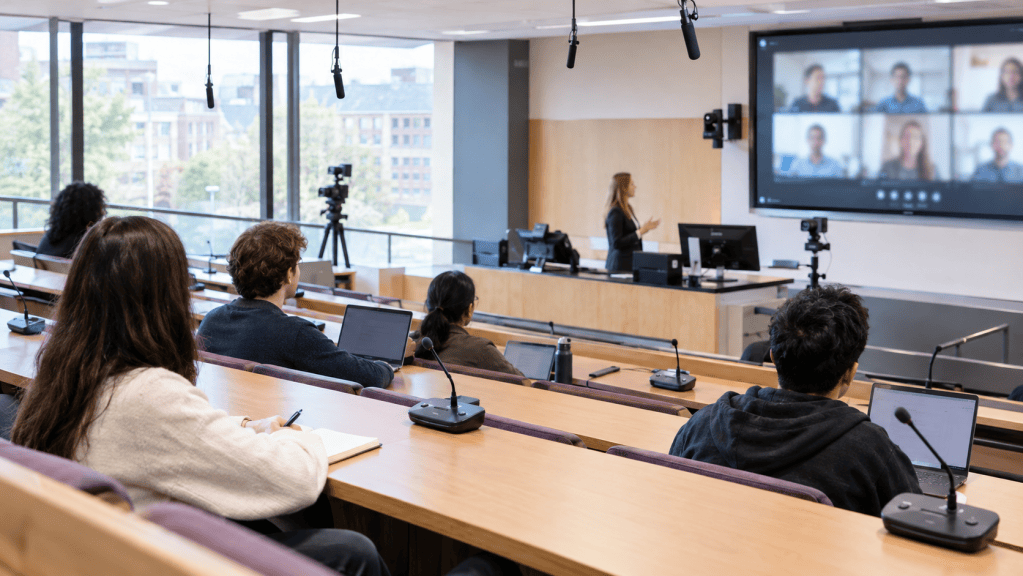
Room configurations are designed to support hybrid delivery, with audio systems specified to pick up lecturers and student contributions clearly for remote participants, while also reinforcing speech for those on site. This approach supports the university's move toward flexible teaching formats and more active learning styles.
Microphone technology supports flexible teaching formats
Sennheiser microphone technology is a core component of the deployment, providing reliable capture for both instructors and students. The university uses a mix of installed and mobile microphone options to match different room sizes and pedagogical approaches.
Hands-free solutions for lecturers enable natural movement around teaching spaces without compromising audio pickup, while additional microphones support student questions and group work. The goal is to maintain intelligible audio for recording and streaming, regardless of where contributors are located in the room.
Audio integration enables hybrid learning and collaboration
The Sennheiser systems are integrated into wider audiovisual infrastructures that support video conferencing and lecture capture. By focusing on high-quality audio at the core, the university can offer smoother hybrid experiences where remote participants can clearly follow teaching content and in-room discussions.
The deployment also supports non-teaching activities, including meetings and collaboration between staff and external partners. Spaces equipped with the same audio platform are easier to book, support and use consistently, making it simpler for users to move between buildings without facing different operating models in each room.
Operational benefits for support and maintenance
Standardizing on Sennheiser across many rooms gives the university's AV and IT teams a more predictable environment to manage. Common device types, similar configurations and shared management approaches reduce the time required for troubleshooting and maintenance.
Centralized monitoring tools and consistent configurations can help teams track status, plan updates and scale proven room designs to new spaces. This not only improves reliability for day-to-day teaching but also supports longer-term campus planning as the university continues to adapt spaces for new ways of learning.
Audio infrastructure underpins future learning environments
The University of Manchester's adoption of Sennheiser audio solutions demonstrates how universities are treating sound quality as a foundational element of modern learning environments. With hybrid teaching now embedded in many programmes, clear and reliable audio is essential to maintaining engagement and accessibility for all participants.
By investing in a campus-wide audio strategy, the university is positioning its facilities to support evolving pedagogies, more collaborative teaching and ongoing digital transformation in higher education. The Sennheiser ecosystem provides a platform that can be extended as new teaching models, room types and technologies are introduced in the future.

