


B Corp certified Sustainable Wedding Alliance has released its 2025 Impact Report, placing real-world stories from member businesses at the centre of its sustainability reporting. The organisation for wedding suppliers and venues uses the report to document how companies are cutting carbon emissions and changing procurement practices across the wedding supply chain.
Alongside these narratives, Sustainable Wedding Alliance has made its methodology and data, aligned with the B Corp framework, publicly available. The organisation positions this transparency as an invitation for other event and wedding professionals to understand how impact is being measured and tracked.
Report places Member Story at Core of Sustainability Data
The 2025 Impact Report opens not with high-level statistics but with detailed case studies from member businesses. These stories showcase practical actions that suppliers are taking to reduce environmental impact, and how those actions integrate into day-to-day operations in the wedding sector.
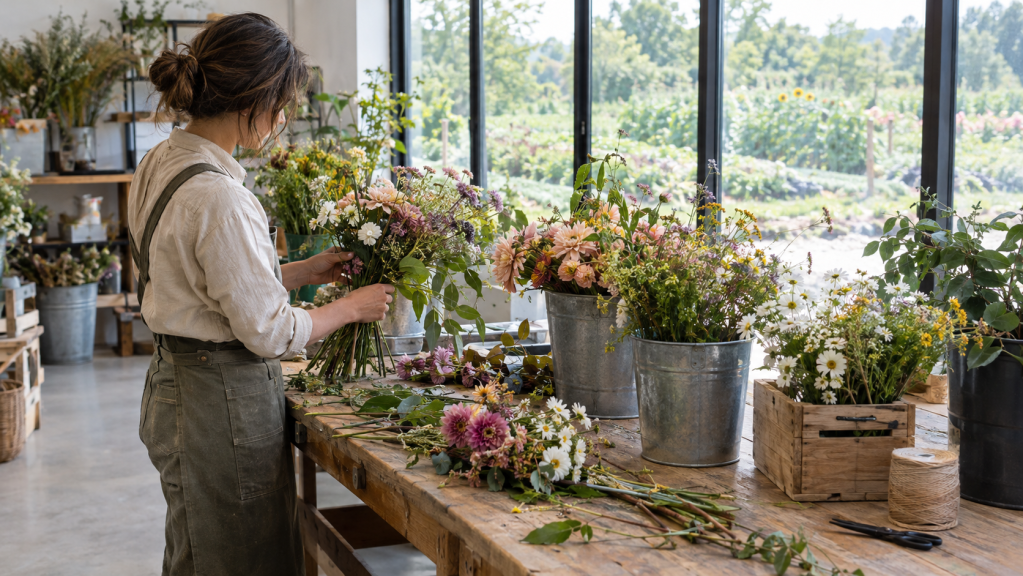
One example highlighted in the report is a florist who now grows the majority of her own flowers, reaching a level where 85% of her stems come from her own production. By shifting to locally grown flowers rather than imported stock, she is portrayed as reducing transport-related emissions and increasing control over growing practices.
Other featured members share how they have reworked sourcing, logistics and waste processes for weddings. While the report emphasises personal journeys and business decisions, these stories are positioned as evidence that sustainability commitments can translate into measurable operational change.
B Corp Framework underpins Measurement and Verification
Sustainable Wedding Alliance holds B Corp certification, and the 2025 Impact Report is structured to reflect that framework. The organisation publishes the underpinning methodology and data alongside the member narratives, giving readers a view of the criteria and assessment approach used.
By referencing the B Corp framework, the report connects individual supplier actions to established impact categories such as environment and community. This alignment is presented as a way to ensure that the stories featured are not isolated anecdotes but part of a broader measurement system.
The report details how information has been gathered from members and how it is aggregated into an annual impact picture for the organisation. This includes how progress is tracked over time and how the Alliance assesses whether member actions correspond to reductions in emissions or improvements in supply chain practices.
Focus on Carbon Reduction and Supply Chain Rethink
Across the case studies, carbon reduction emerges as a recurring theme. The florist example illustrates how growing flowers domestically can cut down on transport distances, refrigerated shipping and associated emissions. The report positions such choices as one pathway for creative suppliers to influence the environmental footprint of weddings.
Beyond floristry, member stories cover how businesses are questioning long-established sourcing habits and re-evaluating their suppliers. The Impact Report documents how some companies are prioritising local or regional partners, seeking lower-impact materials, or consolidating deliveries to reduce transport requirements for events.
These operational changes are described in the context of the complex wedding supply chain, which can involve numerous vendors. By focusing on how individual companies rework their own practices, the report aims to show where tangible adjustments are being made, from product selection to logistics planning.
Transparency invites wider Event Industry Engagement
A key element of the 2025 Impact Report is the decision to share the Alliance’s methodology and working data rather than presenting only high-level conclusions. The organisation publishes the full framework, including how member input is collected and how impact indicators are defined.
This approach allows wedding professionals, venues and other event stakeholders to see the steps behind the final figures and case studies. The availability of this information is framed as an opportunity for others to learn from the process, benchmark their own activity or adapt aspects of the methodology.
By making the data and calculations accessible, Sustainable Wedding Alliance also opens its work to scrutiny and discussion within the sector. The report encourages readers to explore how specific actions, such as adjusting supply routes or changing product mix, feed into measurable outcomes on carbon and resource use.
Role of Sustainable Wedding Alliance in Supplier Network
Sustainable Wedding Alliance operates as a network for businesses involved in weddings, including suppliers and service providers. The 2025 Impact Report underscores the organisation’s role in connecting these companies around shared sustainability objectives and providing a structure for reporting progress.
Through its B Corp certification and impact reporting, the Alliance positions itself as a coordinator for sustainability efforts in a segment of the events market that spans venues, production services and creative suppliers. The member stories in the report illustrate how different types of businesses interpret and implement sustainability within their own context.
The report also reflects how the Alliance uses its framework to gather consistent information from members year on year. This recurring process aims to build a longitudinal view of how sustainability initiatives are evolving within the wedding supply chain, and where further changes may be taking place.
Impact Report underscores People-driven Change in Wedding Sector
By leading with individual business stories, the Sustainable Wedding Alliance 2025 Impact Report emphasises the role of people and decision-making in driving sustainability outcomes. The florist growing 85% of her flowers is one of several examples used to show how choices at supplier level can reshape the environmental profile of wedding events.
The combination of narrative accounts and B Corp aligned data is presented as a way to connect personal commitment with documented progress. For event professionals and wedding planners engaging with the report, the structure offers both qualitative insight into supplier journeys and quantitative context on impact measurement.
As wedding and event businesses continue to face pressure to demonstrate credible sustainability action, the 2025 Impact Report from Sustainable Wedding Alliance provides a structured view of how a defined group of suppliers is responding. Through open publication of its methodology and the experiences of its members, the organisation sets out a detailed snapshot of current activity within this niche of the wider events industry.

