


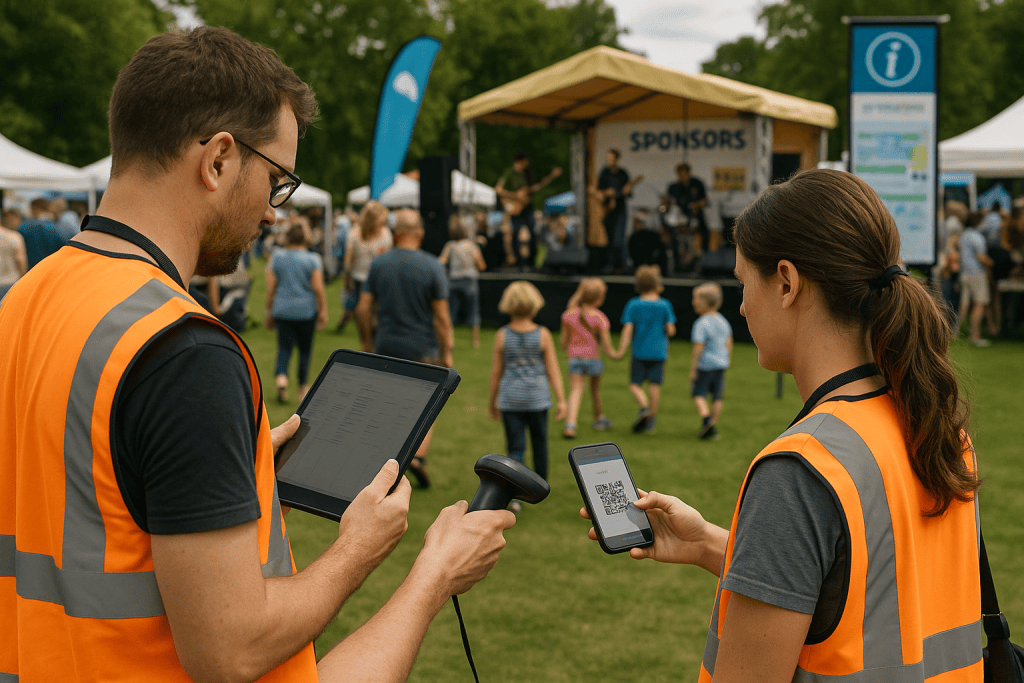
Community-based events, from local festivals to regional shows and sporting fixtures, are undergoing a quiet digital shift. While their core value has always centred on in-person connection, organisers are increasingly turning to technology to streamline operations, broaden reach and deepen engagement without undermining the character that makes these events distinctive.
Rather than replacing physical experiences, digital tools are being deployed to support volunteers, improve planning and enhance the attendee journey before, during and after an event. The emphasis is on complementing long-standing traditions, not reinventing them.
Background: people first, technology second
For many communities, annual events are milestones in the local calendar, often driven by volunteers, small committees and long-standing partners. Success is typically judged not by headline revenue or global attendance figures, but by participation from residents, satisfaction among regular attendees and the health of community partnerships.
Historically, these gatherings have relied on informal networks, word-of-mouth promotion, paper-based ticketing and manual planning processes. That approach has fostered strong relationships but can create challenges as expectations change. Audiences now assume basic digital services as standard – from online information and simple booking flows to timely updates on schedule changes.
At the same time, organisers are under pressure to demonstrate value to sponsors, local authorities and participants. Being able to quantify engagement, understand who is attending and adapt programming accordingly is becoming increasingly important, even for modestly sized events.
Key developments in digital adoption
In response, many community event teams are selectively adopting technology in targeted ways rather than attempting wholesale transformation. Several patterns are emerging across different types of local events:
- Digital registration and ticketing: Basic online registration systems are allowing organisers to manage capacity, reduce queues and gain clearer insight into attendance. Even when tickets remain free, simple sign-up forms can provide useful data on visitor profiles and expected numbers.
- Hybrid and remote access elements: While few community events are becoming fully hybrid in the corporate sense, some are streaming headline moments, competitions or performances to remote audiences. This is particularly useful for participants who are geographically remote, have accessibility needs or are unable to attend in person.
- Scheduling and programme visibility: Digital timetables accessed via mobile devices are replacing or supplementing printed programmes. This allows real-time updates for weather-related changes, safety notices or last-minute additions to schedules.
- Volunteer coordination tools: Several events are experimenting with basic event management platforms and communication tools to organise volunteer shifts, briefings and logistics. This helps distribute information more evenly and reduces reliance on a small number of individuals holding all operational knowledge.
- Audience feedback and insight: Short digital surveys and post-event questionnaires are being used to gather structured feedback, moving beyond anecdotal comments to measurable insight that can inform future planning and funding applications.
These developments are typically incremental and pragmatic, shaped by available budget, digital confidence among organisers and the capacity of volunteer teams to adopt new processes.
Balancing digital tools with local character
A recurring concern among community organisers is that too much focus on technology could dilute the distinctive atmosphere of their event. To address this, many are taking a conservative approach, prioritising solutions that remove friction rather than change the nature of participation.
Digital elements are most often placed around the core experience rather than in the centre of it. Online registration may manage entry, but the welcome is still delivered by local volunteers. Live streams might capture a key competition, but the emphasis remains on the on-site energy, local traders and physical interactions that define the event.
This approach also acknowledges varying levels of digital inclusion. Organisers are careful to maintain offline options for those who prefer to buy on the gate, use printed programmes or are less comfortable with technology. The objective is to increase access, not create barriers.
Industry impact and emerging practices
The gradual digitalisation of community events is influencing suppliers and technology providers serving this segment of the market. There is growing demand for tools that are affordable, easy to implement and scaled to smaller events, rather than complex platforms designed for large-scale conferences or exhibitions.
Key emerging practices include:
- Modular technology adoption: Organisers are favouring modular solutions that can be deployed piece by piece – for example, starting with online ticketing and later adding feedback tools or simple mobile schedules.
- Data-light decision making: Even basic attendance and engagement figures are influencing programming decisions, helping teams understand which activities resonate most strongly and where to invest limited resources.
- Collaboration with local stakeholders: Technology decisions are increasingly made in consultation with local authorities, sponsors and community groups to ensure that any digital tools align with wider objectives such as tourism promotion, accessibility or youth engagement.
- Resilience planning: The experience of recent disruptions has encouraged some events to build in digital contingencies, such as simple live streams, online information hubs or remote participation options that can be scaled up if in-person attendance is restricted.
While many of these initiatives are still at an early stage, they are setting expectations for what constitutes a well-run community event in a more digitally aware environment.
Why this matters for event professionals and technology providers
For event professionals, the evolution of community events offers a view of how digital transformation can proceed in a low-budget, volunteer-led context. It underlines the importance of prioritising user needs, maintaining accessibility and avoiding overcomplication.
For technology providers, this segment represents a distinct market with specific requirements:
- Tools need to be intuitive enough for teams with limited technical support.
- Pricing models must reflect smaller event scales and irregular frequency.
- Features that deliver immediate operational value, such as check-in, updates and simple analytics, tend to be more attractive than advanced configurations.
- Support and training resources are often as important as the product itself, given the reliance on volunteer turnover and part-time organisers.
Vendors that can translate capabilities developed for larger events into simplified, accessible solutions for local organisers may find new opportunities, particularly as expectations around digital standards continue to rise.
Conclusion
Community events are demonstrating that it is possible to adopt digital tools without losing the essence of what makes these gatherings meaningful. By introducing technology in a measured way – focused on access, clarity and operational support – organisers can preserve the human connections at the heart of their events while meeting modern expectations.
As this segment continues to adapt, the most successful initiatives are likely to be those that respect local identity, maintain inclusivity and treat digital not as a replacement for in-person experience, but as a supportive layer that helps community traditions endure.