


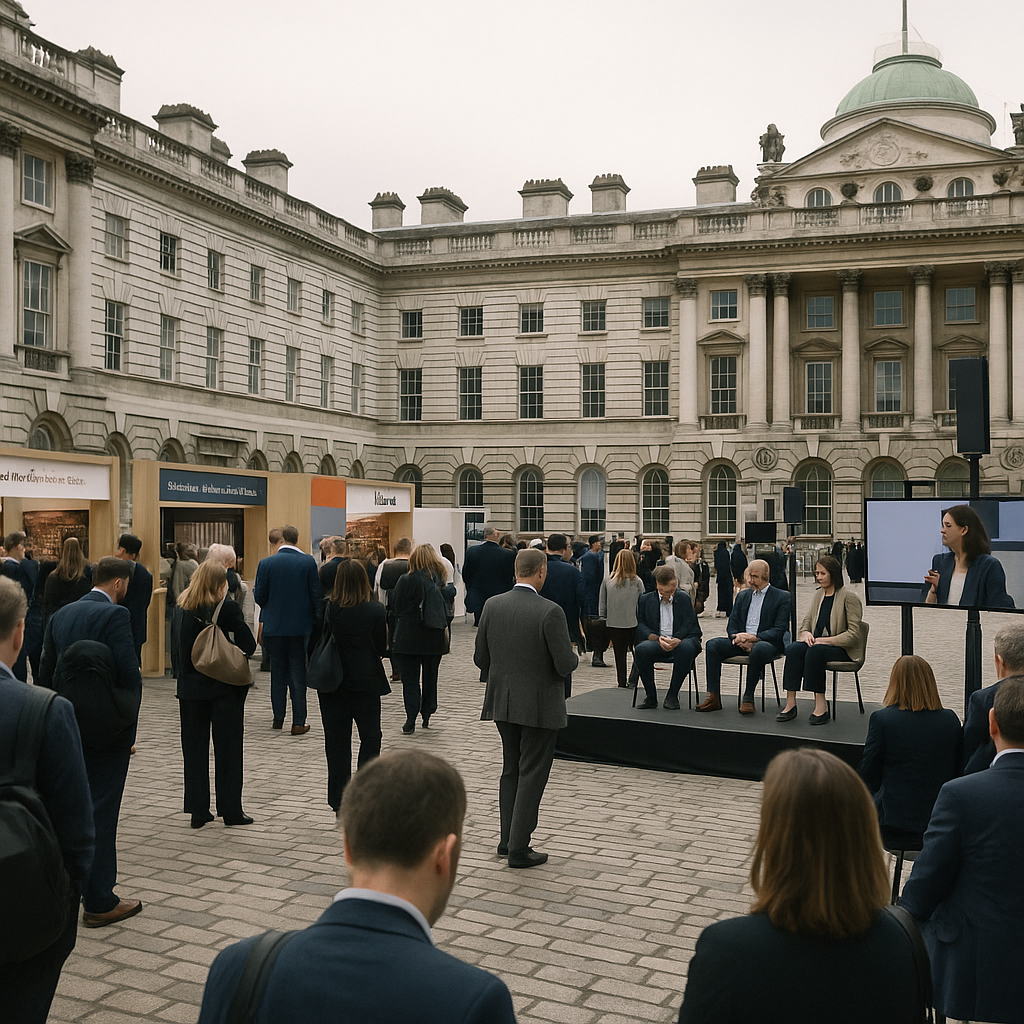
Next-generation event design and attendee engagement will be in focus at the upcoming Unique Venues of London (UVL) Showcase, as organisers confirm the latest expert panel for the 2026 edition. The showcase will take place at Somerset House on Tuesday 6 October 2026 and will feature a growing education programme alongside venue exhibitions and networking.
The newly announced session brings together senior figures from agencies and landmark cultural venues to explore how emerging formats, digital tools and new audience expectations are reshaping live, hybrid and experiential events hosted in distinctive spaces across the capital.
Background: London venues adapt to new attendee expectations
Event organisers working with heritage, cultural and non-traditional spaces are under pressure to deliver experiences that go beyond standard conferences or receptions. Audiences now expect richer storytelling, seamless technology integration and more personalised journeys, whether attending in person or participating remotely.
Unique Venues of London, a marketing consortium representing a wide range of unusual and character venues, has positioned its annual showcase as a forum for both commercial meetings and knowledge-sharing. The 2026 edition at Somerset House continues this approach by pairing venue discovery with structured education sessions aimed at corporate planners, agencies and association organisers.
The forthcoming panel on next-generation event experiences reflects a broader trend: venue operators and agencies are collaborating more closely to integrate content, technology, and space design. This includes the use of data-driven planning, immersive media, and flexible hybrid formats that can be adapted for different audience sizes and objectives.
Key developments: expert panel confirmed for 2026 showcase
Organisers have revealed the next panel in the education line-up for the Somerset House showcase, focused on the future of event experiences in unique venues. The session will feature:
- Zoe Light, Head of Agency at Asembl, bringing an agency-side perspective on client expectations, creative strategy and the role of data and insight in shaping event concepts.
- Clare Arouche, Head of Hospitality & Events at The National Gallery, offering a viewpoint from a major cultural institution that regularly hosts corporate and public-facing events within a heritage setting.
- Martin Dibben (role and organisation as announced), contributing additional expertise on how venues and organisers can collaborate to deliver high-impact experiences.
The panel will sit within a broader education schedule designed to give buyers practical insight into working with characterful spaces that have complex operational requirements but strong experiential potential. While full session details have not yet been disclosed, the theme of next-generation event experiences is expected to cover topics such as:
- How agencies and venues are incorporating digital layers into physical events.
- Balancing heritage preservation with modern production and AV requirements.
- Evolving attendee expectations around interactivity, accessibility and sustainability.
- The role of collaboration between brands, agencies and venue teams in delivering innovative formats.
The showcase at Somerset House will also provide buyers with the opportunity to meet representatives from a range of London venues, explore spaces in person, and discuss upcoming briefs. The education programme is being built to complement this marketplace element, giving context to how these spaces can be used for more experimental or technology-enabled activations.
Industry impact: bridging venue heritage and digital innovation
For the wider events sector, the focus on next-generation experiences within a consortium of unique venues underscores a shift away from treating heritage and character locations as purely static backdrops. Instead, these sites are increasingly being used as canvases for storytelling, digital content and brand experiences.
Venues such as The National Gallery and Somerset House must balance stringent conservation requirements and public access with the demands of modern event production. This often involves careful planning around load-in, technical infrastructure, connectivity and audience flow, as well as an understanding of how immersive content, projection, or interactive installations can be deployed without compromising the building fabric or core visitor experience.
By convening venue leaders and agency specialists on a dedicated panel, the UVL Showcase is signalling that innovation is not limited to purpose-built conference centres. Instead, culturally significant spaces are positioning themselves as testbeds for new formats, provided that technology and experience design are integrated thoughtfully and in line with venue guidelines.
Why this matters for event professionals and technology providers
For planners, producers and event technologists, the Somerset House showcase and its education agenda highlight several practical considerations:
- Strategic use of space: Unique venues demand tailored layouts, audience journeys and content plans. Technology must fit the architecture and narrative of the venue, rather than being imposed as a generic solution.
- Hybrid-ready infrastructures: Even when events are primarily in-person, clients increasingly expect live streaming, on-demand content or remote participation options. Working in heritage venues requires early-stage conversations about connectivity, power, camera positions and noise management.
- Collaborative planning: Agencies, production teams and venue operators need to collaborate from concept stage to align on feasibility, risk, and guest experience. The panellists’ combined perspectives underscore the importance of early dialogue on everything from content formats to audience data capture.
- Technology as an enabler, not the focus: In cultural spaces, the venue itself is often a central part of the experience. Event technology providers must therefore design solutions that enhance rather than overshadow the setting, whether through subtle projection, discreet audio systems or low-profile interactive elements.
- Sustainability and compliance: Many unique venues are tightening policies around waste, supplier access and technical installations. Next-generation experiences need to align with these frameworks, pushing providers to develop more sustainable and compact solutions.
Technology partners attending or following the showcase can gain insight into how their products and services might be adapted for historically significant or architecturally distinctive environments, where constraints are high but the potential for memorable experiences is substantial.
Conclusion
As the 2026 Unique Venues of London Showcase approaches, the unveiling of a panel dedicated to next-generation event experiences signals that innovation within heritage and cultural spaces remains a priority for the city’s venues and agencies alike. By placing a spotlight on collaboration, digital integration and evolving audience expectations, the Somerset House event is set to provide practical guidance for professionals looking to push the boundaries of what is possible in non-traditional environments.
For event organisers and technology providers, the showcase offers both a networking platform and a lens into how London’s most distinctive venues are preparing for the next phase of experiential, hybrid and content-rich events.

