


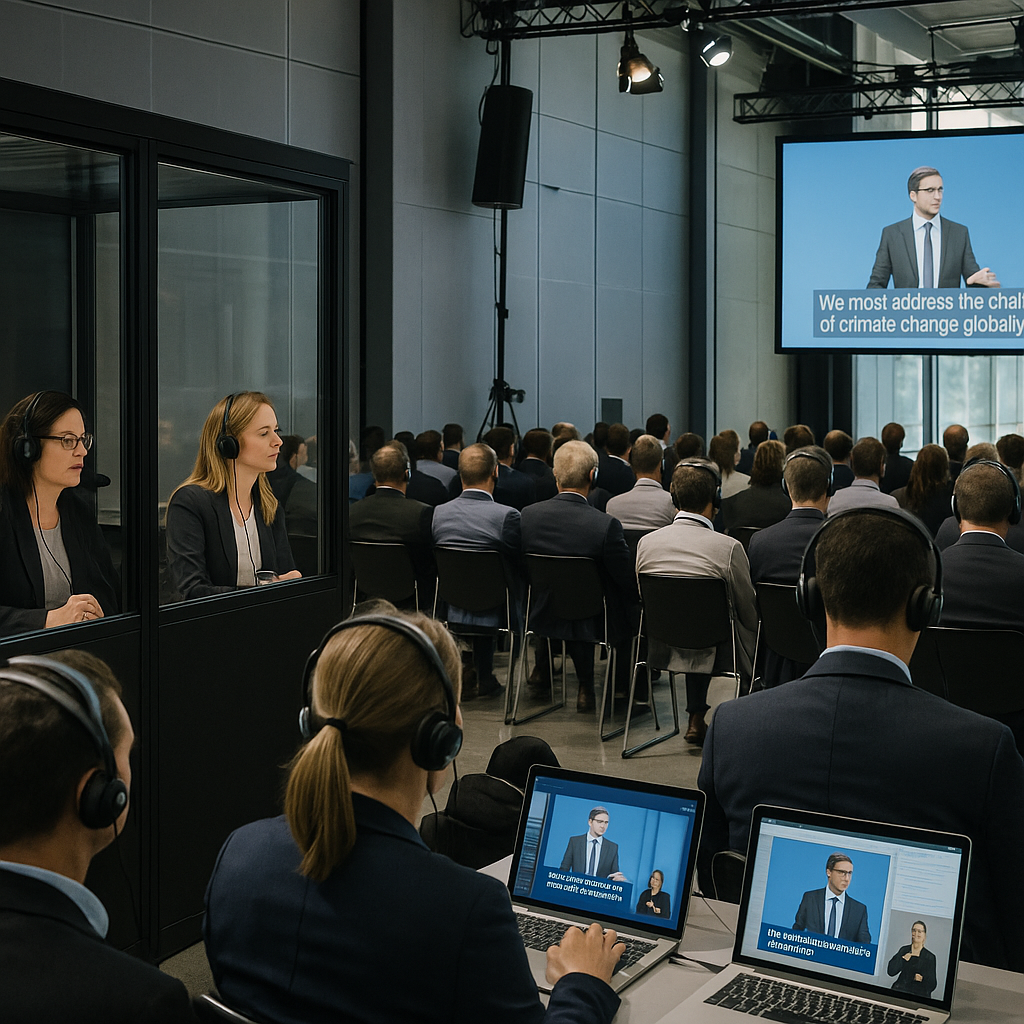
Language has become a strategic factor in how events are designed, delivered and experienced, as organisers increasingly serve international and diverse audiences onsite and online. TranslateAble, a specialist provider of language services for events, is positioning itself around this need, focusing on translation, interpreting, captioning and localisation to widen access and engagement at conferences, exhibitions and hybrid events.
The company, led by founder and CEO Julia Danmeri, is working with organisers to embed language accessibility across event operations, rather than treating it as a last-minute add-on. Its approach spans human interpreting, sign language, remote participation support and platform-agnostic technology that can plug into a range of event platforms and production setups.
Background and industry context
As business events globalise and hybrid formats mature, organisers are under pressure to cater for multilingual audiences, participants with hearing impairments and delegates joining from different regions. This has pushed language accessibility from a niche service to a core operational requirement for many conferences and corporate events.
The shift is being driven by several factors: the rise of remote and hybrid participation, an increased focus on diversity, equity and inclusion (DEI), and demand from sponsors and stakeholders for measurable reach beyond a single language group. At the same time, rapid advances in AI-powered translation tools have sparked debate over how far automated systems can replace human interpreters and captioners in live event settings.
Within this context, TranslateAble is advocating a blended model that combines specialist human expertise with flexible technology, seeking to deliver accuracy and accessibility without locking organisers into a single event platform or proprietary ecosystem.
Key developments and service focus
TranslateAble’s core offering is built around several interlinked services designed to support both physical and digital event formats:
- Spoken translation and interpreting: Support for in-person sessions, remote speakers and hybrid panels, with professional interpreters providing simultaneous or consecutive interpreting across multiple languages.
- Remote interpreting and integration: Technology that allows interpreters to work offsite, while delegates listen via event apps, web platforms or dedicated devices, helping organisers manage multilingual content without significantly altering production workflows.
- Sign language and accessibility services: Provision of sign language interpreters and accessible layouts for sessions, helping organisations meet inclusion objectives and accessibility standards for attendees who are deaf or hard of hearing.
- Captioning and subtitles: Live and post-event captioning for keynotes, panels and on-demand content, supporting both accessibility and content reuse across geographies.
- Localisation of event content: Adaptation of agendas, speaker materials, marketing assets and platform interfaces to align with local languages and cultural expectations, rather than simply translating text word-for-word.
Danmeri places particular emphasis on maintaining human oversight within these services, arguing that interpreters, translators and captioners remain essential for nuance, tone and context in professional and technical event environments. While automated tools may support workflows in the background, the company’s stance is that human specialists are still critical for high-stakes, brand-sensitive or regulatory content.
A notable part of the company’s model is its platform-agnostic approach. Instead of pushing a proprietary event platform, TranslateAble works with the systems organisers already use, including streaming platforms, event apps and AV infrastructure. This is designed to allow event teams to maintain their existing tech stacks while adding multilingual and accessibility features on top.
Industry impact
The increased attention on language services is impacting how events are scoped, budgeted and marketed. Organisers are beginning to address language accessibility earlier in the planning cycle, building it into programme design and technical specifications rather than treating it as a limited service for select sessions.
For international conferences and exhibitions, multilingual delivery can expand audience reach, enabling attendees to participate more fully in sessions, networking and digital content. For corporate and association events, improved accessibility through captioning and sign language can help meet internal inclusion targets and external regulatory expectations.
Technical producers and AV teams are also affected, as they now need to accommodate audio feeds for interpreters, monitor latency for remote language channels and ensure captions and sign language are visible both on-site screens and virtual interfaces. Providers like TranslateAble, which claim to operate independently of specific event platforms, are positioning themselves as support partners for production teams facing these new requirements.
On the content side, localisation is influencing how speakers and organisers think about session structure. Presentations may need to allow for interpreting pauses, more visual communication, or pre-translated materials to ensure clarity across language groups. Post-event, captioned and translated recordings can extend the lifespan and geographic impact of sessions, creating new opportunities for content monetisation and year-round engagement.
Why this matters for event professionals and technology providers
For organisers, the way language is handled can directly affect registration numbers, satisfaction scores and perceived event value. In multilingual markets, offering sessions only in one language can limit attendance or reduce engagement, particularly for technical or educational formats where understanding detail is essential.
Integrating translation, interpreting and accessibility tools early allows planners to:
- Design programmes that are accessible to wider audiences, including those with disabilities.
- Align with organisational DEI policies and legal accessibility obligations.
- Extend the reach of content beyond the live event through translated and captioned recordings.
- Demonstrate inclusivity to sponsors, exhibitors and partners seeking broader exposure.
For technology providers and platforms, the rising importance of language services is a signal to prioritise integrations and compatibility. Streaming platforms, registration systems, mobile apps and networking tools that can accommodate multiple audio channels, multi-language interfaces and accessible video formats are better equipped to serve international clients.
Vendors that operate in a platform-agnostic manner, as TranslateAble aims to do, may find opportunities to partner with AV companies, production agencies and event platforms that lack in-house language capabilities but face growing client demand.
Conclusion
The expanding global reach of business events and the continued growth of hybrid formats are making language accessibility a central operational issue rather than an optional extra. TranslateAble is one of a group of providers working to embed translation, interpreting, captioning and localisation into the infrastructure of modern events, with a focus on human-led services supported by flexible technology.
As organisers plan for future editions, the role of language in enabling participation, inclusivity and audience growth is likely to remain a key consideration. Vendors that can work across platforms and formats, while maintaining the accuracy and nuance required for professional environments, are positioned to play a larger role in how events communicate with attendees worldwide.