


Background and context
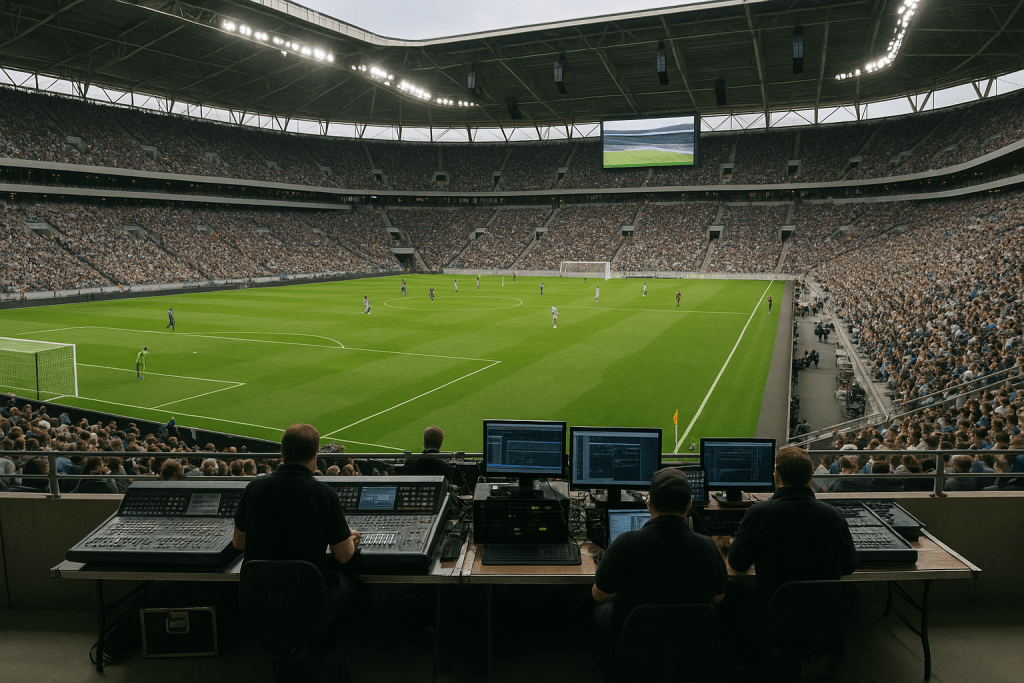
Shell Energy Stadium in Houston, Texas, has completed a significant upgrade to its bowl sound system, replacing the original 2012 installation with new loudspeaker technology from L-Acoustics.
The 20,656-seat venue, opened in 2012 and designed by Populous, was the first soccer-specific stadium in Major League Soccer to be built in a downtown district. It is home to four teams: Houston Dynamo FC, Houston Dash, Texas Southern University Tigers football, and the Houston Gamblers of the United Football League.
The audio renewal comes as the stadium continues a broader modernization program that includes energy-efficiency measures. Under a naming-rights agreement with Shell Energy announced in 2023, the venue has invested in LED lighting, rooftop solar, renewable power contracts, and detailed energy metering, with a stated goal of cutting Scope 1 and 2 emissions by half by 2026 compared with 2018 levels.
Key announcement
Systems integrator LD Systems, a Clair Global brand, designed and installed a new L-Acoustics A Series loudspeaker system to deliver higher output, more uniform coverage, and better music reproduction for matches and events.
The project sought to improve sound quality in the seating bowl while minimizing structural changes and reusing as much existing infrastructure as possible. The original PA had been in place since the stadium opened and was primarily configured for speech reinforcement.
The new design uses L-Acoustics A15i Wide and A15i Focus loudspeakers, along with KS21i subwoofers, modeled in L-Acoustics Soundvision software to deal with the stadium’s asymmetrical geometry and open north and south ends. Particular attention was given to areas historically difficult to cover, including the north-end supporters’ section and seats around the main video board.
Main bowl coverage on the east and west stands is provided by 16 arrays of four A15i Wide, interspersed with eight pairs of down-firing KS21i subs. The north seating area is served by four compact arrays of one A15i Focus over one A15i Wide, mounted around the large video display. The south end features three arrays of four A15i Wide suspended from an overhanging canopy, while four corner zones are covered by arrays of two A15i Focus over one A15i Wide.
In total, the installation comprises 84 A15i Wide, 12 A15i Focus, and 16 KS21i subs, driven by ten LA12X and two LA4X amplified controllers. The existing cabling infrastructure was retained, and no major structural steel additions were required.
Industry impact
The Shell Energy Stadium project highlights how mid-sized line source systems and installation-focused loudspeakers are being used to retrofit older sports venues without extensive construction work.
By relying on a relatively small number of high-power amplified controllers and reusing legacy copper, the stadium has been able to implement a modern, music-capable PA while limiting additional electrical load and installation complexity. This aligns with the venue’s broader sustainability targets, where audiovisual systems form part of the overall energy profile alongside lighting and other infrastructure.
The design also illustrates current priorities for multipurpose stadiums: speech intelligibility for announcements and officiating, high-impact music for entertainment segments and DJs, and controlled coverage that reduces spill onto the field and into surrounding neighborhoods.
Why this matters
For event and venue technologists, the Shell Energy Stadium upgrade shows how existing downtown facilities can be modernized for contemporary fan expectations without full structural redesigns.
Key aspects of note for the industry include:
- Use of predictive modeling to address difficult coverage zones around large video displays and open ends of the bowl.
- Targeted control of vertical and horizontal dispersion to keep sound energy in the seats while limiting impact on the pitch and nearby properties.
- Integration of a more music-oriented system into a multi-sport, multi-tenant venue that regularly hosts DJs and non-sport programming.
- Alignment of audio upgrades with venue-wide sustainability goals and energy constraints.
Early audience reactions reported by the project team indicate that regular attendees noticed a clear improvement in sound quality, even without being informed of the technical changes. For manufacturers and integrators, the Shell Energy project provides a reference example of how an installation-focused loudspeaker line like the L-Acoustics A Series can be deployed in a complex, downtown sports environment. More information on the A Series platform is available on the L-Acoustics official website.