


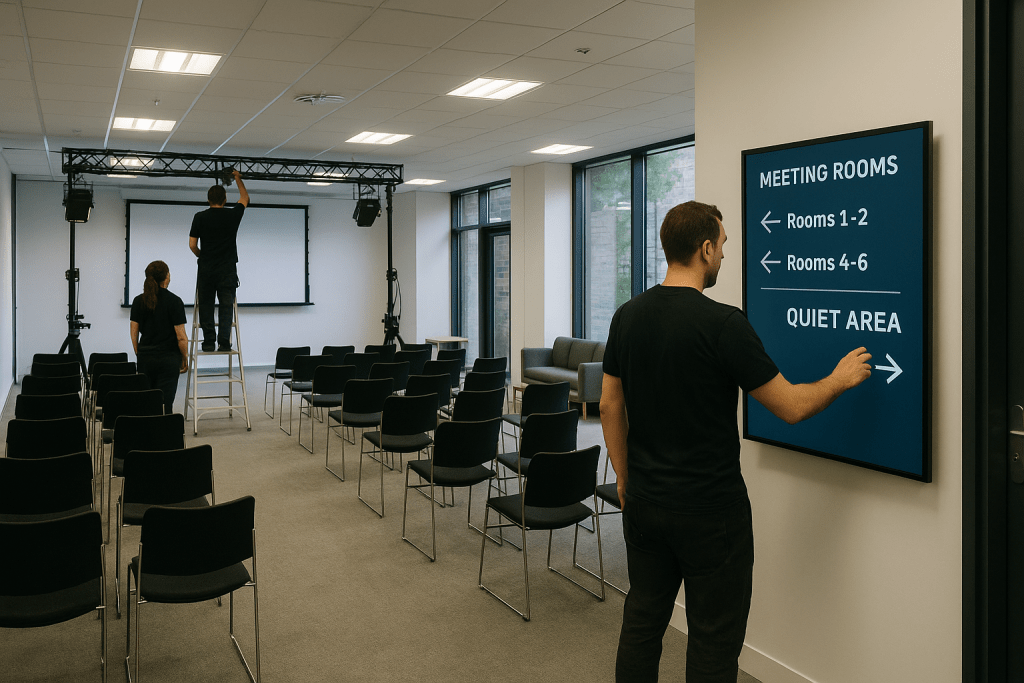
thestudio has become the first UK venue group to put its entire portfolio through a formal neuroinclusive accreditation process, underlining a growing focus on accessibility and inclusive design in the meetings and events sector.
The group’s venues in Birmingham, Glasgow, Leeds and Manchester have all begun working towards Neuroinclusive Venue Accreditation with Welcome Brain Consulting, a specialist consultancy focusing on neurodiversity and inclusion in built environments and services.
Background and industry context
Neuroinclusion in events has moved from a niche conversation to a core component of accessibility strategies, as organisers and venues seek to better support delegates who are autistic, ADHD, dyslexic, dyspraxic or otherwise neurodivergent. This shift has influenced how spaces are designed, how information is delivered and how sensory experiences are managed during conferences, exhibitions and hybrid events.
For venues, this often means rethinking wayfinding, lighting and sound levels, breakout and quiet spaces, and even how digital platforms and event apps are configured to minimise cognitive overload. In parallel, more event organisers are asking for demonstrable standards or third-party verification to ensure that accessibility promises are backed by measurable practice.
Within this backdrop, specialist accreditation schemes are beginning to emerge, designed to give venues a structured pathway to review and improve their approach to neurodivergent guests. Welcome Brain’s programme is an example of this growing market, offering external assessment, training and guidance aligned with neuroinclusive design principles.
Key development: portfolio-wide accreditation commitment
By enrolling all of its locations simultaneously, thestudio is positioning neuroinclusion as a group-wide operational priority rather than a site-level experiment. The Birmingham, Glasgow, Leeds and Manchester venues have entered the accreditation process together, which typically involves an initial audit, staff training, environmental assessments and implementation of recommended adjustments.
While the specific recommendations for each building will vary, such accreditation programmes commonly examine:
- Physical space: lighting, acoustics, seating arrangements, escape from crowding and availability of low-sensory areas.
- Signage and navigation: clarity of wayfinding, visual supports, colour contrast and logical routes between key event spaces.
- Information design: how schedules, maps, catering information and emergency procedures are communicated, both on-site and digitally.
- Operational processes: check-in experience, crowd management, queuing systems and staff readiness to offer adjustments on request.
- Hybrid and digital touchpoints: how event technology such as registration systems, mobile apps and streaming platforms can be configured to reduce sensory and cognitive strain.
The move marks a notable escalation from individual pilots or partial adaptations towards a consistent standard across all venues within a group. It also suggests that demand from clients for demonstrable inclusion credentials is strong enough to justify a coordinated investment in training, audits and physical changes.
Industry impact and signals for the market
For the broader events ecosystem, a portfolio-wide commitment by a venue group sends two clear signals. First, it suggests that neuroinclusion is being treated increasingly as a business-critical capability rather than a discretionary add-on. Second, it highlights that accreditation and external validation are gaining ground as a way to benchmark progress.
As more organisers embed diversity, equity and inclusion requirements into procurement, they are likely to look for venues that can evidence specific competencies — including neuroinclusion — through recognised schemes. Venue groups that move early may therefore gain an advantage in bids where attendee wellbeing, accessibility and inclusive design are scored criteria.
The ripple effects extend to technology providers and service partners as well. AV companies, event tech platforms, caterers and interpretation services may be asked to align with neuroinclusive standards when working in certified spaces, from managing sound levels and lighting transitions to adapting registration flows or content delivery formats.
There is also potential for cross-industry learning. As accreditation projects mature, they can generate data and case studies on which design interventions are most impactful, what delegates value most, and how digital and physical tools can be combined to create more predictable, less overwhelming experiences for neurodivergent participants.
Why this matters for event professionals and technology providers
For event organisers, having access to neuroinclusive venues can streamline planning and reduce the need for extensive, bespoke accessibility workarounds on each project. Instead of building solutions from scratch, planners can select locations that already integrate quiet zones, clear signage and trained staff, and then focus on tailoring event content and digital interfaces to their specific audience needs.
This development also reinforces the need for organisers to think about neuroinclusion across the full event lifecycle, from marketing and registration through onsite delivery and post-event follow-up. Registration forms might include clearer options for attendees to disclose requirements; event apps may need modes with simplified interfaces; session formats might be adapted to avoid continuous high-intensity sensory exposure.
Technology vendors serving the event sector are likely to see increasing demand for features that support neurodivergent attendees. Examples include:
- Customisable notification settings in event apps to reduce information overload.
- Options for visual schedules and colour-coded agendas.
- Captioning and transcript tools that assist attendees with different processing preferences.
- Wayfinding integrations that provide step-by-step, low-stress navigation through complex venues.
For venue operators, accreditation schemes offer a structured roadmap to address these expectations. They can highlight gaps between current practice and emerging standards, provide staff with confidence when supporting neurodivergent guests, and help integrate inclusive design into refurbishment and technology investment decisions.
Conclusion
thestudio’s decision to pursue Neuroinclusive Venue Accreditation across all its UK locations illustrates how quickly expectations around accessibility and inclusion are shifting in the business events market. Rather than approaching neuroinclusion on a case-by-case basis, the group is working towards a consistent standard that spans multiple cities and client types.
As more organisers prioritise attendee wellbeing and inclusive design, similar moves from other venue operators appear likely. That, in turn, will place pressure on event technology platforms, AV partners and service suppliers to ensure their products and workflows support — rather than undermine — the experience of neurodivergent delegates.
While the specific outcomes of the accreditation process for each thestudio venue will become clear over time, the strategic direction is evident: neuroinclusion is moving into the mainstream of venue operations, shaping how spaces are designed, how staff are trained and how technology is deployed to host conferences, meetings and hybrid events.