


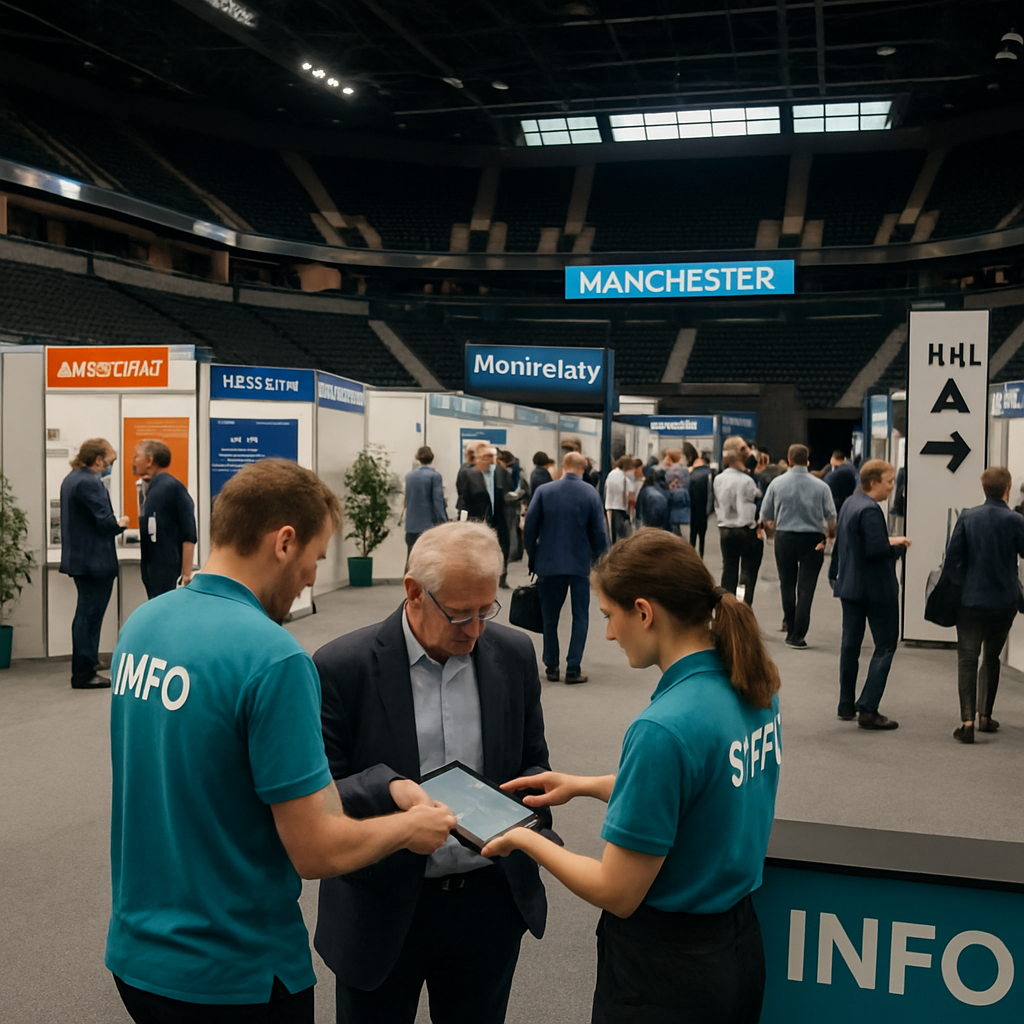
CHS Manchester is preparing to debut a refreshed approach to attendee experience when the show returns on 30 September at Manchester’s AO Arena, positioning the one-day event as a live testbed for more intensive, human-centric visitor support.
The exhibition, which connects event planners with venues, destinations and suppliers, is reframing its service philosophy around being of what organisers call “unreasonable” use to visitors. The concept is inspired by internationally recognised thinking on hospitality that encourages organisations to exceed conventional service expectations and look for highly personalised, sometimes unexpected, ways to support guests.
For event professionals, the 2024 edition is being framed as an experiment in how far a business event can push the boundaries of care, responsiveness and practical assistance on-site, while still remaining scalable and operationally realistic.
Background and industry context
Across the business events sector, organisers are reassessing what constitutes value for attendees who now have more choice than ever, both online and in-person. Hybrid and virtual formats have raised expectations around convenience and personalisation, while economic and time pressures mean planners are increasingly selective about which trade shows and conferences they attend.
In this environment, visitor experience has become a strategic differentiator. Organisers are investing in data-driven matchmaking, personalised agendas, and higher-touch concierge-style services designed to help attendees justify travel and registration costs. Parallel to these trends, hospitality-led frameworks that emphasise empathy, anticipation of needs and small but meaningful gestures have gained traction as a way to deepen loyalty and advocacy.
CHS Manchester’s decision to formally adopt an “unreasonable” stance on visitor support places it within this wider movement towards more human, service-led event design, while testing how such principles translate into the context of a busy trade show floor.
Key developments at CHS Manchester
Organisers are repositioning the visitor journey as the central design driver for the 30 September edition. While detailed operational plans have not been fully disclosed, the shift is framed around several core ideas:
- Elevated attendee support: The team intends to move beyond standard registration helpdesks and information points to deliver more proactive, hands-on support throughout the day, aiming to solve problems before they affect the visitor experience.
- Human-first interaction: Building on the show’s longstanding reputation for personable engagement, staff and hosts are expected to be more visible, more accessible and more empowered to assist visitors in non-routine ways.
- Responsive on-site decision-making: The approach suggests that team members will have greater latitude to adapt processes, offer guidance or make small, experience-enhancing interventions in response to real-time attendee needs.
- Experience as a design principle: Rather than treating visitor services as a support function around the exhibition, the event is being shaped from the outset around how each touchpoint feels and functions for planners and suppliers.
The AO Arena venue itself also adds a distinctive dimension. As a large, high-profile live entertainment space, it offers a different canvas from typical convention centres or hotel-based trade shows. This setting can provide opportunities for more visible, hospitality-led interactions and creative use of circulation areas, lounges and access routes to reinforce the “unreasonable” support theme.
Industry impact and experimentation
By foregrounding this approach, CHS Manchester joins a growing cohort of organisers who are using their events to pilot new service models that blend hospitality, operations and technology. The outcomes of such experiments are likely to influence how B2B events think about staffing, training, supplier partnerships and digital tools designed to support on-site care.
If the model proves effective, it could accelerate several industry shifts:
- Reframing service roles: Front-of-house, registration and floor-walking teams may be redefined less as process operators and more as experience stewards, with training focused on empathy, problem-solving and situational awareness.
- Higher expectations from attendees: As planners encounter more personalised support at key events, they may begin to expect similar standards elsewhere, prompting competitive responses from other organisers.
- Closer integration with technology: Delivering “unreasonable” levels of service at scale often requires real-time information on attendee profiles, schedules and preferences. This could drive further adoption of connected event apps, CRM integrations and on-site communication tools.
The event will serve as a live case study for how far such a concept can be operationalised within the constraints of time-limited, high-footfall trade shows, where staff resources and physical space are carefully managed.
Why this matters for event professionals and technology providers
For planners attending CHS Manchester, the 2024 iteration offers more than a marketplace of venues and suppliers. It provides insight into how a mid-scale, sector-specific show is attempting to redesign its visitor journey in line with evolving attendee expectations. Observing what works, and where the limits are, may help organisers benchmark their own events and refine service strategies.
For corporate and agency buyers, an “unreasonable” support model may translate into more efficient use of time on-site, better navigation of the show floor, more targeted introductions and smoother problem resolution. These outcomes are directly linked to return on time invested, an increasingly important metric as workloads intensify.
Technology providers in the event space may also find the initiative instructive. As service levels rise, tools that enable staff to anticipate needs, personalise interactions and respond quickly become more critical. This could include:
- Event apps that surface context-aware recommendations or assistance
- Real-time messaging platforms connecting attendees with support teams
- Analytics dashboards that highlight congestion points or service gaps as they emerge
- Simple feedback mechanisms to capture and act on on-site sentiment
While CHS Manchester’s announcement is primarily about human-led service, it implicitly underscores the role of technology as an enabler for more responsive, data-informed hospitality at scale.
Conclusion
As CHS Manchester prepares for its 30 September outing at AO Arena, the decision to embrace an “unreasonable” visitor experience model reflects broader shifts in how business events are conceived and delivered. Rather than relying solely on content, exhibitors and networking as differentiators, organisers are exploring how far service and hospitality can be elevated without compromising operational efficiency.
The show’s experiment will be closely watched by event professionals seeking practical models for enhancing attendee care. Its outcomes may influence not just how trade shows design their visitor journeys, but also how technology and human service combine to meet rising expectations in an increasingly experience-driven sector.