


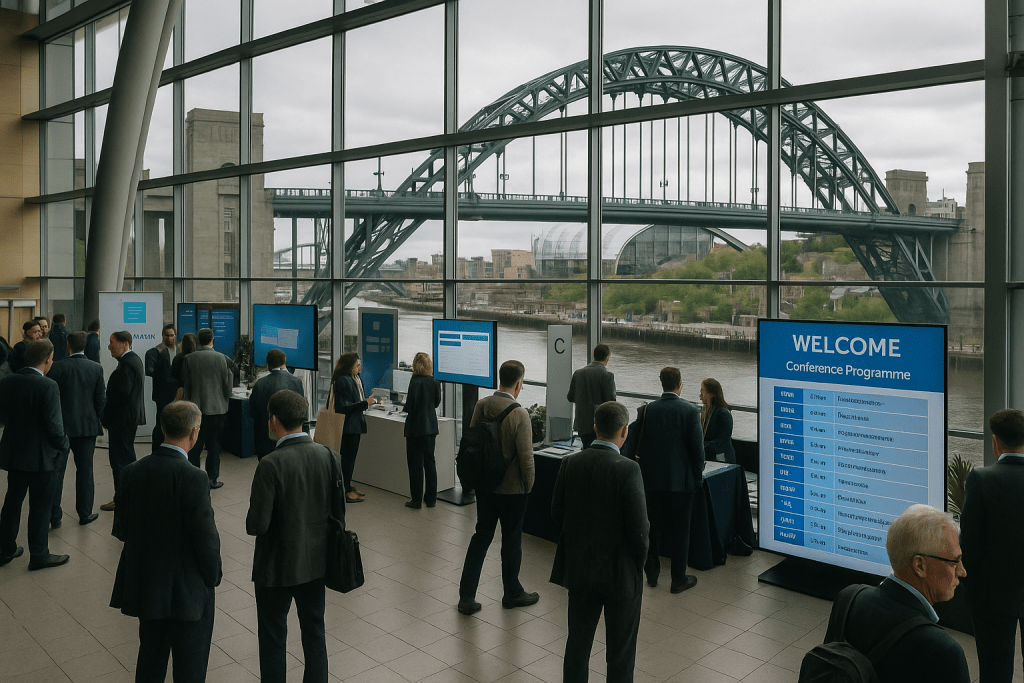
Newcastle is emerging as one of the UK’s most closely watched event destinations, as a surge in visitor numbers and a growing roster of high-profile cultural and sporting events draw increased attention from corporate planners. The city’s rising status reflects a wider trend in which organisers are diversifying beyond London and long-established conference hubs in search of fresh locations, competitive pricing and distinctive delegate experiences.
Recent figures show Newcastle and neighbouring Gateshead welcomed 17.5 million visitors in the last reported year, an uplift of 2.8% that underlines the region’s momentum. Local stakeholders, including major conference hotels and venues, say this uptick is feeding directly into demand for meetings, incentives and large-scale corporate gatherings.
Regional shift in UK event geography
Newcastle’s trajectory comes as part of a broader rebalancing of the UK events map. For years, London, Birmingham, Manchester and a handful of traditional conference cities have dominated the sector. Now, planners are increasingly exploring alternative destinations that can offer strong infrastructure, easier access for regional delegates and a more distinctive sense of place.
Several factors are driving this shift. Budget pressure is pushing organisers to scrutinise accommodation, venue hire and food and beverage costs more closely, leading many to compare value outside the capital. At the same time, delegates are increasingly seeking experiences that feel different from standard city-centre conference circuits, leading corporate hosts to consider destinations with strong local culture and compact, walkable centres.
Newcastle, with its mix of industrial heritage, waterfront regeneration and investment in hotels and venues, has been working for more than a decade to reposition itself as a serious player for both leisure and business tourism. The city’s evolution has coincided with a wider push across northern England and the wider North East to capture a greater share of domestic and international events.
Major events raise Newcastle’s profile
Newcastle’s hosting track record over recent years has been a key driver in raising its profile among event professionals. The city has attracted nationally recognised cultural events and awards shows, such as major music industry ceremonies, that demand sophisticated production capabilities, reliable infrastructure and experienced local supply chains. Successful delivery of such occasions has helped prove the city’s capacity to handle complex logistics and broadcast requirements.
Looking ahead, preparation for UEFA EURO 2028, for which the UK and Ireland will host matches, is set to further expand Newcastle’s visibility on the international stage. While the final match allocations and operational plans are still being refined, the city’s inclusion within the tournament footprint is expected to prompt additional investment in transport, public realm and supporting services. For the events sector, this kind of infrastructure upgrade typically translates into improved accessibility, better crowd management expertise and enhanced technology capabilities that can be leveraged well beyond the tournament itself.
Local hospitality operators report that the spotlight created by such large-scale occasions often triggers a ripple effect in corporate bookings. Companies that first encounter the city as spectators, sponsors or partners at consumer-facing events may later return with internal conferences, product launches or client experiences, leveraging the same venues and supplier networks.
Implications for the UK events ecosystem
The rise of Newcastle and other regional destinations has implications for the way organisers design their event portfolios across the UK. As rail links and domestic air connections improve, more planners are looking at multi-city strategies that spread activity beyond a single central hub, or rotating event models that move between different locations on a cycle of years.
For national associations, this trend can support member engagement by bringing annual congresses or roadshows closer to different parts of their audience. For corporates, it offers the opportunity to shift internal events around the country, tapping into varied local talent pools and partner ecosystems while avoiding the cost and congestion associated with the busiest metropolitan centres.
Newcastle’s case also highlights the role of city-wide collaboration in building a credible event proposition. Successful bidding for major cultural and sports events typically requires aligned efforts from local authorities, destination marketing organisations, venue operators and transport providers. Once established, these partnerships can be repurposed to attract and support business events of different sizes, from board meetings and incentive groups to large conferences and exhibitions.
Why this matters for event professionals and technology providers
For event planners, Newcastle’s ascent underscores the importance of reassessing venue shortlists and destination strategies. Cities that may have been considered secondary markets a decade ago are now competing on infrastructure, digital connectivity and audience appeal. This widens the palette of options for creating differentiated experiences, particularly for organisations that run multiple events annually and want to avoid repetition.
The trend also has direct consequences for technology providers. As more large-scale events move into regional hubs, there is increased demand for high-capacity connectivity, robust AV, hybrid streaming capabilities and data-rich attendee management solutions in these markets. Suppliers that previously focused on capital-city venues may find new opportunities partnering with hotels, arenas and conference centres in emerging destinations.
Additionally, cities building their profile as event hosts tend to be more open to piloting new technologies, whether that is digital signage for wayfinding, app-based visitor journeys, or analytics tools that measure economic impact and delegate behaviour. Technology companies able to demonstrate clear value in areas such as crowd intelligence, sustainability reporting or sponsor activation will find receptive prospects among destination teams aiming to differentiate their offer.
From a strategic perspective, planners should consider how regional event locations can be integrated with virtual and hybrid formats. Newcastle’s growing transport links and technology infrastructure position it to support blended experiences, where in-person programming is augmented by remote participation, extending reach without losing the benefits of a physical gathering.
Conclusion
Newcastle’s rising status, from hosting notable cultural occasions to preparing for EURO 2028, is emblematic of a broader reconfiguration in the UK events landscape. As corporate and association planners expand their search radius beyond London and traditional powerhouses, cities with a clear investment story, evolving infrastructure and strong local collaboration are moving into contention.
For the business events community, this shift creates both challenges and opportunities: a need to deepen destination intelligence across a wider geography, and the potential to design more varied, cost-effective and memorable experiences. For technology vendors, the momentum in cities like Newcastle signals a growing market for digital tools and infrastructure that can support increasingly sophisticated regional events.
How organisers and suppliers respond to this redistribution of attention will help shape the next phase of growth in the UK’s event economy, as delegates, sponsors and stakeholders become more open to convening in places that combine high standards with a distinct local character.