


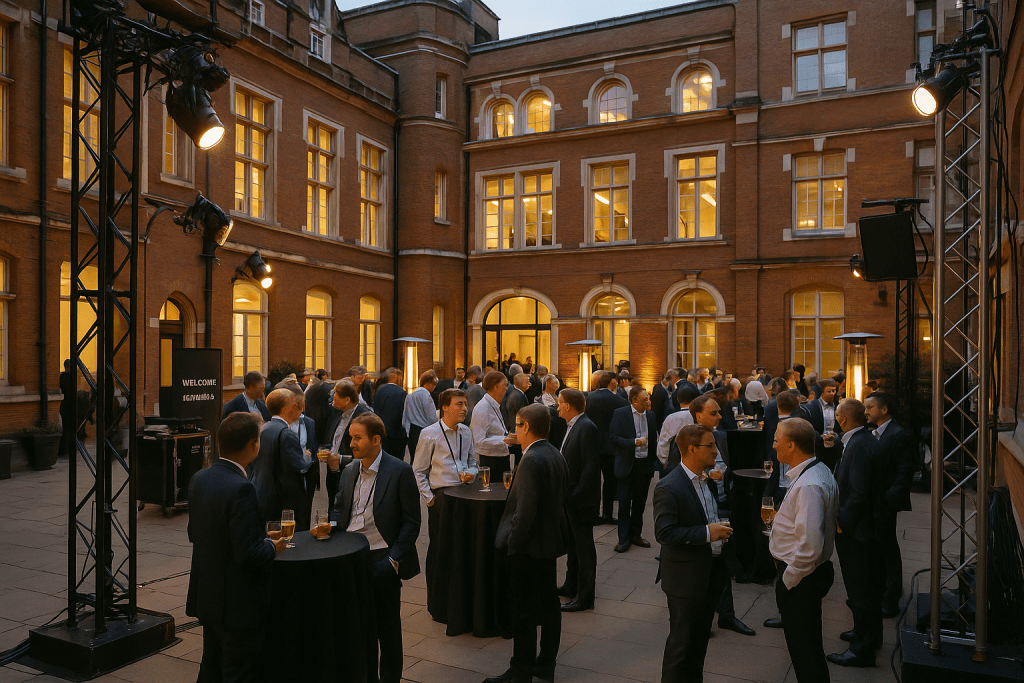
Central London venue BMA House is urging event organisers to place greater emphasis on what happens after the formal conference programme ends this summer, highlighting the role of structured and informal post-conference networking in rebuilding connection, belonging and team cohesion.
As organisations continue to look for ways to strengthen internal culture and reconnect dispersed workforces, the venue is positioning extended time on site – particularly into the early evening – as an opportunity to deepen engagement beyond the main agenda. To support this, BMA House is offering complimentary twilight room hire on selected dates, encouraging planners to incorporate additional networking and social elements around their daytime meetings and conferences.
Background and changing delegate expectations
The call for more thoughtful post-conference experiences comes at a time when many businesses are reassessing the purpose of in-person events. With hybrid work patterns now embedded across numerous sectors, face-to-face meetings are increasingly being evaluated not just on content, but on their ability to foster meaningful interaction between colleagues, partners and stakeholders.
Delegates who may travel into central locations less frequently are also seeking more value from the time they spend away from the office. For many, this includes opportunities to connect informally with peers, continue discussions sparked during sessions and build relationships that are harder to form in virtual settings. As a result, planners are revisiting how they use time before and after the core conference schedule.
Venues with outdoor space and flexible meeting layouts are being brought into sharper focus, particularly for summer programmes when organisers can extend events into the late afternoon and evening. BMA House, located in Bloomsbury, is one of several London venues emphasising how their spaces can support this shift, with a particular focus on networking formats, wellbeing-led activities and relaxed social gatherings.
Details of BMA House’s summer initiative
BMA House is encouraging organisers to integrate twilight networking, receptions or informal breakout sessions into their event designs, using early evening room hire at no additional cost on qualifying bookings. The venue’s approach is intended to help planners experiment with extended schedules without significantly increasing budget or operational complexity.
While the precise booking terms and available dates are handled directly between the venue and organisers, the initiative centres on late-afternoon and early-evening use of event spaces following daytime meetings or conferences. This can include:
- Post-conference networking receptions that keep delegates on site for longer.
- Extended coffee or drinks breaks evolving into informal social time.
- Team-building or internal collaboration sessions following formal presentations.
- Smaller breakouts for departmental or project-based conversations.
The venue is also highlighting the benefits of using its indoor and outdoor areas in combination, enabling planners to transition from structured conference sessions to more relaxed, open-air networking as the day progresses, weather permitting.
Impact on event design and audience engagement
The move to spotlight twilight room usage reflects a broader trend in event design, where organisers are rethinking rigid, nine-to-five agendas. Instead, many are adopting more fluid formats that allow discussions and networking to continue organically, both on-site and through accompanying digital tools.
For corporate meetings, internal conferences and training programmes, extending time at the venue can:
- Allow leaders and teams to address questions or ideas that emerge during sessions without squeezing them into short Q&A slots.
- Provide space for cross-departmental interaction that rarely happens in day-to-day work.
- Support the integration of wellbeing activities, such as informal walks, outdoor conversations or quieter reflection spaces.
- Encourage greater participation from delegates who prefer smaller-group or one-to-one conversations.
For associations and external conferences, a structured twilight period can become a natural extension of the event’s networking offer, providing clearer value for delegates who want to maximise contacts and knowledge exchange during their time on site.
Why this matters for event professionals and technology providers
For planners, extended post-conference time reinforces the role of events as strategic tools for connection, not only content delivery. Building deliberate networking windows into the agenda can help justify travel and time away from routine work, especially for delegates joining from hybrid or remote setups.
This approach also has implications for technology providers working with venues and organisers:
- Networking platforms: Tools that support smart matchmaking, appointment scheduling and contact capture can be deployed around twilight sessions to transform informal gatherings into structured opportunities, while still feeling relaxed for attendees.
- Mobile event apps: Extended programmes require clear communication of time, location and format changes. Push notifications, live agenda updates and interactive maps can help delegates transition smoothly from formal sessions to evening activities.
- Hybrid and on-demand content: While the physical twilight experience is in-person, streaming short summaries, highlights or panel debriefs from the end of the day can connect remote participants to the outcomes of the additional networking time.
- Data and analytics: Measuring attendance, dwell time and interaction patterns during extended networking can provide organisers with evidence of ROI, feeding into future agenda design and venue selection.
Venues that can demonstrate how their spaces support these extended engagement windows – alongside appropriate connectivity, AV support and digital infrastructure – are likely to be more attractive to organisers seeking to maximise the impact of in-person gatherings.
Conclusion
BMA House’s focus on twilight room hire and post-conference networking underlines how venues and organisers are adapting to new expectations of what in-person events should deliver. As companies seek to rebuild culture and collaboration, the time immediately after the formal agenda is emerging as a critical moment for strengthening relationships and embedding key messages.
For event professionals, the initiative serves as a prompt to reassess how agendas are structured, how long delegates are encouraged to remain on site and how technology can support connection before, during and after the main programme. As the summer season progresses, extended networking and twilight event formats are likely to remain central to conversations about the evolving role of physical venues in a hybrid-first business environment.