


Background and context
Initial public offering (IPO) celebrations have become a distinct niche within corporate event production, combining high visibility, strict timelines, and multiple stakeholder interests. These events typically sit at the intersection of finance, communications, and experiential marketing.
Glow Events, a San Francisco–based event production and design agency, has worked on a series of IPO celebrations in recent years. Drawing from those projects, the company has outlined several recurring patterns and challenges that are relevant to event planners overseeing similar high-stakes corporate moments.
While every IPO follows its own legal, financial, and communications strategy, the event component must often adapt to fast-moving market conditions and strict confidentiality requirements. This has direct implications for venue selection, production timelines, run-of-show, and guest experience design.
Key announcement
In a recent guest column, Glow Events’ director of marketing and events summarized five core lessons the team has learned from producing IPO celebrations. These points reflect practical adjustments the agency has made across multiple launches rather than one-off observations.
-
Build for uncertainty in timing. IPO dates and ceremonial moments, such as bell-ringing or announcement windows, can shift with market conditions or regulatory processes. Event plans, vendor contracts, and technical setups need built-in flexibility to accommodate last-minute changes.
-
Align early with legal and communications teams. Disclosure rules and messaging approvals can affect everything from stage remarks to visual content on screens. Event teams are advised to work closely with legal, investor relations, and corporate communications from the outset.
-
Design for multiple audiences. IPO celebrations are often aimed at employees, executives, investors, media, and remote stakeholders at the same time. This can require a mix of live on-site moments, internal culture-focused elements, and broadcast-ready visuals suited to external channels.
-
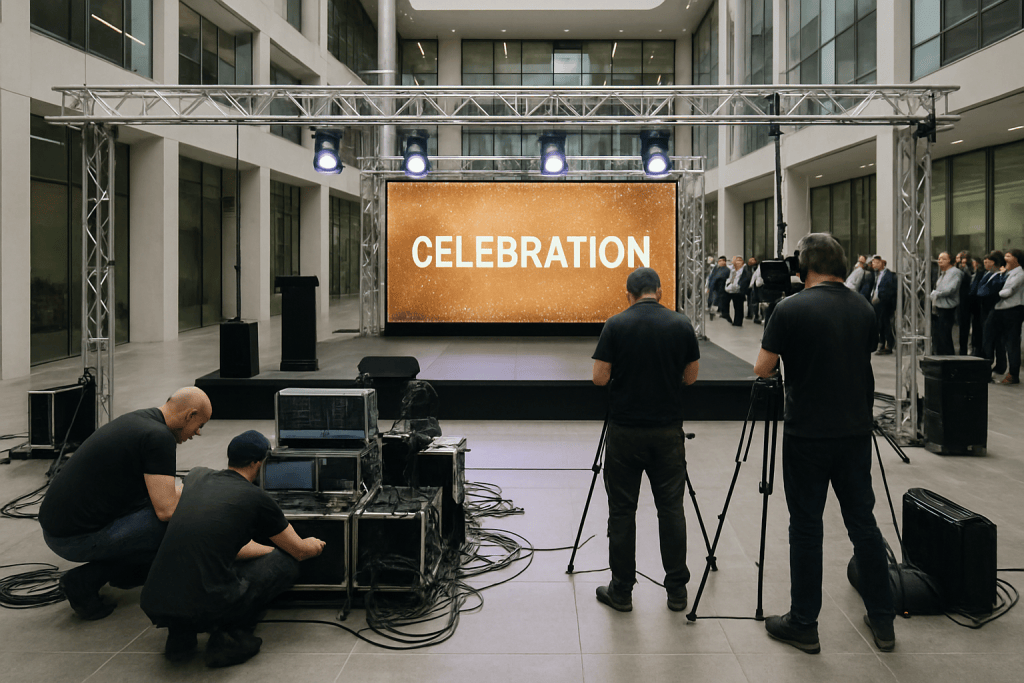
Plan for extensive media and content capture. These events often serve as major brand storytelling opportunities. That places added emphasis on camera positions, lighting for broadcast and photography, and a clear plan for how content will be used post-event.
-
Protect the attendee experience amid tight security. Higher security and access controls are common around IPOs. The agency notes that wayfinding, registration flows, and thoughtful guest communication are key to avoiding a restrictive or disjointed experience.
Glow Events positions these takeaways as a working framework for teams that may be approaching their first IPO-related program. Further details on the firm’s approach to corporate events are available via its official website at glowsf.com.
Industry impact
The lessons highlighted by Glow Events reflect broader shifts in how corporate milestones are produced. IPO celebrations increasingly resemble hybrid media events, requiring tight integration between AV production, staging, and real-time communications.
For event technology providers, this reinforces the need for flexible technical infrastructures. Rapid changes in timing or format can put pressure on production teams to reconfigure live streams, LED walls, and audio systems with little notice.
The emphasis on multi-audience delivery—on-site attendees, remote staff, and external stakeholders—also points to growing demand for robust streaming, recording, and content management tools. Vendors that can support both in-room experience and broadcast-quality output are likely to be central to future IPO and financial communications events.
Why this matters
As more companies treat IPOs as brand-defining moments, expectations for production quality and technical reliability are rising. The operational insights shared by Glow Events provide a practical lens on how event teams can navigate high-stakes, regulation-heavy environments without losing sight of attendee experience.
For planners, producers, and AV partners, the key takeaway is the importance of building flexible plans that anticipate volatility in timing and messaging. Coordinated work across legal, communications, and production functions is no longer optional; it has become central to delivering IPO celebrations that are both compliant and impactful.
These learnings are applicable beyond IPOs, informing how the industry approaches other sensitive corporate events such as mergers, major funding announcements, and leadership transitions—moments where the margin for error is small, and the visibility is high.