


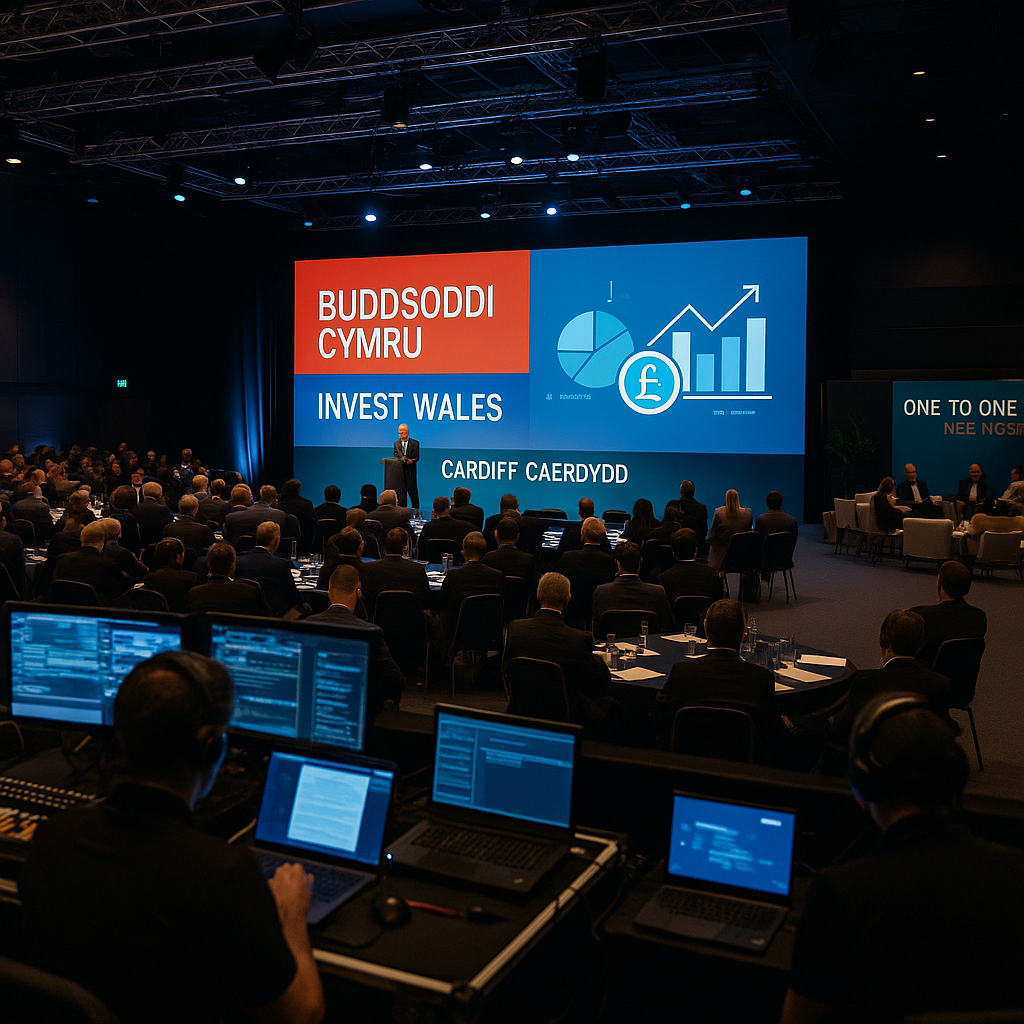
When senior leaders, policymakers and investors converge at a large-scale summit, the core challenge extends beyond registrations and logistics. The real test is how effectively an event environment can support focused discussion, structured dealmaking and informal relationship-building, all within a compressed timeframe.
A recent flagship investment summit in Wales, positioned as the country’s largest business event to date, illustrates how spatial design, programme planning and technology integration are being combined to create conditions for more meaningful engagement. The gathering brought together more than 300 delegates from nearly 30 countries, including government representatives and corporate decision-makers, to explore trade, investment and innovation opportunities.
Background: shifting expectations of high-level business events
Global business summits are under growing pressure to deliver measurable outcomes. Attendees increasingly expect more than keynote speeches and high-level panels; they look for curated introductions, opportunities to validate ideas with peers and the ability to access relevant content and contacts before, during and after the event.
At the same time, organisers must balance security and protocol with informality and openness. Government-backed investment forums, in particular, need to project stability and credibility while also signalling innovation. This has led to renewed focus on how venue layout, session formats and digital tools can facilitate both concentration and serendipity.
For event technology providers, this shift is driving demand for platforms and services that can support precise matchmaking, flexible content delivery and data-driven insight into how delegates actually use spaces and time on site.
Key developments at the Wales Investment Summit
The Wales Investment Summit in November 2025 was designed as a showcase for the country’s sectors and capabilities, but it also served as a testing ground for new approaches to event structure and experience design. More than 300 attendees from 29 countries joined senior political figures and regional leaders for two days of presentations, discussions and site visits.
The summit’s organisers placed particular emphasis on three elements: focus, creativity and connection. These themes influenced how the agenda was constructed, how spaces were configured and how technology was deployed across the event.
- Creating focus: Planners worked to segment the event into clearly defined thematic tracks, giving delegates the ability to concentrate on relevant sectors or regions. Smaller breakout areas were used to move conversations away from busy plenary zones, while schedules were structured to avoid overlapping high-priority sessions for common audience segments.
- Encouraging creativity: Formats extended beyond traditional panel discussions to include workshops and facilitated roundtables. These were intended to help participants exchange practical insights, explore new partnership models and consider future-looking projects rather than only current deal opportunities.
- Enabling connection: The layout of social and networking areas was planned to encourage chance encounters, with seating zones and open meeting points embedded between formal conference spaces. Curated networking sessions and pre-arranged one-to-one meetings were layered on top of this to support more intentional interaction.
Digital tools underpinned these design choices. A central event platform was used for agenda planning, delegate discovery and meeting scheduling. Attendees could identify relevant contacts in advance and reserve time for one-to-one or small group conversations, reducing the friction often associated with large gatherings where key people can be difficult to locate.
Industry impact: evolving models for summit design
Although each government or corporate investment summit operates within a distinct political and economic context, several practices from the Wales gathering reflect wider trends in the sector:
- Blending content and commerce: The summit combined formal presentations on policy, infrastructure and sector strengths with tailored sessions designed for investors, trade delegations and corporate leaders. This approach is becoming more common as organisers look to align thought leadership with tangible business outcomes.
- Data-informed layout and scheduling: Pre-registration data on delegate profiles and interests was used to refine tracks and meeting zones. Event technology vendors are increasingly asked to provide not only matchmaking tools but also analytics to inform physical design and programme adjustments.
- Flexible formats within a secure framework: High-level events must observe security protocols and formalities, yet are under pressure to feel accessible and collaborative. Configurable spaces, tiered access controls within digital platforms and clear signage were used to manage this balance.
- Extended lifecycle engagement: The summit was not treated as a standalone moment but as one touchpoint within an ongoing investment strategy. Digital content, connections and follow-up mechanisms were planned to extend beyond the two event days, mirroring a broader shift across the industry towards year-round engagement communities.
These practices are reshaping expectations for what “success” looks like at investment-focused conferences and exhibitions. Rather than counting only attendance or media coverage, organisers are paying closer attention to the density and quality of interactions and the potential pipeline they generate.
Why this matters for event professionals and technology providers
For event organisers, the Wales Investment Summit underscores the strategic role of design and technology in enabling high-value engagement:
- Experience design as a core competency: The ability to choreograph movement, attention and conversation across plenaries, breakouts and networking zones is becoming as important as traditional operations and logistics.
- Platform integration: Delegates now expect a coherent experience across registration, agenda planning, networking and follow-up. Fragmented tools can undermine engagement and complicate data collection.
- Customisable journeys: Senior stakeholders have limited time on site. Personalised agendas and targeted matchmaking help ensure their schedules align with strategic objectives, improving perceived value.
For technology providers, summits of this nature highlight several product and service opportunities:
- Enhanced matchmaking algorithms that account for investment criteria, sector focus and geographic interests.
- Tools that support real-time changes to agendas and room allocations based on participation levels and delegate feedback.
- Analytics that translate engagement patterns into actionable insight for host regions, sponsors and participating organisations.
- Hybrid capabilities that allow remote stakeholders to join select sessions or meetings, widening reach without diluting the on-site experience.
As governments and regions compete for attention on the global stage, the ability to demonstrate that an event can reliably produce structured conversations, partnerships and potential deals becomes a differentiator. Event technology will be central to evidencing that impact.
Conclusion
The Wales Investment Summit offers a recent example of how large-scale, high-level business events are evolving. By combining spatial planning, diversified formats and integrated digital tools, organisers sought to foster an environment where focused discussion, creativity and connection could coexist.
For event professionals, the summit underlines the importance of designing with outcomes in mind rather than simply filling programme slots. For technology companies, it confirms a growing demand for platforms that can support sophisticated matchmaking, flexible experiences and meaningful analytics.
As more regions stage their own investment and trade summits, approaches that prioritise concentrated attention, collaborative ideation and well-supported networking are likely to shape the next generation of global business events.