


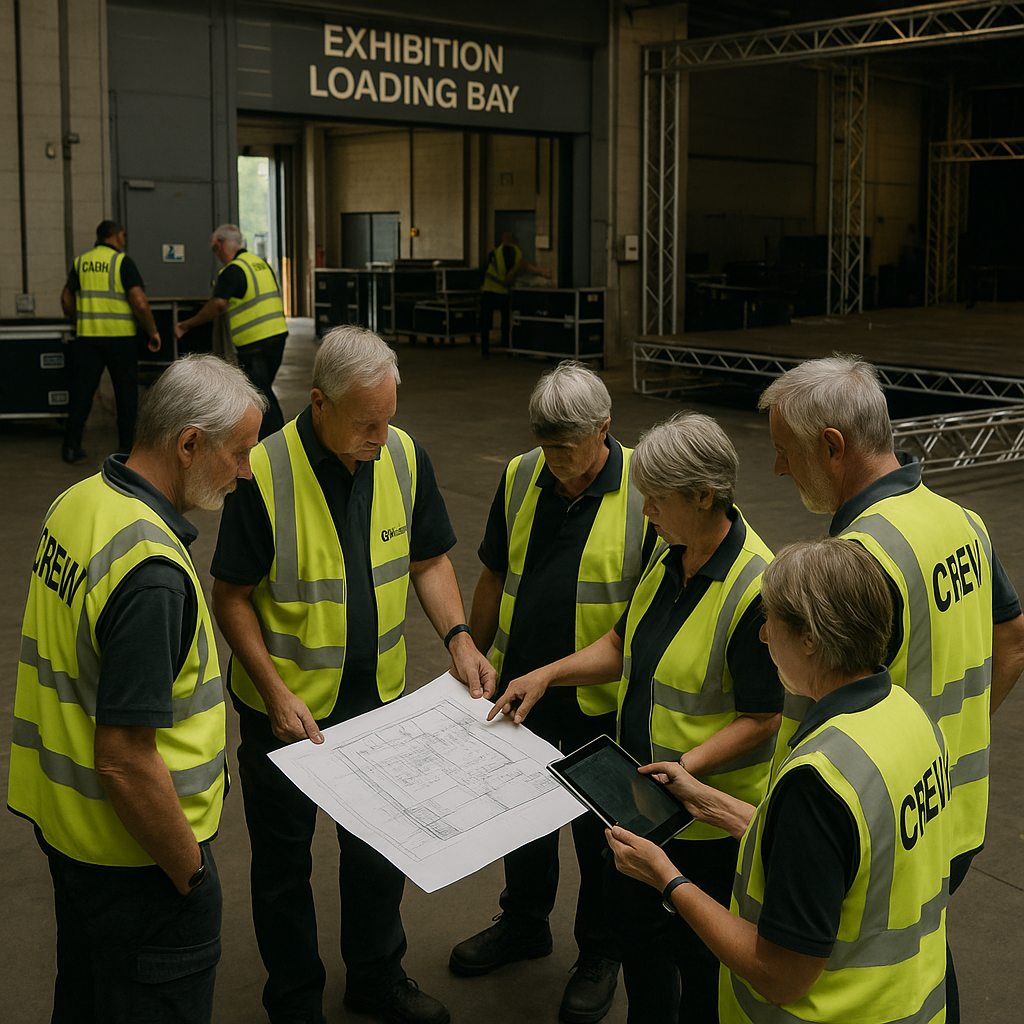
UK-based event crewing provider Crewsaders has promoted six senior team members into newly defined regional leadership roles, signalling a targeted investment in operational management and customer service across its national footprint.
The appointments, all to Regional Crew Manager positions, form part of a broader organisational shift designed to support long-term growth and provide clients with more structured, locally focused management for complex live events and builds.
Background and industry context
Event crewing companies sit at the core of the live events supply chain, providing the skilled labour that underpins exhibition builds, conference setups, staging, AV installation and de-rigs. As organisers and production agencies take on increasingly hybrid and technically complex projects, pressure on delivery timelines and on-site coordination has intensified.
In this environment, providers are being pushed to move beyond transactional labour supply towards more managed, consultative services. Strengthened regional leadership teams can be a key part of this shift, helping to standardise processes, improve communication with production partners, and ensure reliable delivery during peak periods.
Crewsaders, positioned in the UK market as a premium event crewing specialist, is responding to this trend by giving greater responsibility to senior crew managers, formalising their remit at regional level and embedding leadership closer to where events are delivered.
Key developments in the leadership restructure
The company has confirmed the promotion of six experienced crew managers into Regional Crew Manager roles across its UK operations. While specific territories and individual biographies have not been disclosed, the expanded leadership layer is intended to create clearer lines of accountability for on-site performance and crew welfare.
As part of the restructure, the new regional managers are expected to focus on several core areas:
- Operational coordination: Overseeing crew deployment across multiple venues and cities, managing last-minute changes, and supporting project leads during demanding build schedules.
- Client service alignment: Acting as senior points of contact for production companies, agencies and venue partners, with responsibility for interpreting requirements and feeding them into crew planning.
- Standards and training: Helping to maintain consistent service levels across sites, including mentoring team leaders and supporting training on health and safety, technical skills and customer interaction.
- Resource planning: Working with central operations to forecast crewing needs around large-scale exhibitions, tours and peak event seasons.
The creation of regional leadership roles suggests Crewsaders is moving towards a more decentralised management structure, where decisions on staffing, escalation and on-site problem solving can be taken closer to the event floor rather than routed solely through head office.
Industry impact and competitive implications
Restructuring at management level within a labour-intensive segment such as event crewing can have a direct impact on reliability and responsiveness, factors that event organisers increasingly prioritise when selecting suppliers. With an expanding calendar of conferences, exhibitions and large-scale brand activations in the UK, the ability to guarantee crew quality and continuity is becoming a differentiator.
By promoting from within, Crewsaders is also signalling a commitment to progression pathways in a sector that has traditionally faced challenges around retention, seasonality and the perception of crewing as a short-term job rather than a career. A more visible leadership layer may help stabilise teams, improve knowledge retention, and support more advanced planning for complex shows.
For competitors, the move highlights growing expectations from organisers and production partners for structured account management, clear escalation routes and consistent on-site leadership, even when working with freelance-heavy or flexible workforces.
Why this matters for event professionals and technology providers
For organisers, agencies and production companies, the strengthening of regional management in a crewing business can translate into more predictable delivery and fewer operational surprises on show days. In practice, this may mean:
- More robust communication from pre-production through to de-rig, with regional managers acting as a stable liaison between client teams and rotating crews.
- Improved alignment between technical requirements (e.g. staging, rigging, AV installations) and the skills mix of the crew deployed on site.
- Faster issue resolution, as senior decision-makers are closer to the venues and familiar with local conditions, loading restrictions and supplier ecosystems.
For event technology providers, the shift is also relevant. As more elements of event delivery are digitised—including crew scheduling, access control, health and safety compliance and time tracking—regional managers often become the operational owners of these systems on the ground.
A stronger leadership layer can facilitate more consistent use of crewing and workforce management platforms, better data capture from sites, and more effective feedback loops between front-line teams and technology vendors. This structure can also support the rollout of new tools, from digital check-in systems and mobile job briefs to incident reporting apps and integrated resource planning solutions.
Vendors supplying workforce or resource management software to the events sector may find growing demand for features that support regional hierarchies, such as multi-site dashboards, role-based permissions, performance analytics by territory and integrated communications between regional managers and field teams.
Conclusion
The promotion of six senior team members into Regional Crew Manager roles marks a notable development for Crewsaders as it seeks to scale its operations and service standards across the UK. By investing in a more defined regional management structure, the company is aligning itself with broader trends in the live events and exhibitions sector, where operational reliability and structured client service are increasingly critical.
For event professionals, the move underscores the importance of strong on-site leadership and well-managed workforces in delivering complex projects. For technology providers, it highlights a growing organisational maturity within crewing and staffing businesses—creating clearer stakeholders for the deployment and optimisation of digital tools that support labour planning, compliance and on-site coordination.
As the UK event calendar continues to rebuild and expand, similar leadership investments across the supply chain are likely to shape how efficiently large-scale conferences, exhibitions and live experiences are delivered in the years ahead.