


Across the exhibitions and events sector, venue operators are steadily abandoning a hands-off, rental-driven approach in favour of more collaborative, service-led models. Instead of merely providing space and basic services, leading venues are positioning themselves as active partners in event design, delivery and long-term strategy.
This shift, described by many operators as moving from “landlord” to “host”, reflects structural changes in the events economy. Organisers are under pressure to demonstrate clearer return on investment, audiences expect higher production values and personalisation, and exhibitors are demanding more measurable outcomes from their participation. Venues are responding by rethinking what it means to host an event within their walls.
Background: from renting space to enabling experiences
Historically, many exhibition and conference venues operated on a relatively simple model: lease floor space, provide utilities, ensure compliance and leave most planning decisions to organisers. Contracts focused heavily on square metres, tenancy periods and standard services, with limited engagement in content, audience strategy or commercial performance.
That approach is increasingly at odds with how events now create value. Visitor expectations have been shaped by digital experiences, consumer retail and entertainment environments. Delegates and attendees compare events not only with each other, but with the best experiences they have on streaming platforms, in airports, museums or flagship retail stores.
At the same time, budgets are under scrutiny. Exhibitors want lead quality, pipeline impact and clear attribution. Delegates want tangible outcomes for time and travel – from targeted networking to high-quality education. Organisers, caught between rising production costs and demanding stakeholders, are looking to venues for more than infrastructure alone.
Key developments: the rise of the hosting mindset
The emerging “host” model changes how venues define their role, responsibilities and commercial relationships. Several practical developments are shaping this shift:
- Deeper pre-event collaboration: Rather than joining conversations only once dates and floor plans are fixed, venues are engaging earlier in planning cycles. This can include sharing insights on attendee flows, advising on hall layouts that support networking or content consumption, and aligning services with specific audience objectives.
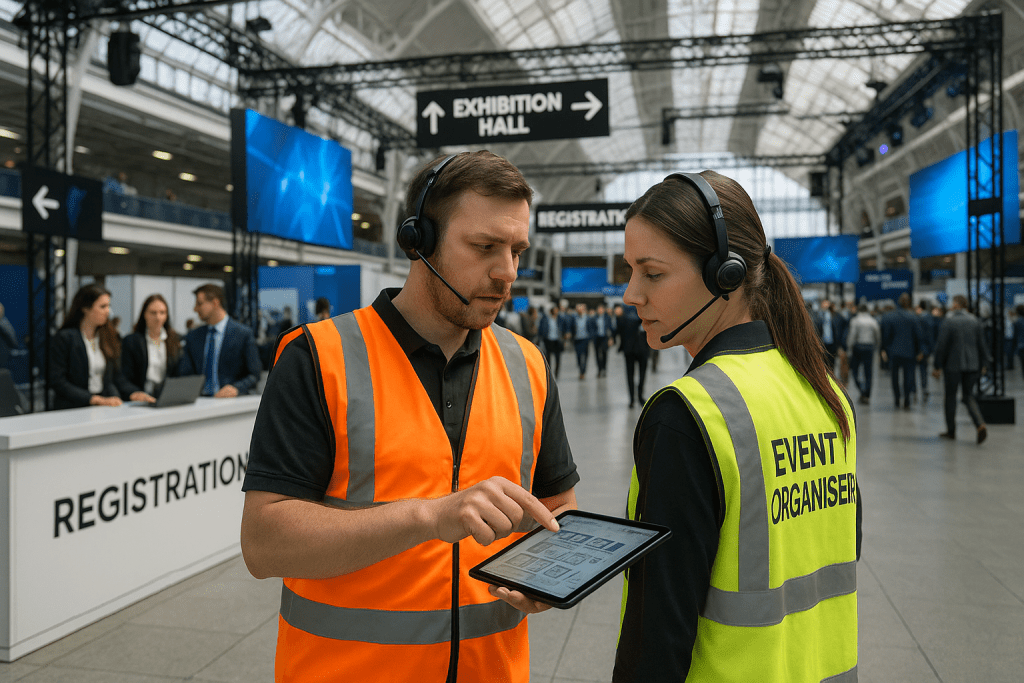
- Operational co-design: Venues are increasingly involved in decisions around signage, wayfinding, catering design, front-of-house staffing levels and overlay production. The hosting mindset treats every touchpoint – from registration to departure – as part of a coherent experience that requires joint planning.
- Integrated digital services: As hybrid and data-rich formats become standard, venues are investing in connectivity, AV infrastructure and digital platforms that can be configured to organiser needs. This includes support for live streaming, on-demand content capture, interactive sessions and audience engagement tools.
- Curated food and hospitality: Catering is being reframed as a strategic element rather than a purely operational one. Venues are working with organisers to align menus, service styles and scheduling with event themes, sustainability objectives and delegate preferences.
- Stakeholder management: With more complex exhibitor and sponsor requirements, venues are increasingly visible to brands and partners, not only to organisers. This can involve joint presentations, walkthroughs and post-event reviews that extend beyond basic facility feedback.
In practice, these changes blur the traditional boundary between organiser and venue responsibilities. The venue’s expertise in operations, visitor flow, safety and technical systems is brought to bear earlier and more deeply, while organisers share more about commercial goals, target audiences and content strategies.
Industry impact: new expectations and new capabilities
This evolving relationship is already influencing how events are scoped, sold and delivered. For organisers, a venue that behaves as a host can help de-risk complex projects, particularly when experimenting with new formats or expanding into new sectors.
On the venue side, adopting a host model requires investment beyond capital projects. Training front-line and operations teams to understand event objectives, audience segments and exhibitor priorities is critical. Staff who were previously focused on compliance and facility management are now expected to think in terms of participant experience, journey design and stakeholder satisfaction.
Data is becoming a central asset in this transformation. Venues are in a unique position to observe patterns across multiple shows, sectors and formats. Aggregated insights into visitor dwell times, access point congestion, catering peaks or content room utilisation can inform organiser decisions and improve event design. Moving from anecdotal feedback to evidence-based recommendations is a key characteristic of the hosting mindset.
However, this shift also raises questions about commercial models and governance. As venues assume a more active role, clarity is needed on who owns which data, who is accountable for which parts of the experience, and how additional services are priced. The line between venue, organiser and production partner can become more fluid.
Why this matters for event professionals and technology providers
For event organisers, the move from landlord to host offers both opportunities and new dependencies:
- Access to embedded expertise: Organisers can tap into a venue’s accumulated knowledge of what works in the space – from traffic patterns to acoustic limitations – reducing trial and error and shortening planning cycles.
- Enhanced resilience: A host-oriented venue is more likely to have contingency plans, cross-trained teams and flexible infrastructure that can adapt if audience numbers, content formats or sponsor needs shift late in the cycle.
- Richer data collaboration: Where data governance is clearly defined, organisers can benefit from venue-side analytics to refine session formats, improve signage strategies or adjust timetables for future editions.
Technology vendors and service providers are also affected. As venues act more like hosts, they often become key decision-makers or co-specifiers for digital platforms, AV systems, connectivity solutions and access control technology. Providers need to design tools that recognise the venue as an active user and stakeholder, not only a backdrop.
Hybrid and digitally enabled events, in particular, depend on tight integration between venue infrastructure and organiser platforms. High-capacity, reliable connectivity, flexible production spaces and intelligent power and rigging grids are now foundational rather than optional. Venues that coordinate these elements proactively can help organisers deliver more ambitious digital experiences without disproportionate complexity.
For both organisers and suppliers, venue selection is increasingly about alignment of capability and mindset, not only location and capacity. Questions about collaboration style, data sharing, technical standards and service philosophy are becoming as important as pricing and availability.
Conclusion: towards a more integrated event ecosystem
The redefinition of venues from passive landlords to active hosts marks a broader evolution in how business events are conceived and delivered. As exhibitions, conferences and trade shows compete with digital alternatives and alternative marketing channels, the physical environment and the teams who operate it have moved closer to the centre of value creation.
Venues that embrace the hosting model are repositioning themselves as partners in outcomes rather than providers of space. Organisers that adapt to this more integrated way of working stand to gain from shared insight, improved resilience and more coherent attendee experiences. Technology providers, in turn, are being drawn into tripartite collaborations where venue and organiser expectations must be met simultaneously.
While commercial and operational frameworks are still evolving, the direction of travel is clear: the most effective events will likely be those where the boundaries between organiser, venue and technology are coordinated rather than siloed. In that context, the shift from landlord to host is less a trend than a structural change in how the modern event ecosystem functions.