


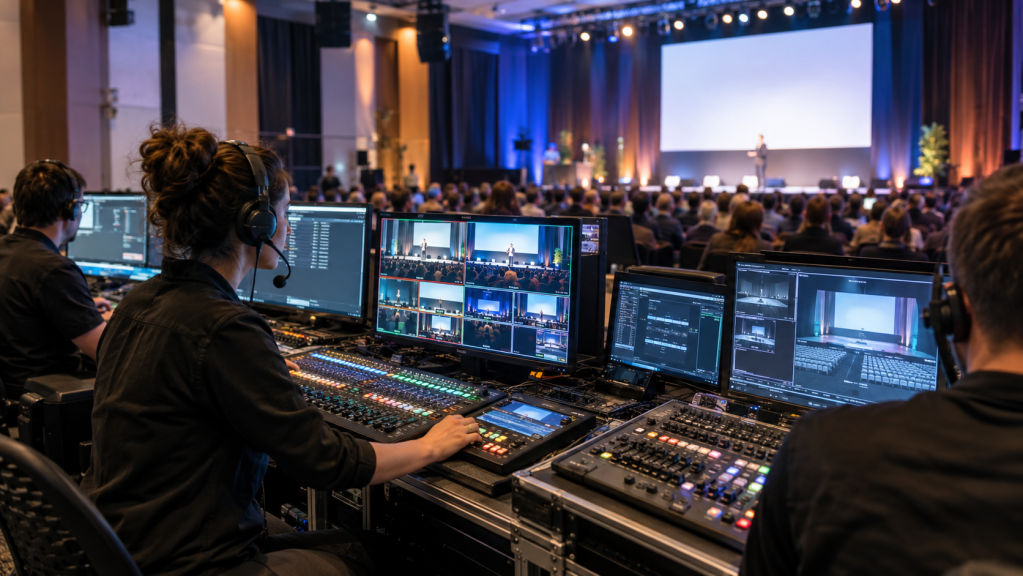
As live experiences become more central to marketing and internal communication, brands are demanding more from their event partners than flawless technical delivery. Clear audio, well-balanced lighting, timely content playback, and smooth transitions are still essential, but many organisers now view these as baseline requirements rather than differentiators.
Instead, value increasingly lies in how an event partner contributes to the wider experience: how they interpret objectives, support audience engagement, and help connect on-site activity with broader brand goals. This shift is reshaping expectations across the event technology and production ecosystem.
Brand demand for Service that extends beyond Core Production
For many organisations, live events sit alongside digital campaigns, content marketing, and sales enablement as part of a broader strategy. As a result, production teams are often expected to do more than simply turn a brief into a working showfile.
Brands frequently look for partners who can understand the purpose of an event, translate that into technical and creative decisions, and advise on how format, staging, and content can support those aims. This advisory role can be particularly important where internal teams run only a small number of major events each year and rely heavily on external expertise.
Event partners that can interpret objectives such as employee alignment, product education, or customer acquisition and reflect them in the event environment are increasingly seen as more valuable than suppliers who focus solely on logistics.
Expectation for Audience understanding and Experience design
Audience insight has become a critical factor in how brands judge prospective event partners. Organisers often want reassurance that their supplier understands who will be in the room and what those attendees need from the experience.
This can include how delegates move through a space, how content is sequenced, and how different formats keep attention over multiple sessions. While the fundamentals of sound, lighting, and video remain technical disciplines, decisions about when to use interactivity, when to prioritise networking, and how long to keep sessions running are closely tied to audience behaviour.
Production teams that can discuss flow, dwell time, and energy levels across an agenda may be better placed to advise on staging, screen configurations, or content formats that support engagement throughout the day.
Integration of Event Production with Brand and Communication objective
As events take on more strategic roles, brands often view them as one touchpoint in a longer communication journey rather than isolated occasions. This can influence what they expect from an event partner before, during, and after the live day.
On the planning side, some organisers look for support in aligning messaging, presentation formats, and technical capabilities so that the live environment reflects broader brand narratives. During the event, they may rely on their partner to manage transitions between plenary and breakout sessions, coordinate content across different rooms, and maintain a consistent visual and audio identity.
Post-event, there is often an increased emphasis on how recorded sessions, highlight reels, and captured assets can be used in internal platforms or external channels. Production teams that understand how to structure capture, file management, and content handover in line with communication plans can be more closely integrated into marketing and internal communication workflows.
Assessment of Creativity, Flexibility, and Problem solving
While budgets and timelines still set parameters for most projects, brands commonly assess event partners on their ability to respond creatively within those constraints. This does not always mean complex staging or experimental technology; in many cases, it is about proposing formats and technical solutions that make the most of available resources.
Flexibility is also a recurring expectation. Agendas often evolve, speakers may change, and content can be updated late in the process. Event partners are therefore assessed on how they manage change: from adjusting room layouts and modifying cue stacks to revising content playback and amending show flows without disrupting delivery.
Problem solving on site remains a core part of this expectation. When unexpected issues arise, brands tend to value partners who can quickly diagnose the problem, communicate clearly, and implement practical solutions while keeping the audience experience intact.
Importance of Communication and Collaboration with Stakeholder
Successful delivery often depends on how well an event partner collaborates with internal teams and other suppliers. For many brands, this is now a key evaluation area when selecting long-term partners.
Organisers may expect regular updates during planning, clear documentation of technical requirements, and straightforward escalation paths when decisions are needed. They also look for production teams who can work constructively with venues, creative agencies, content producers, and digital platforms.
Open communication around limitations, risks, and dependencies can be as important as technical capability. Brands frequently expect event partners to raise concerns early, explain implications, and propose alternative approaches where necessary.
Use of Data and Feedback to inform Future Event
Measurement and insight are becoming more prominent in discussions about event value. While not all production teams are responsible for data strategy, many brands now expect their partners to support basic measurement and feedback processes.
This can range from ensuring that audience response systems, streaming platforms, or registration tools are integrated correctly, through to assisting with simple metrics such as attendance patterns across sessions. In some cases, production decisions around room layout, camera positions, or microphone placement can also influence the quality of data collected from interactive tools.
Over time, feedback from previous events can shape technical design and format decisions. Event partners who participate in debriefs, review what worked well, and adapt approaches for future projects may build stronger, longer-term relationships with their clients.
Shift in Criteria for Selection of Event Partner
As expectations expand beyond core production tasks, selection criteria for event partners are also changing. Technical reliability, equipment quality, and health and safety compliance remain essential, but brands frequently weigh these alongside softer factors.
These factors can include how well a partner understands the organisation, whether they contribute constructive ideas during scoping conversations, and how they handle pressure on site. For recurring events, consistency of team members and continuity of knowledge can also influence partner choice.
In a marketplace where multiple suppliers can deliver competent sound, lighting, and video, many brands now look for partners who combine operational excellence with strategic understanding of what the event needs to achieve.
This combination of production capability, audience awareness, and collaborative working is increasingly what distinguishes event partners that merely deliver a show from those that support the broader objectives behind it.

